
1 day in National Park Thy
Hiking trails, adventures and places to eat
Thy National Park
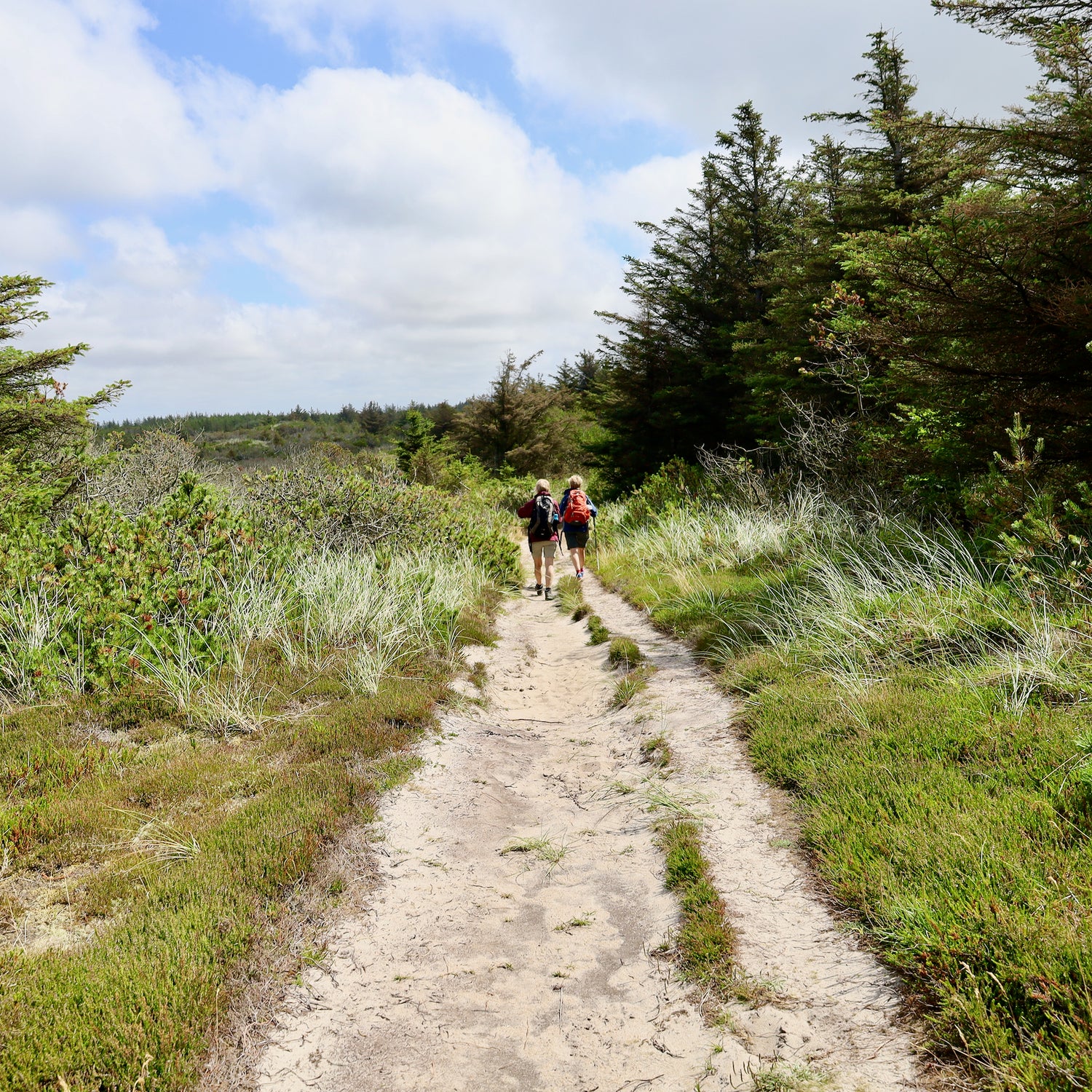
Thy National Park stretches up to a 12 kilometer wide belt along the west coast of Jutland from Agger Tange to Hanstholm. It is an unspoiled natural area of a total of 244 km2.
Denmark's first national park is thus four times larger than Copenhagen, and the closest you in Denmark come to Norway's vast wilderness.
In the national park you can experience the magnificent nature of northern Jutland, which through long periods of sand blasting, has created a completely unique landscape.
Water, beach and dunes. Heaths, forests and large, clean lakes. The nature in National Park Thy is of the highest quality with its range of desolate, varied landscapes as well as rare animals and plants. Here you have the opportunity to experience the wild nature, enjoy the outdoors or just be in the magnificent surroundings.
There are also some unique cultural attractions in the area. Man has left traces in the coastal area, from burial mounds to lost villages and a church ruin, as well as huge fortifications from the time of the war. It is all here and is part of the overall story of National Park Thy.
In Thy, the national park with its 55 kilometer long coastline, abundant wildlife and varied nature is a source of great local pride.
Here there is time for you to experience the vastness, get sand between your toes and have a lot of nature-rich experiences.
Lodbjerg Dune Plantation
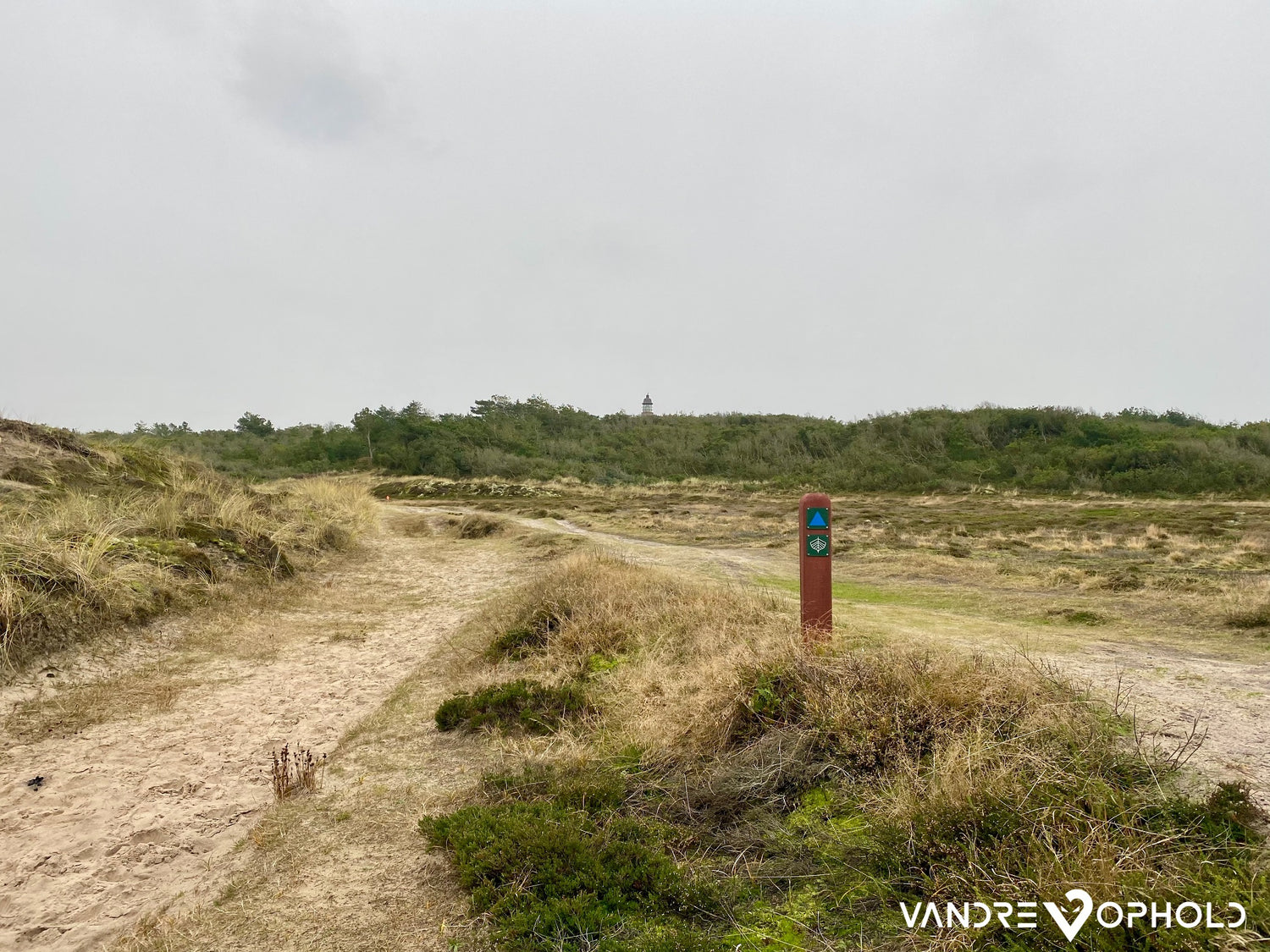
Lodbjerg Plantage was started in 1923 and is thus a relatively young plantation.
The interesting thing about this plantation is that it was established at a time when the main purpose was no longer to dampen the sand, as was the case in most dune plantations. Therefore, several natural considerations were taken into account in Lodbjerg Plantage from the beginning.
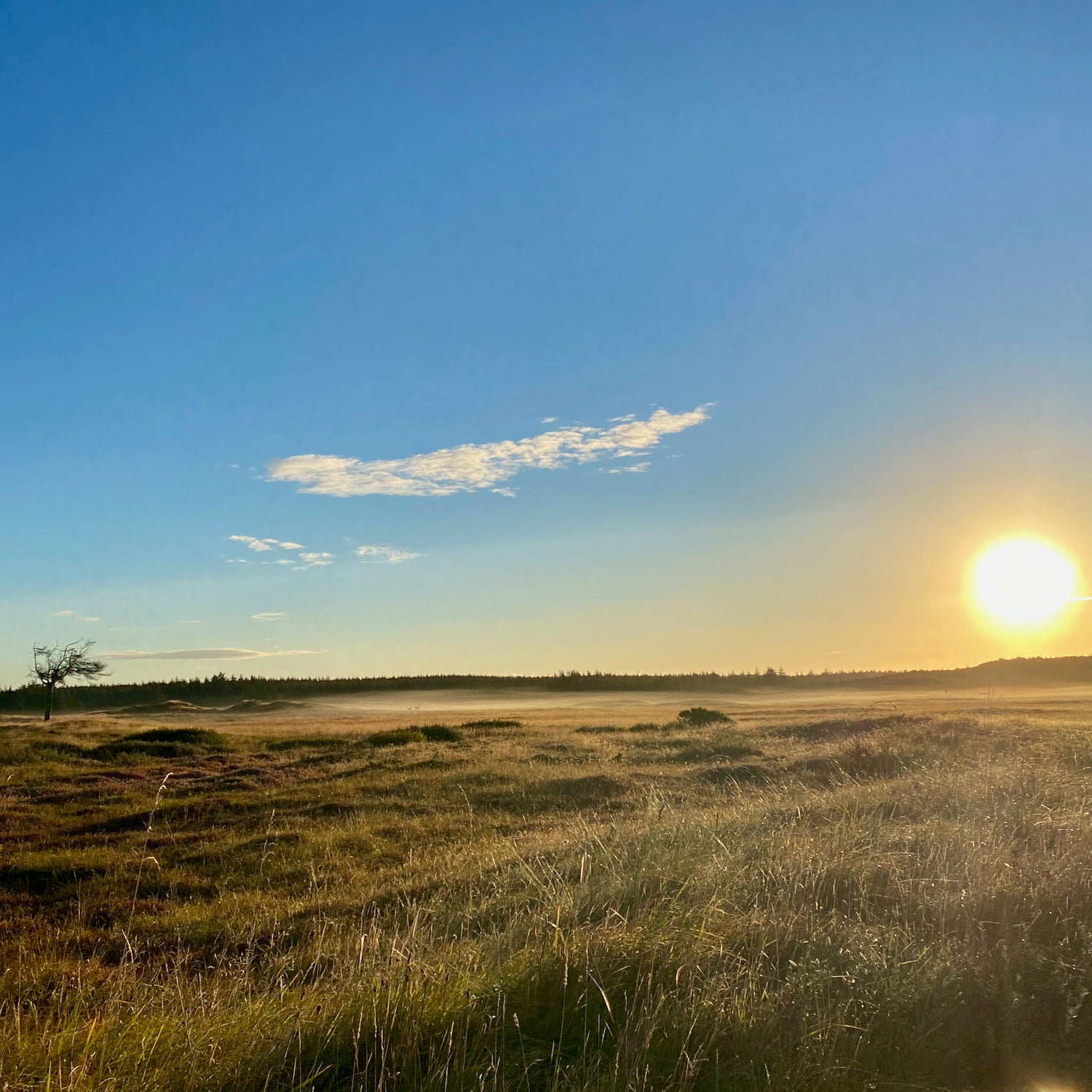
The result is that there are large areas that are not planted, but instead lie as heath, grassland, plains and fields. This variation, combined with the forest, creates an area of great diversity that benefits flora, insects, wildlife and people.
Approx. one kilometer northwest of Lodbjerg Lighthouse, the wind and human activity have created an impressive hole in the vegetation on the sea dunes. The sand from this area moves as a "mile" (a formation of floating sand) across the dune. Elsewhere along the coast there are dunes that can be up to 30 meters high.
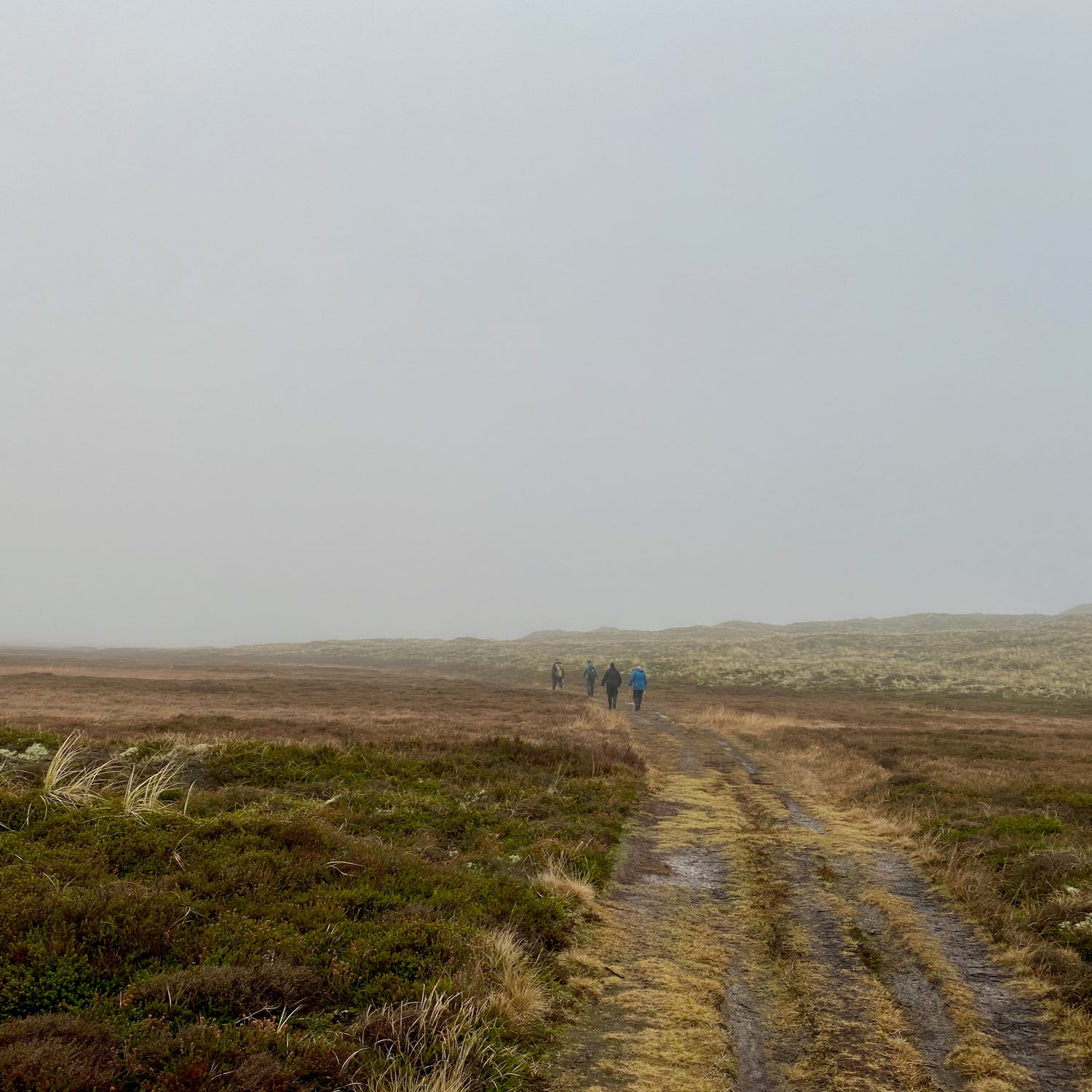
Stenbjerg Dune Plantation
Stenbjerg Klitplantage is a scenic area that stretches over raised seabed and sandy soil. The terrain varies between flat plains and large dune areas.
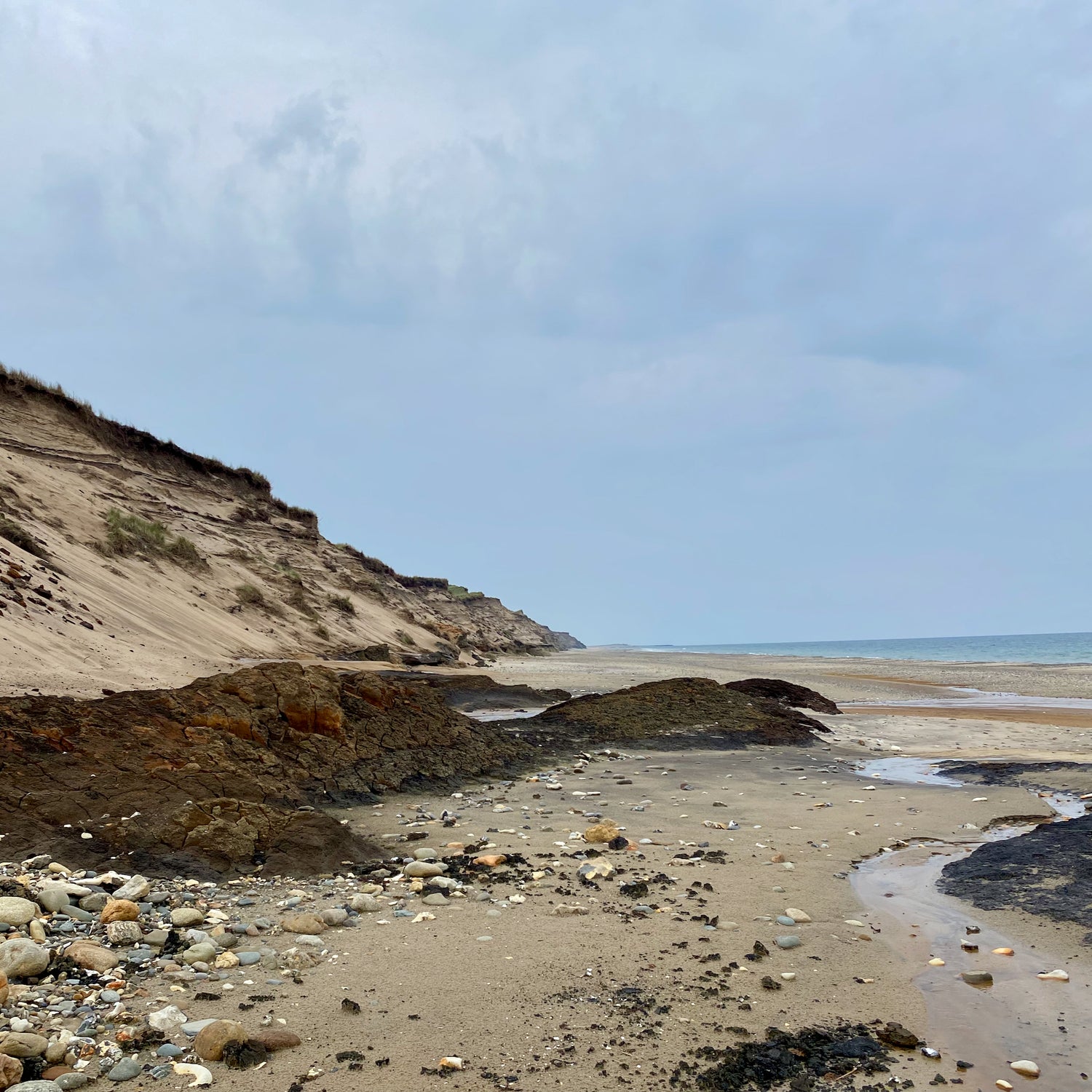
About 5-6 kilometers from the sea, the old coastal cliffs from the Stone Age sea begin to rise. East of these slopes, where the soil consists of clay and gravel with underlying lime, you will find more lush vegetation. This is reflected in the choice of tree species and their growth in the area.
Stenbjerg Klitplantage was established from 1895, and the process roughly involved "rolling a mountain pine carpet" over the landscape. As the mountain pine established itself and served as shelter from wind and frost, other tree species such as sitka spruce, Norway spruce, Scots pine and oak could gradually be introduced under its protection.
In 2004, the dune plantation was hit by a violent forest fire that raged for 2 days and destroyed around 150 hectares of forest. Some areas have been cleared, while others have been planted with deciduous trees in groups. There are also areas that are allowed to stand until the soot-blackened trunks collapse naturally.
In the eastern part of the plantation, there are many burial mounds, including the impressive "Store Dyrehøj", as well as several exposed mounds along the coastal slope of the Stone Age sea.
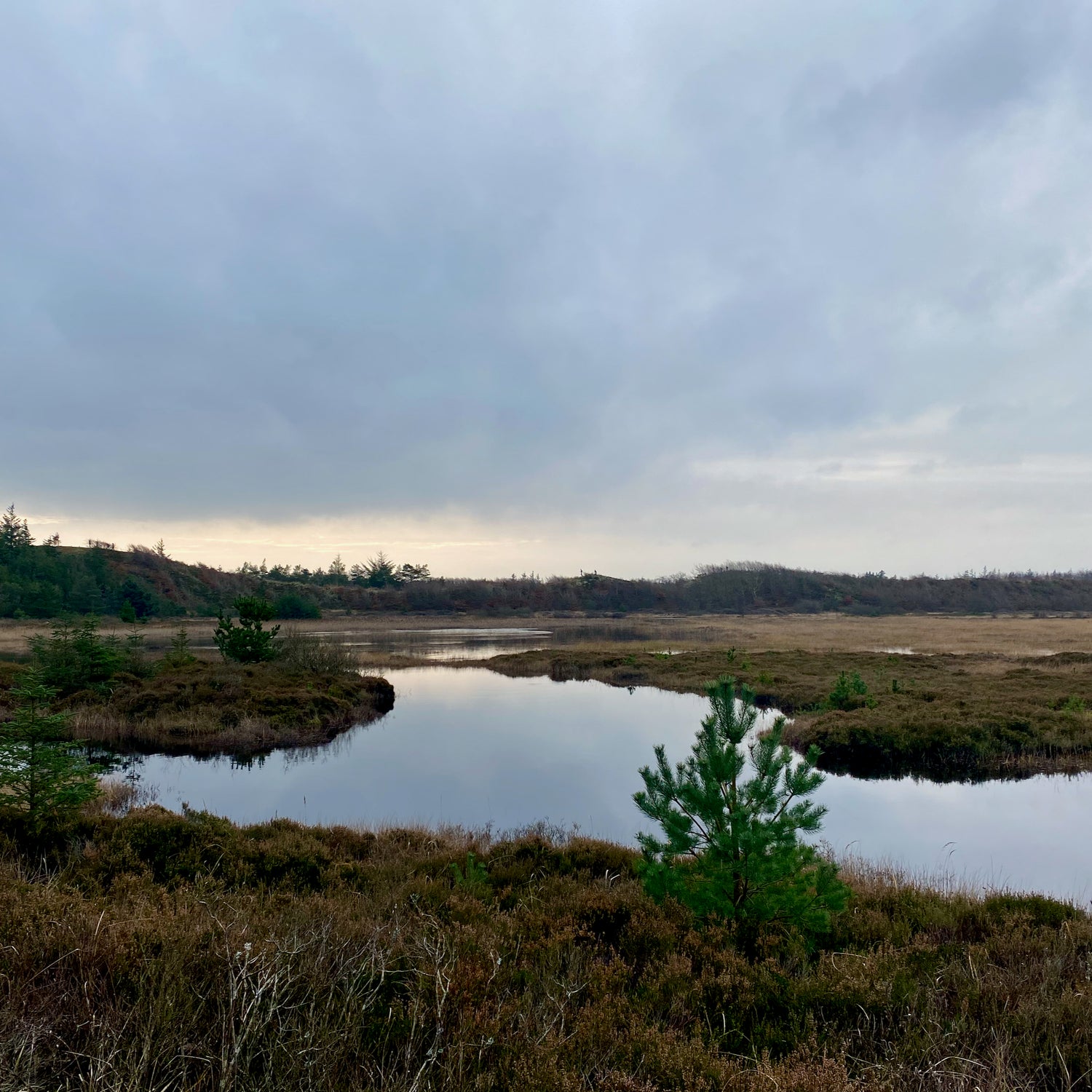
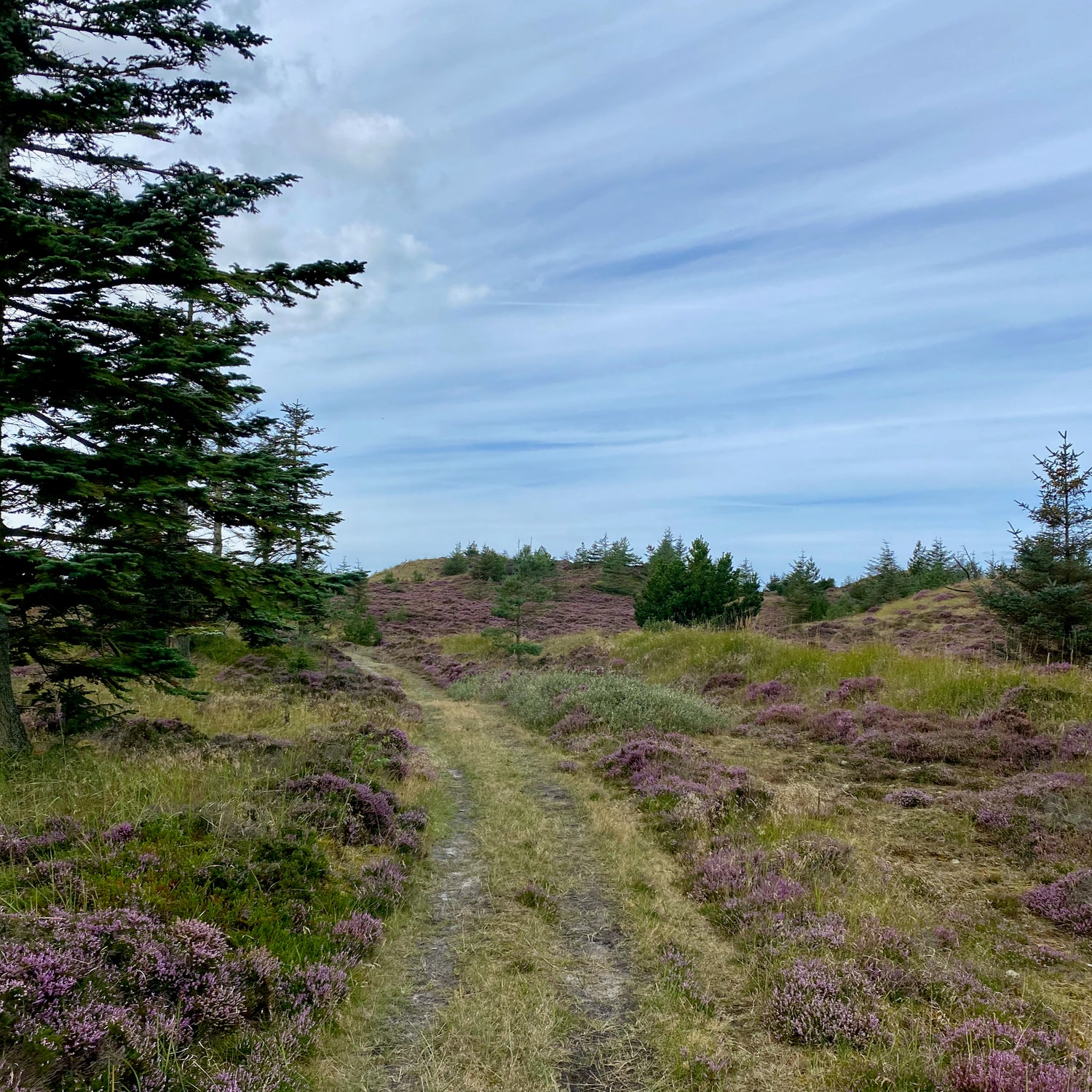
Bøgsted Rende
Bøgsted Rende is one of the most breathtaking natural areas in Thy National Park.
The water in the trench has a brownish-red color due to the presence of ochre, which is due to oxidized iron compounds from the adjacent ditches.
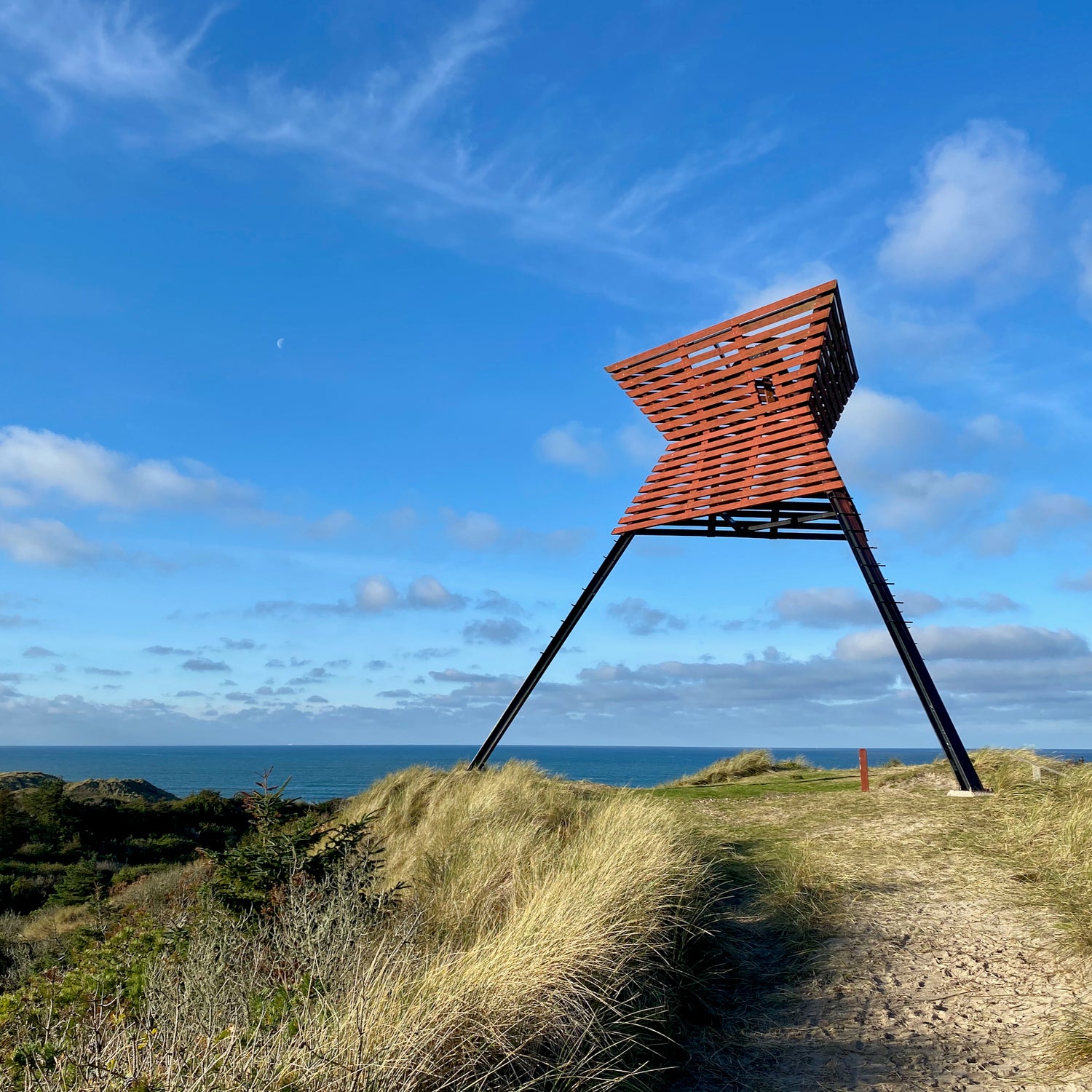
Bøgsted Rende Båke, one of just 11 remaining landmarks, rises majestically above the vegetation. The impressive seamark with its characteristic hourglass-shaped top is painted in red and is constructed of solid iron girders and wood. It was built between 1884 and 1885 and served as a landmark for seafarers.
In the area, you can also admire many of the 200-year-old trees that originate from one of Thy's first plantations, Thagaards Plantage. The oldest living trees in the area were planted at the end of the 19th century.
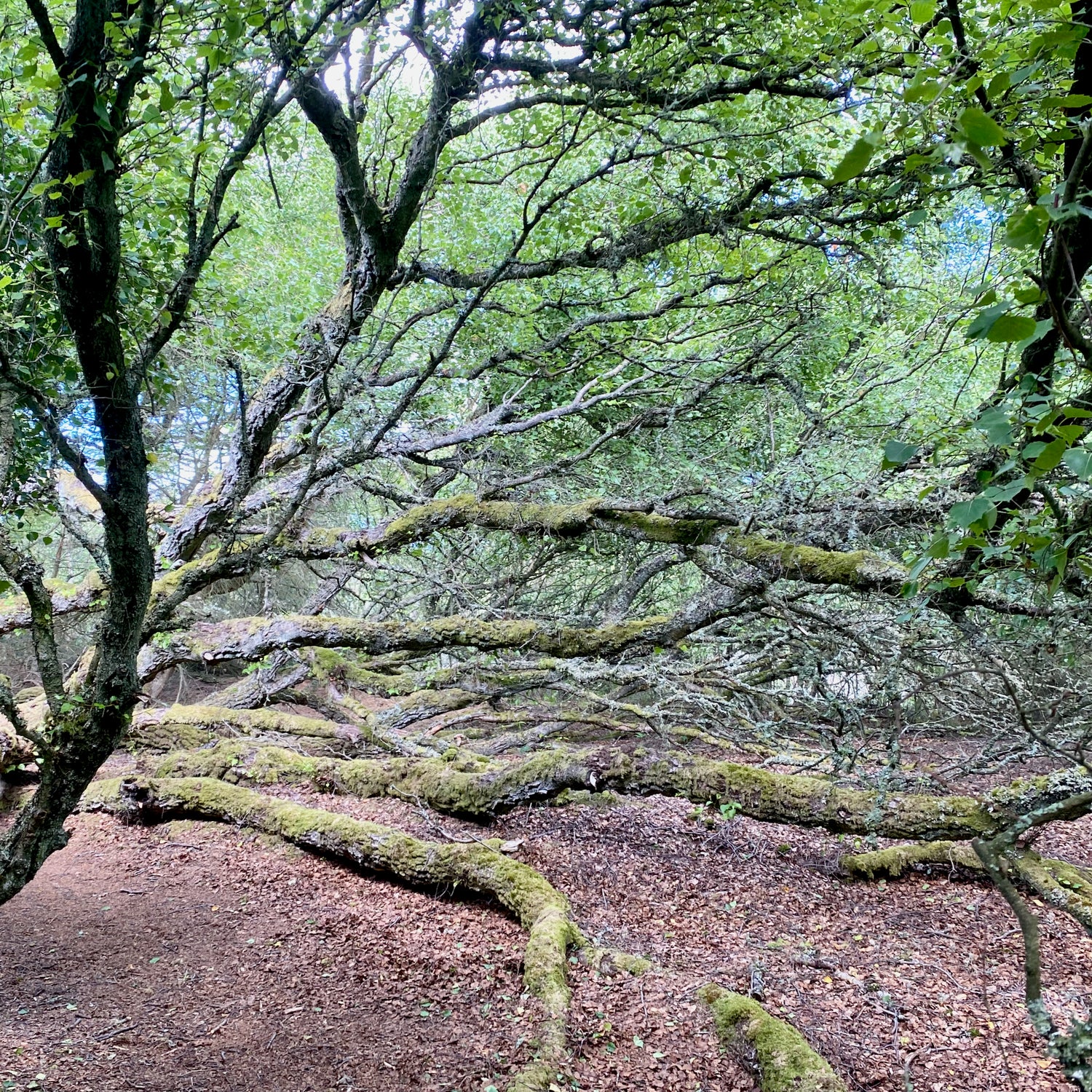
Hanstholm Wildlife Reserve
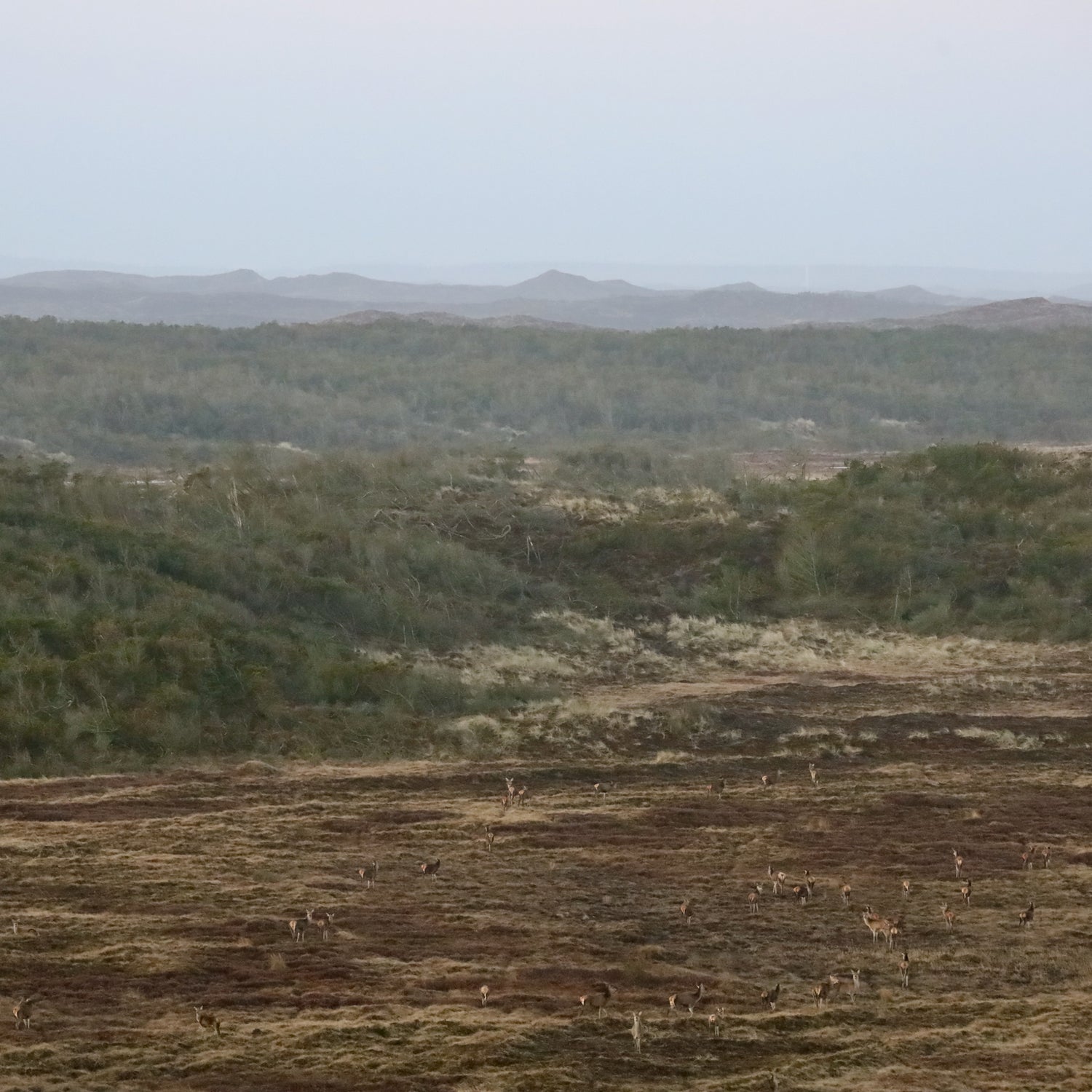
Hanstholm Wildlife Reserve stretches over almost 40 square kilometers and forms the largest continuous dune in Denmark. The landscape is a beautiful mosaic of large flat plains, known as blow flats, and majestic dune formations.
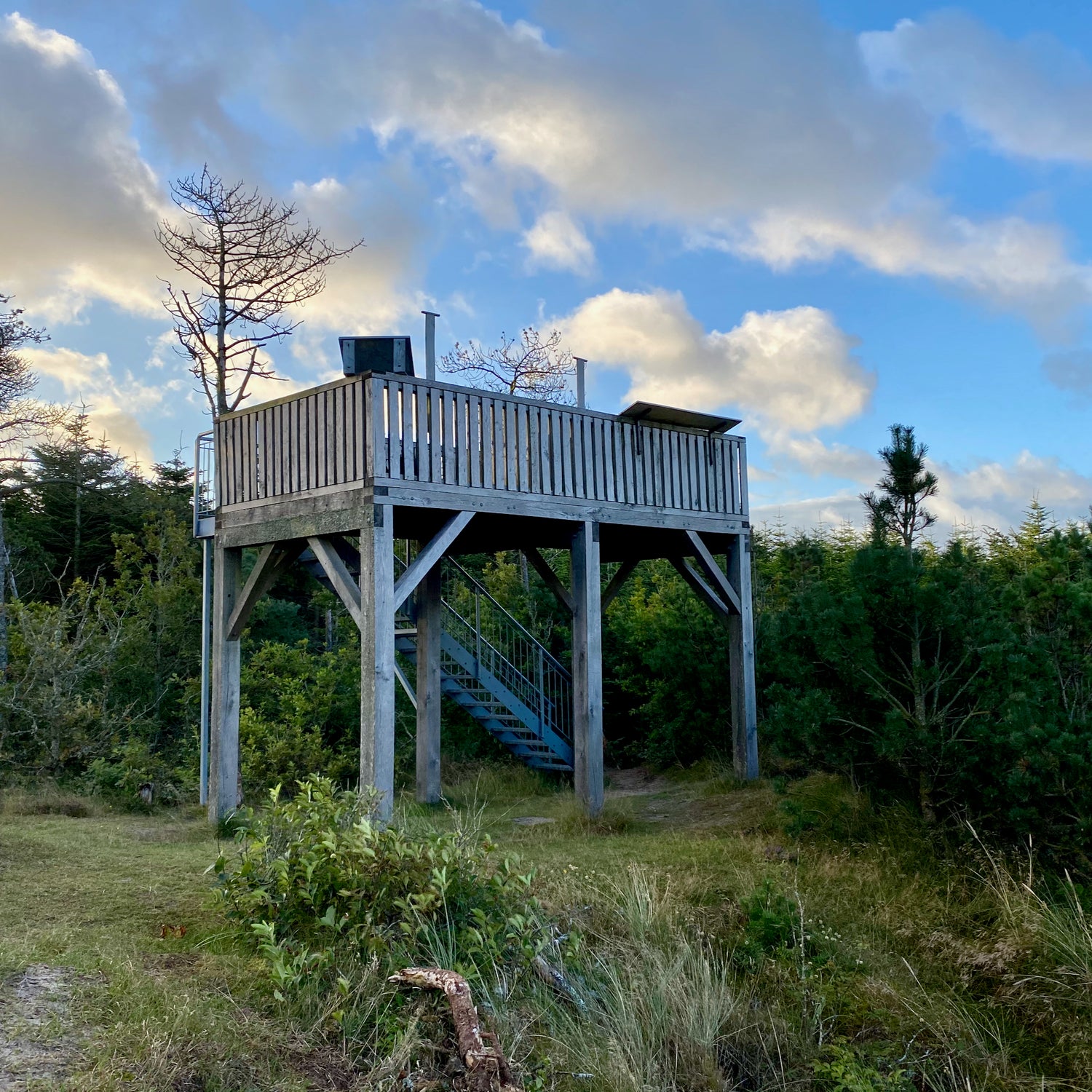
The bird tower in Sårup, located in the northwestern part of Tved Klitplantage, offers a fantastic view over the inner and more sheltered areas of the Hanstholm Wildlife Reserve. Feel free to bring a good pair of binoculars, as they will help you spot wildlife.
Around the lakes in the area you can experience a rich wildlife at different times of the year.
In March-April there is an opportunity to be lucky and experience cranes dancing and trumpeting in the fields below the tower before settling down on their breeding grounds in the reserve. Later in the summer, you can see the cranes walking around in pairs with their young.
The bird tower is also one of the best places to observe the red deers in the reserve. In late summer, at times up to 400 animals can be gathered in the dunes next to the tower. Later in the rut, the herd is divided, when the large male red deer each form their own group, which they zealously guard.
When the deer roar across the wilderness on a quiet evening at sunset, you can almost forget the present and feel transported back to primeval times.
During migration, the inner reserve is visited by many resting birds. Every autumn, large flocks of pink-footed goose arrive from their breeding grounds on Svalbard, and over recent years the flocks of greylag geese have grown larger and larger, which is a fantastic experience in itself.
The hiking trails
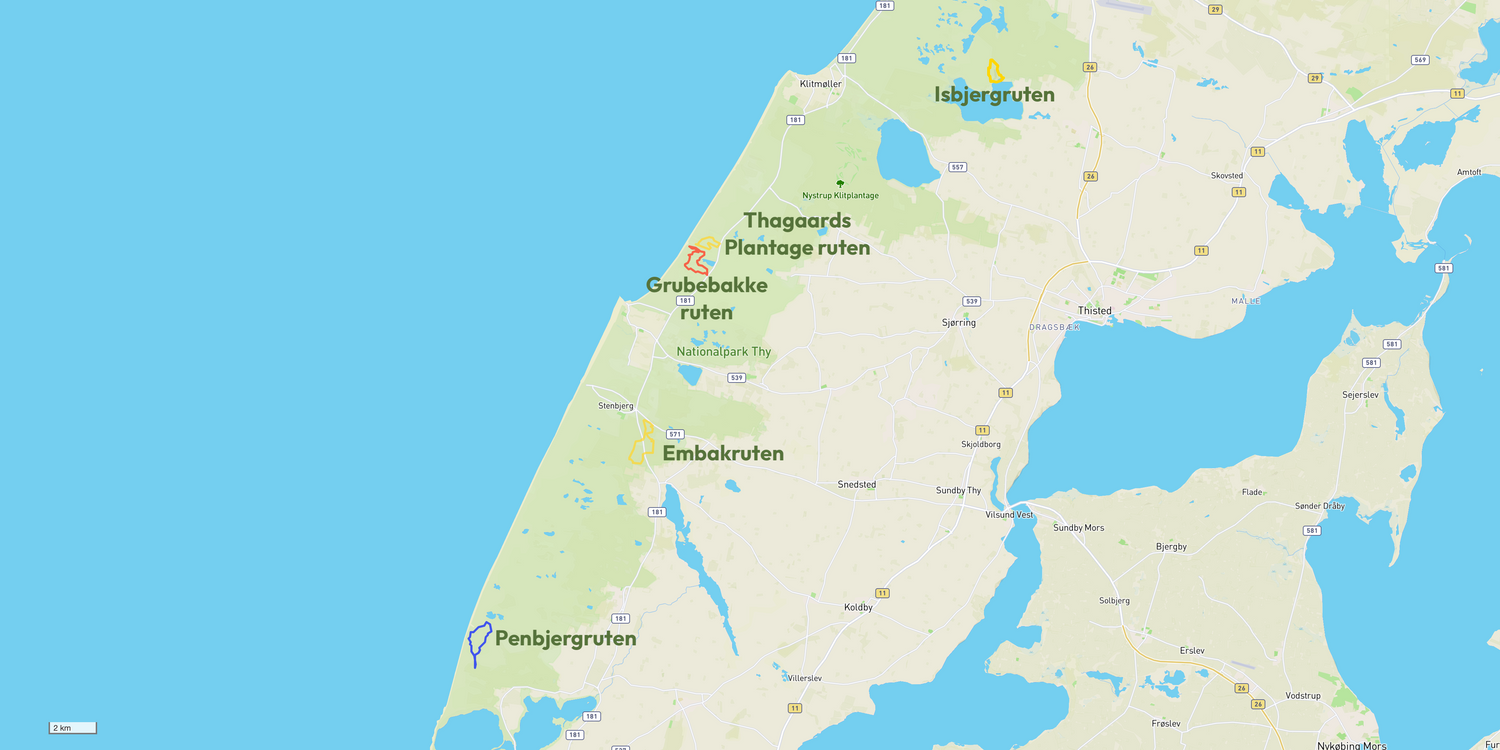
Below you see the selected hiking trails from the hiking area with mileage.
We have prioritized the trails with our favorite trail in the area as the first.
You get information about each hiking trail by clicking on the pictures.
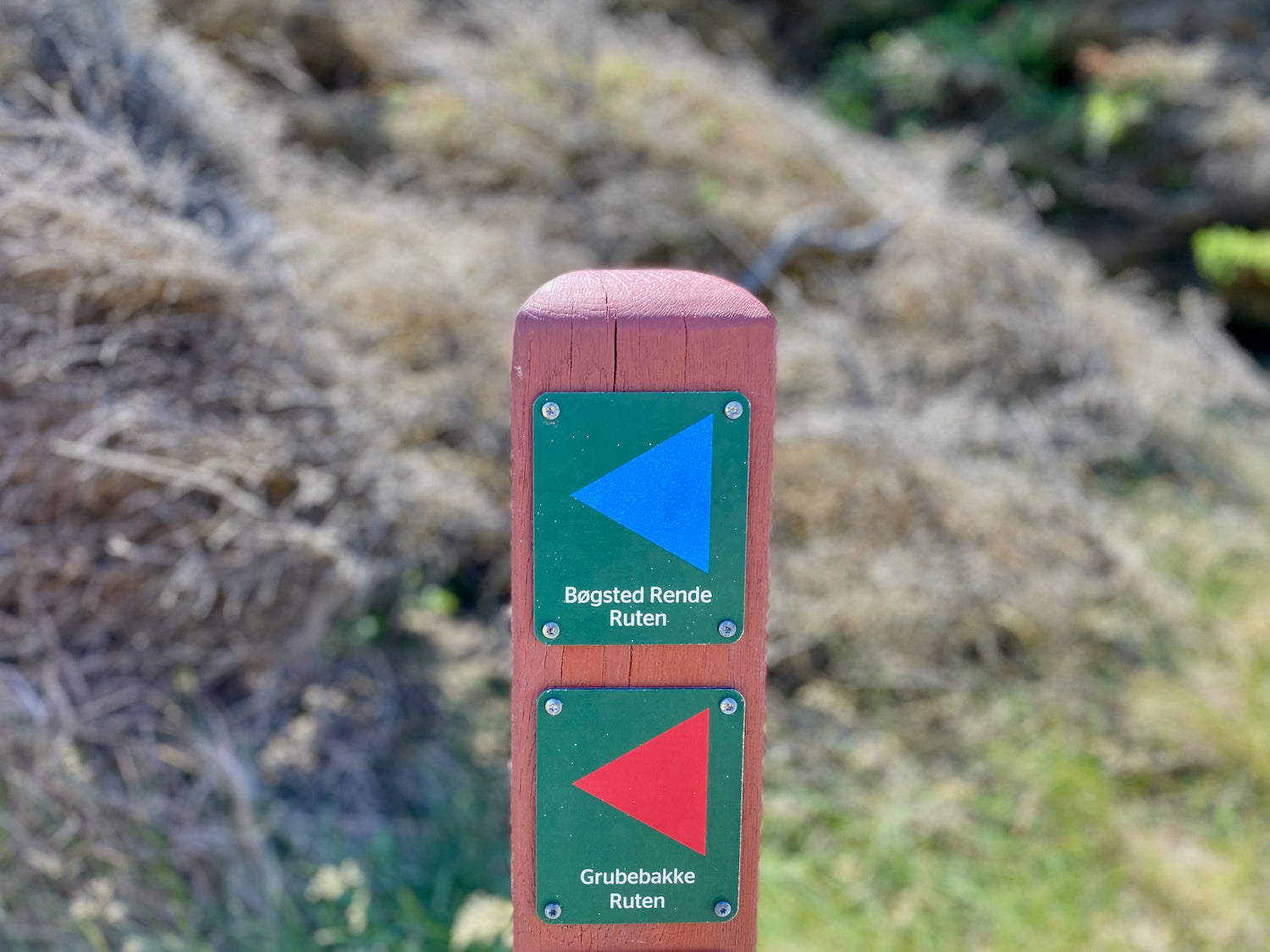
Grubebakke route 4.5 km
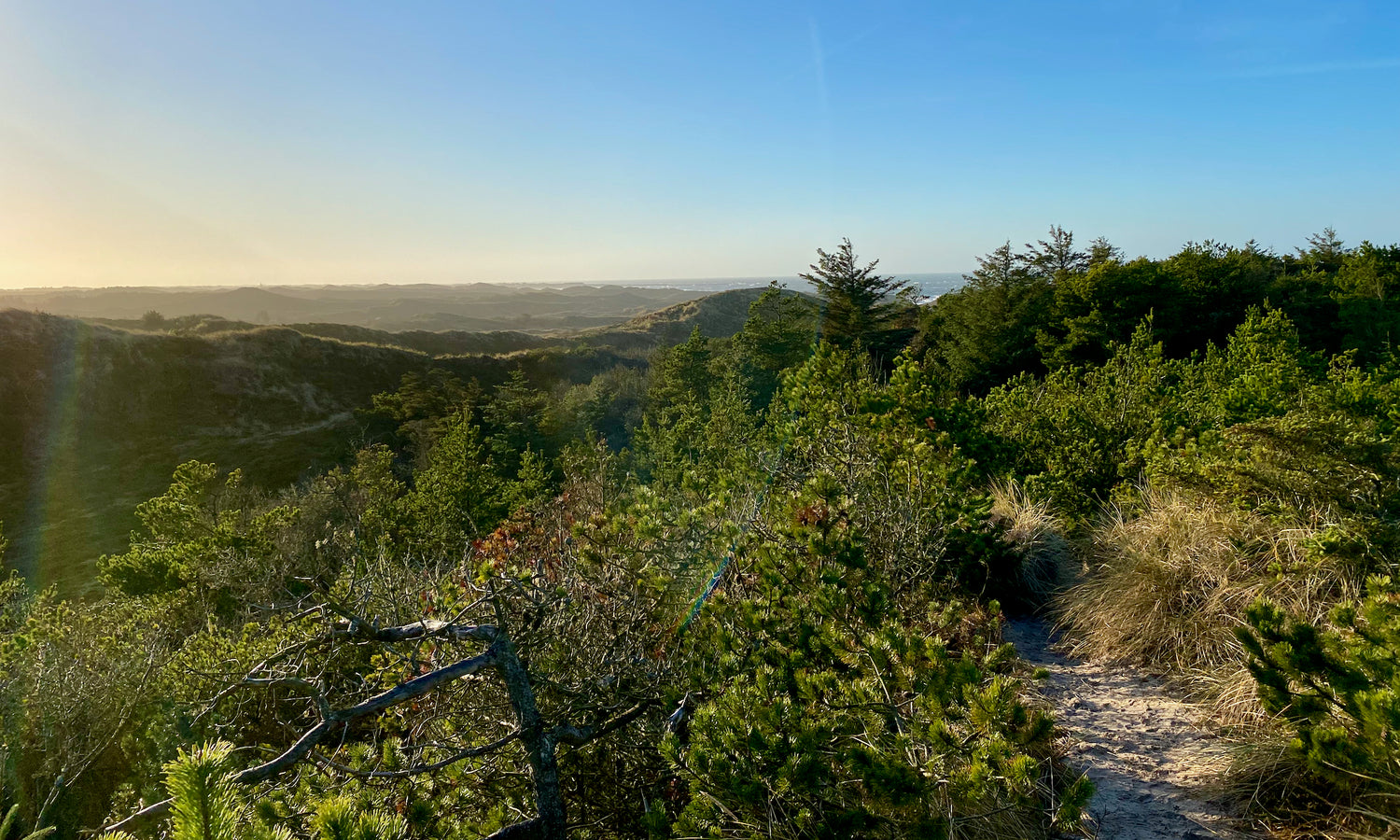
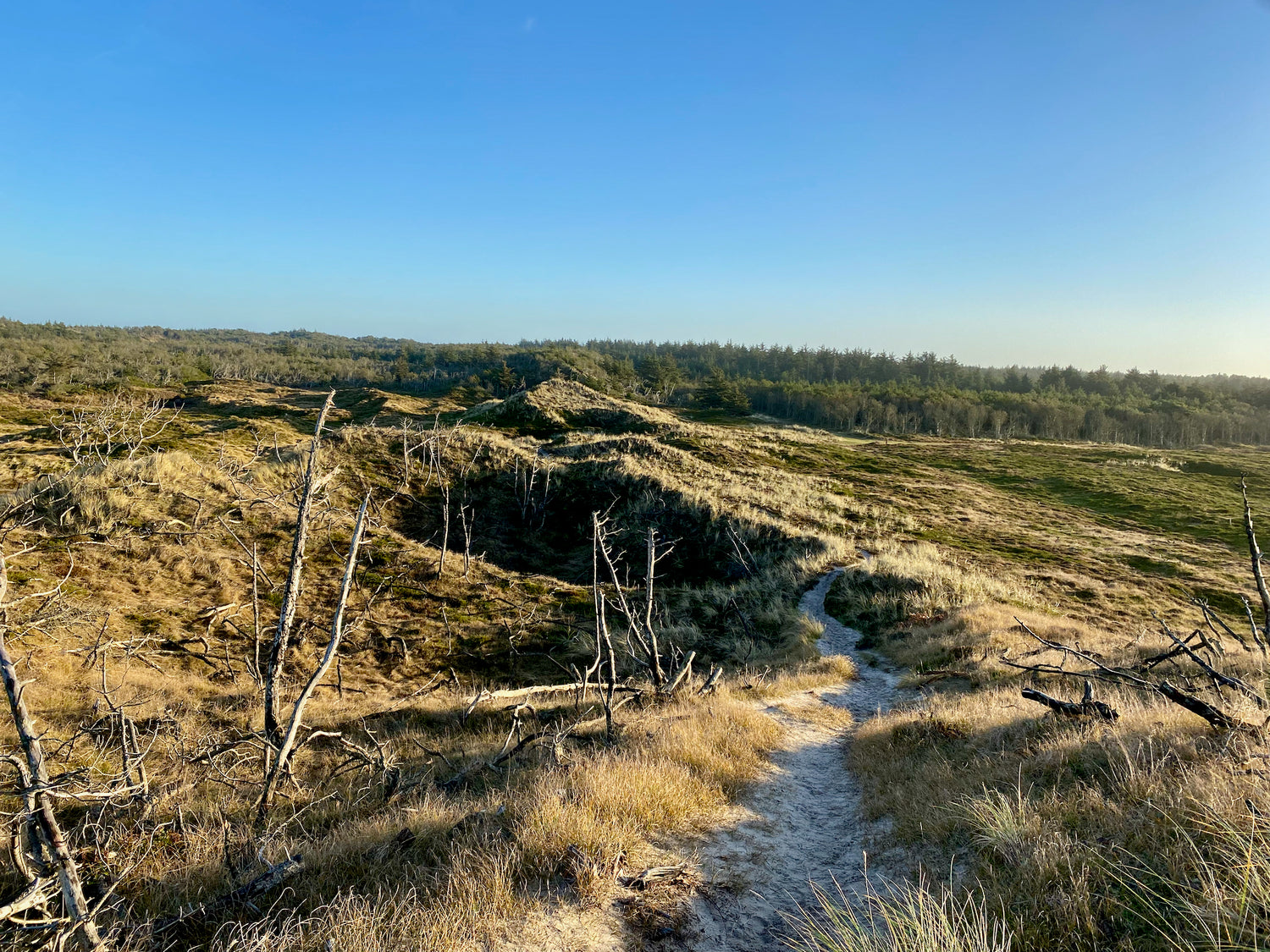
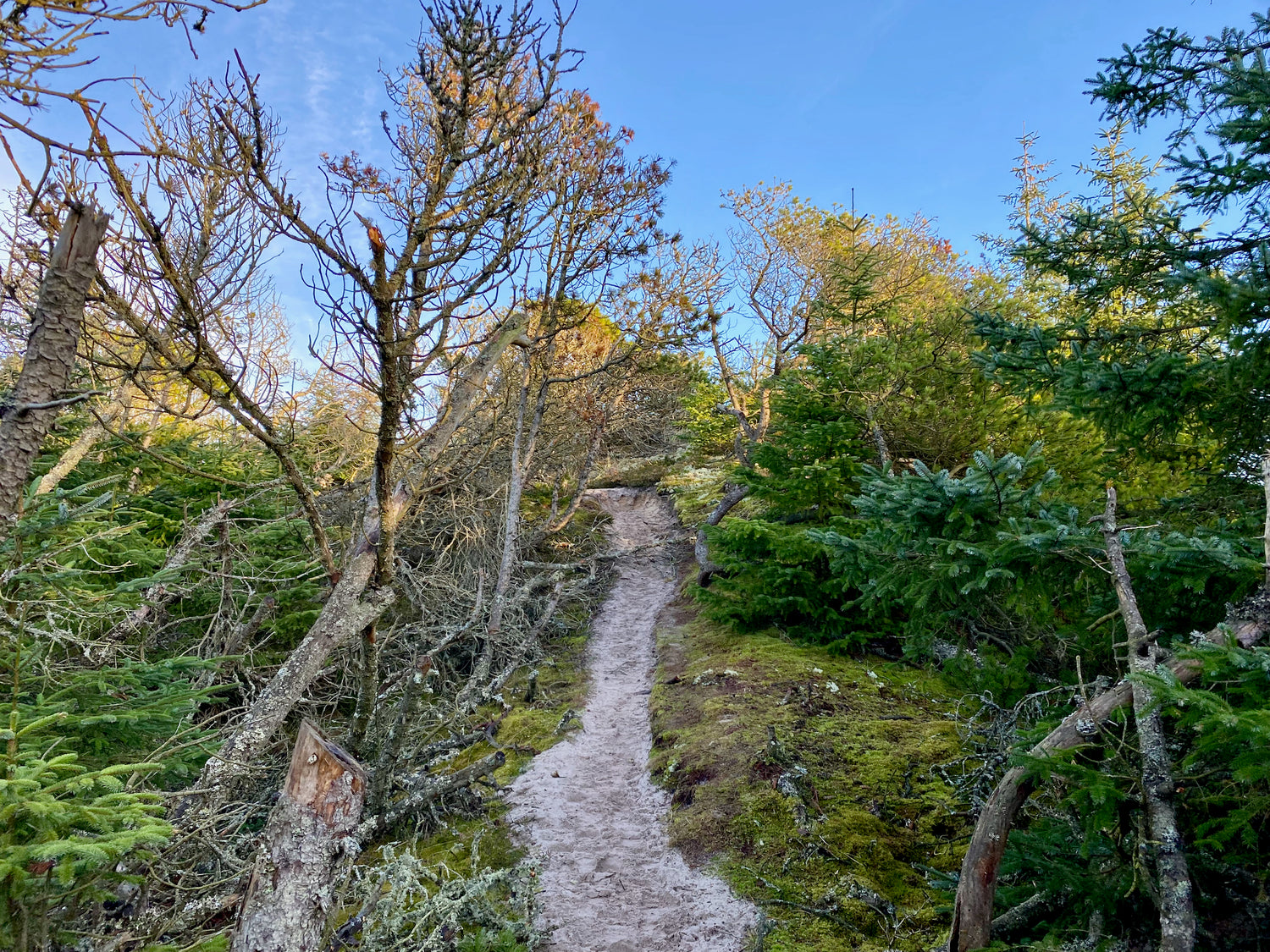
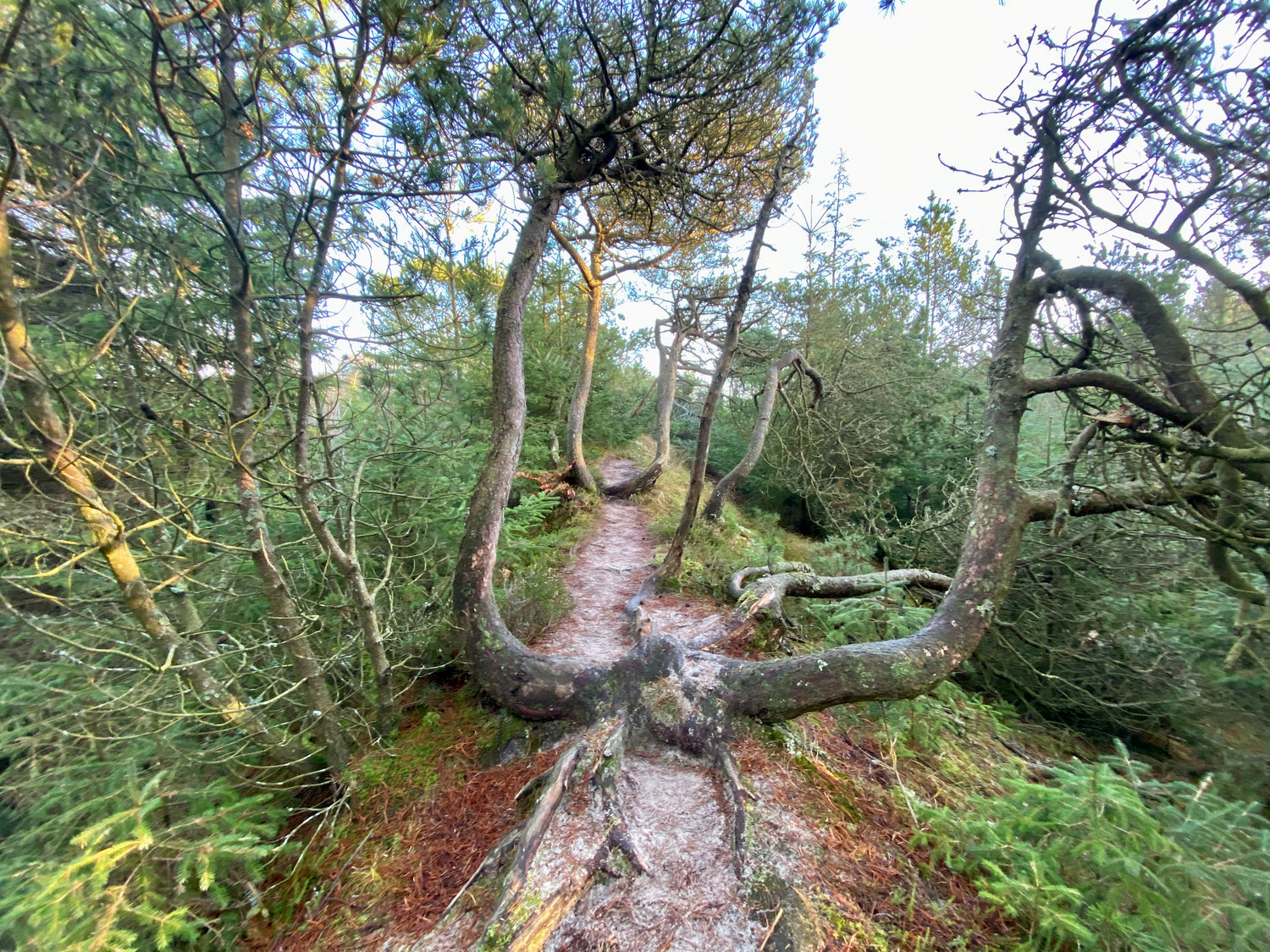
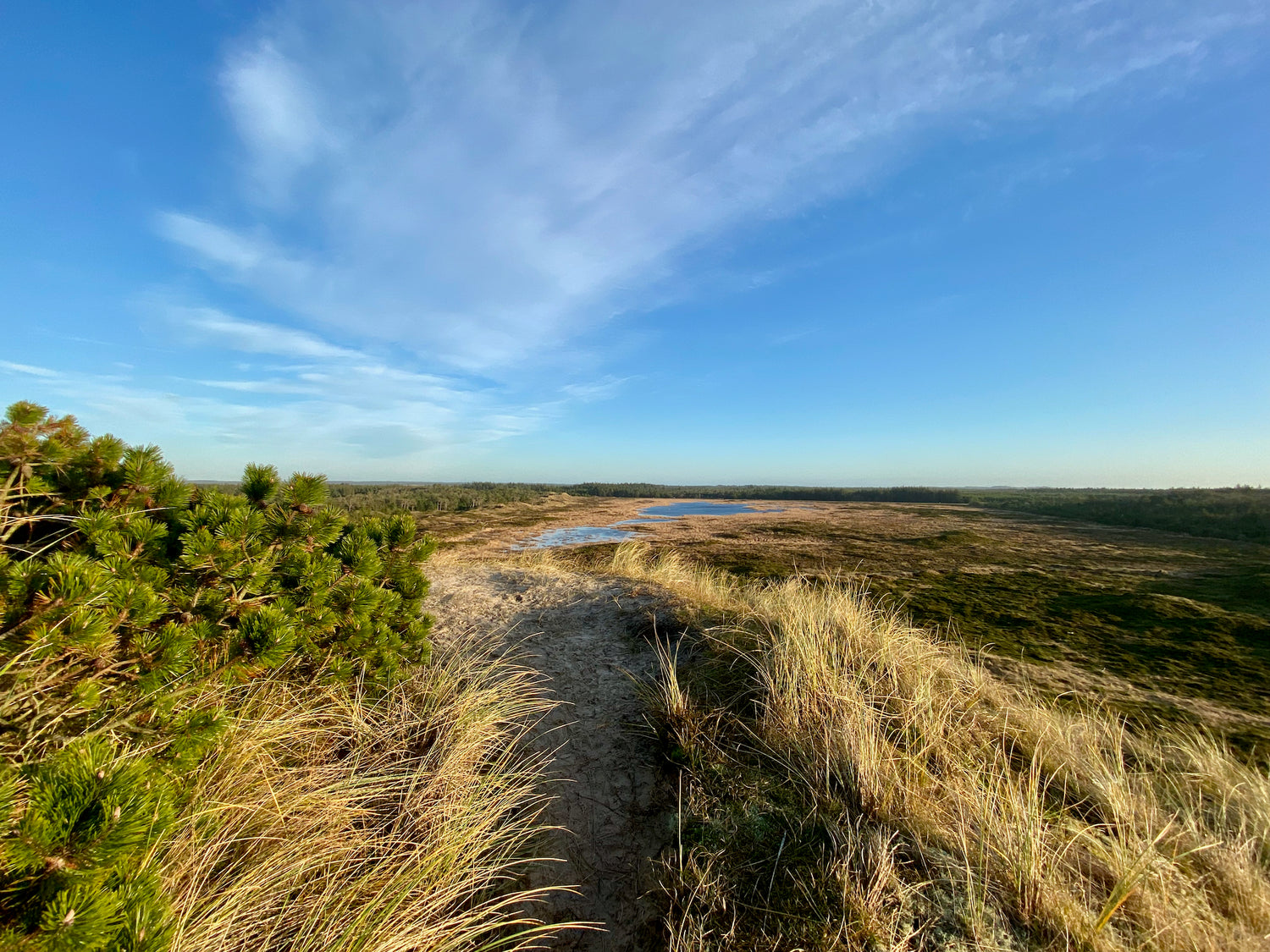
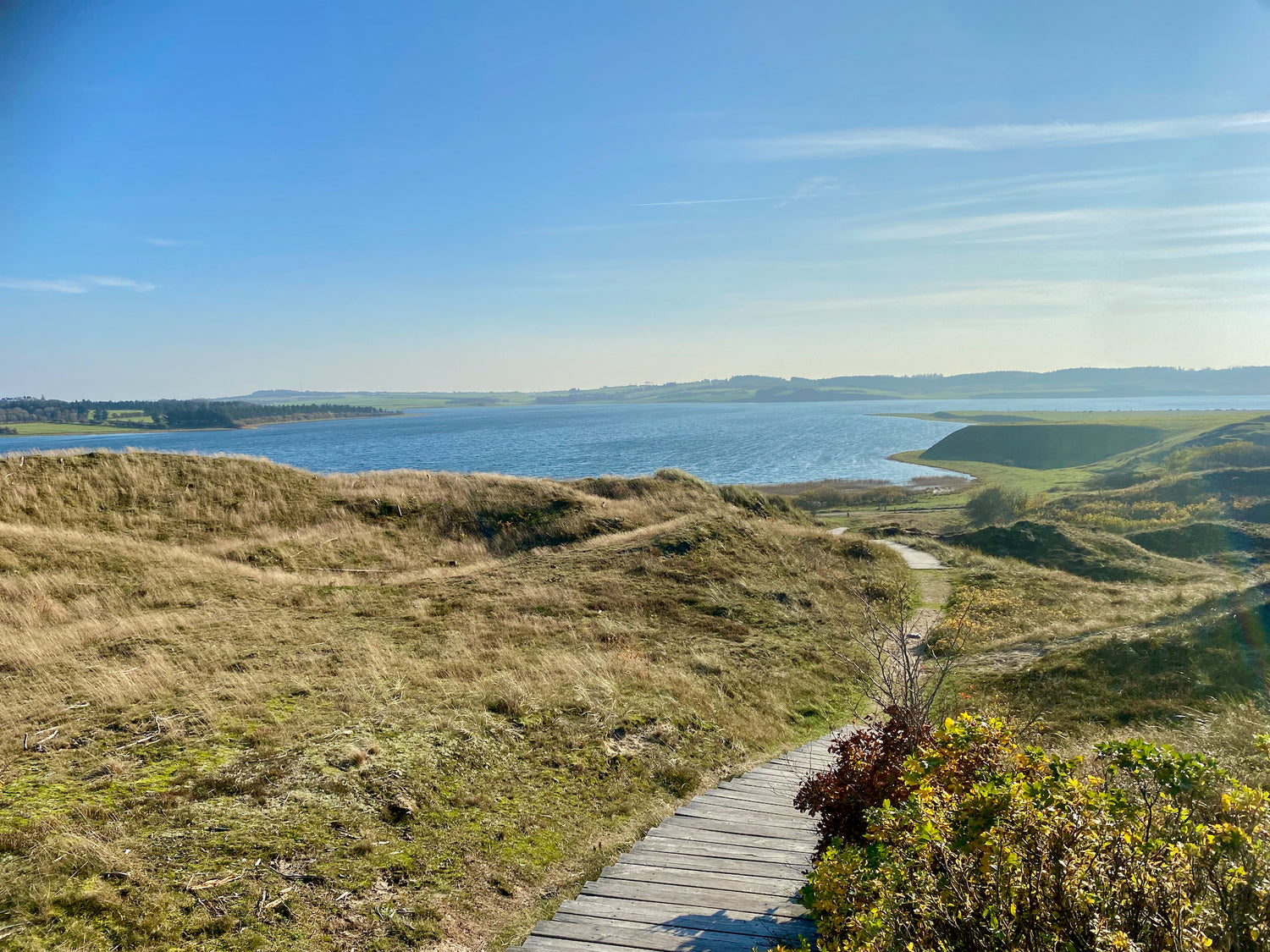
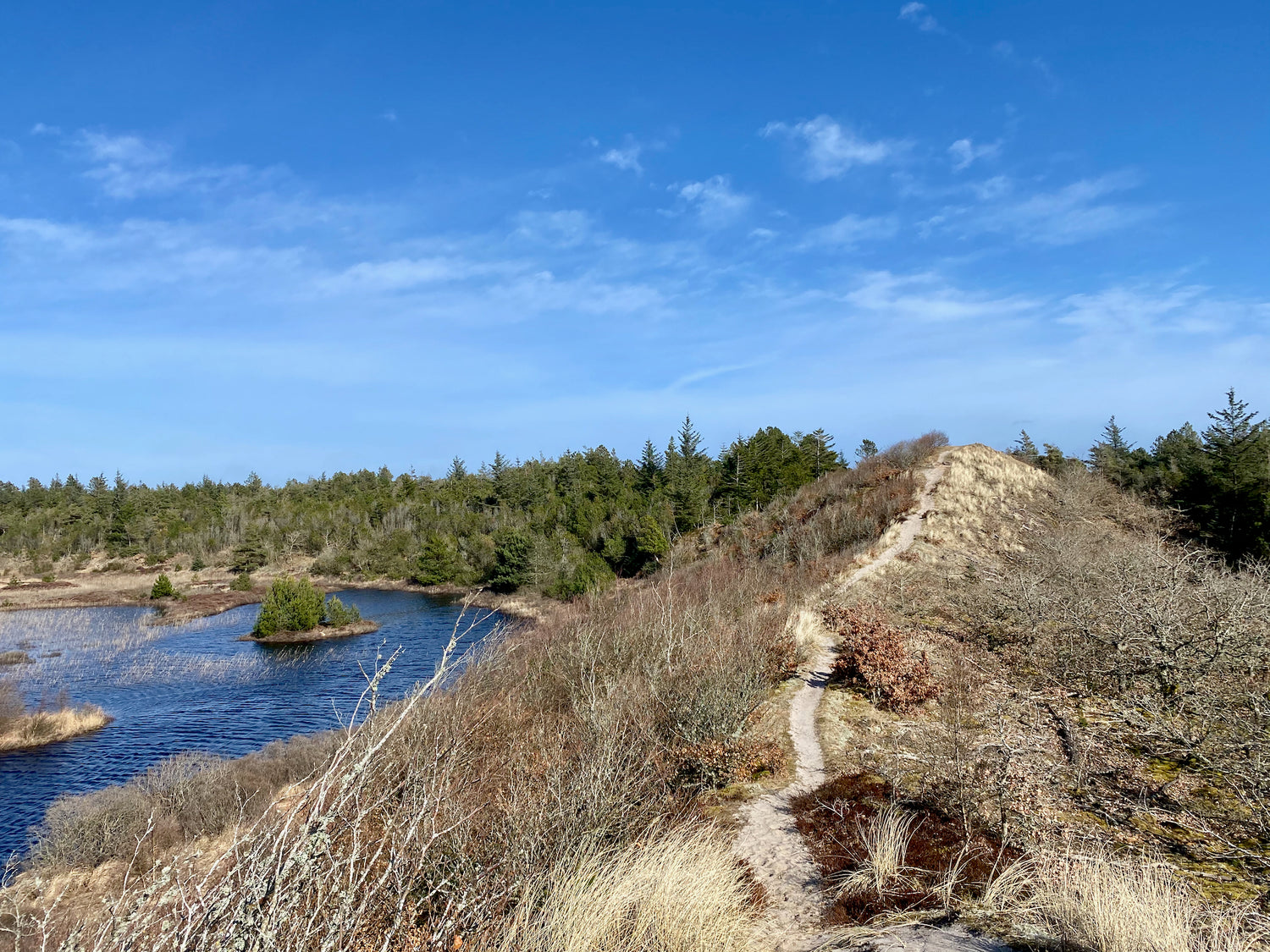
The Grubebakke route is characterized by a considerable variation in the terrain, as it stretches from dune top to dune top and offers unique and impressive views of the sea, the dunes and the plantation.
Penbjerg route 5.7 km
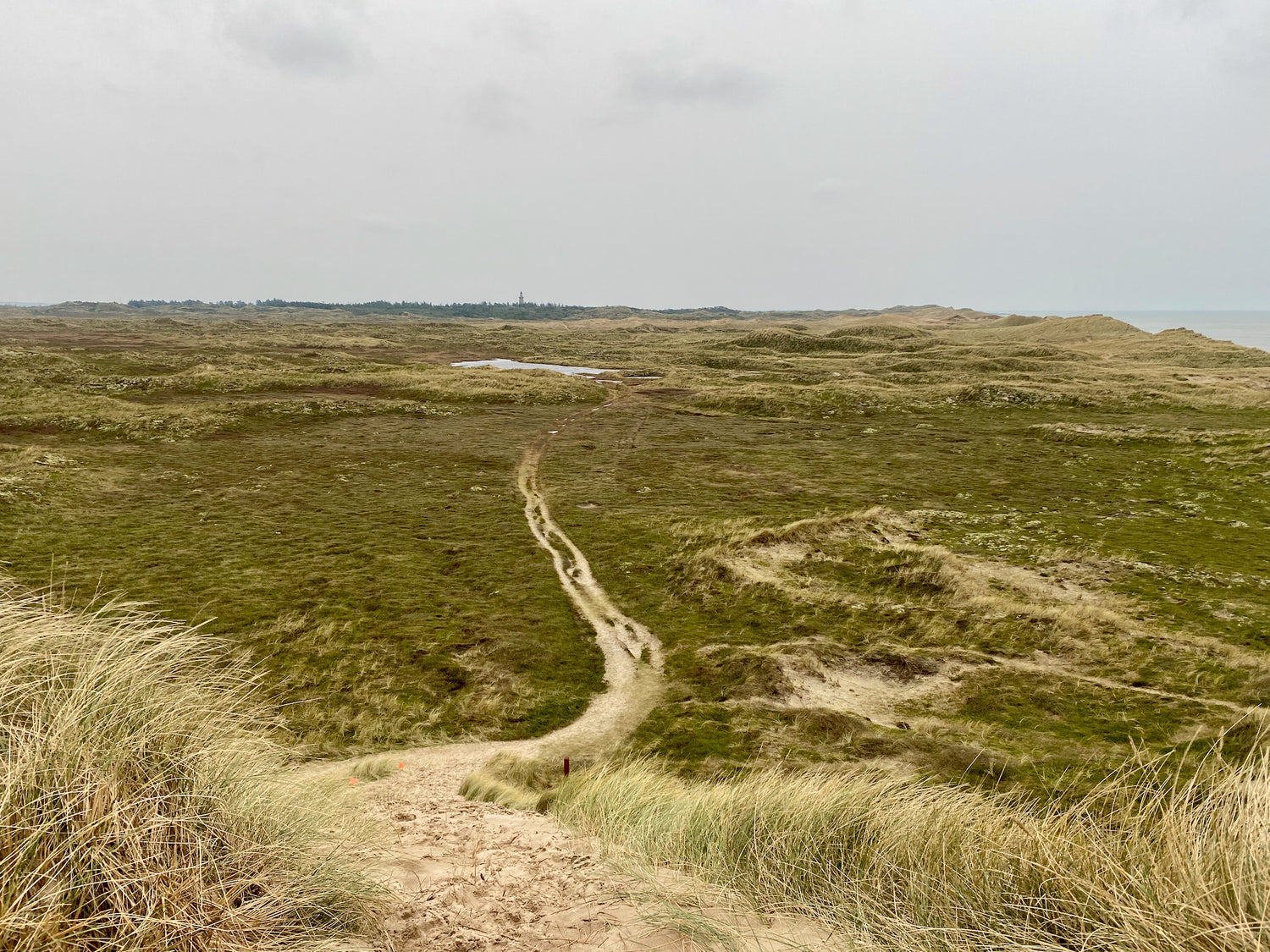
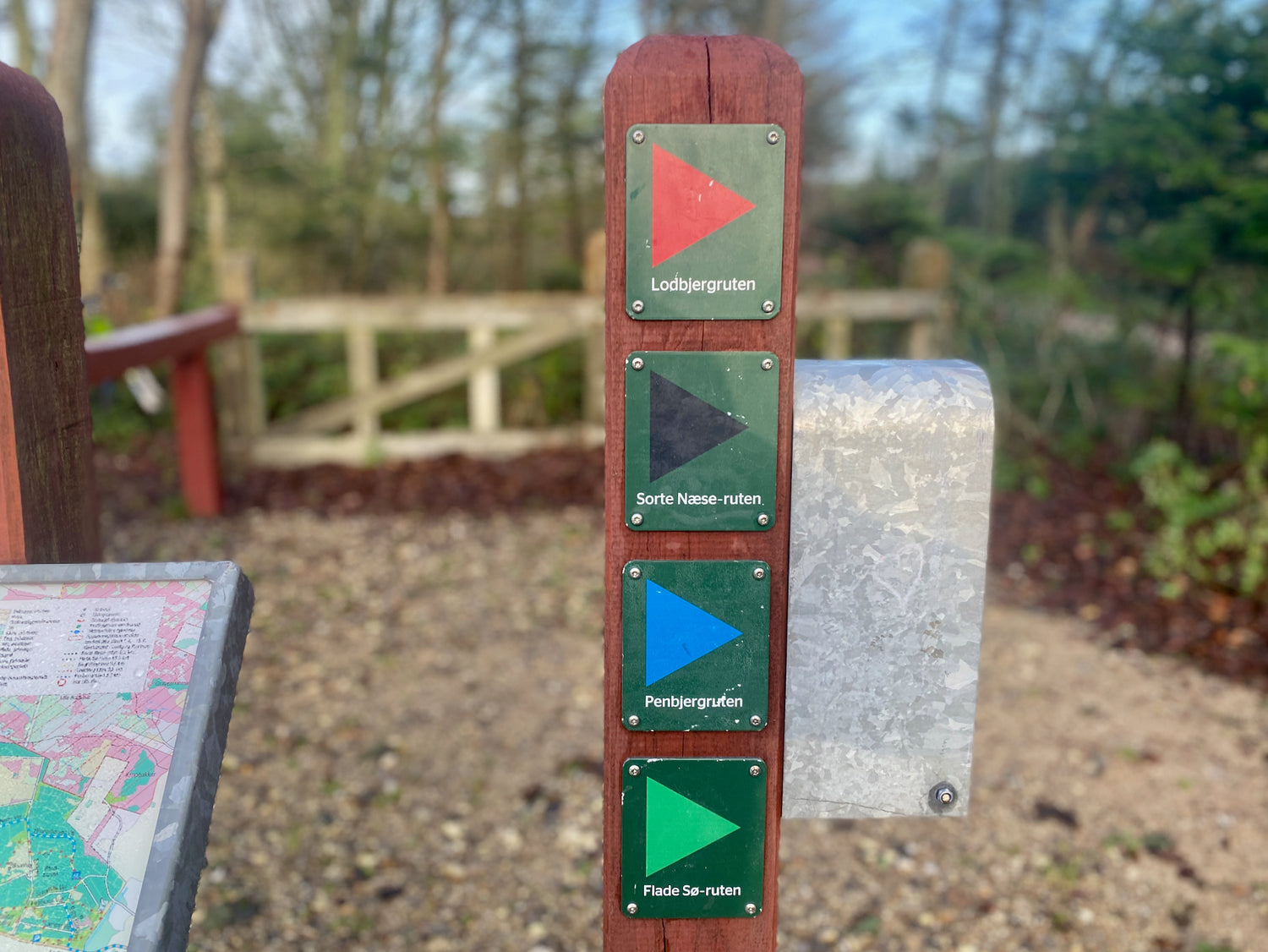
The Penbjerg route follows the first part of the road from Lodbjerg Lighthouse and then continues along the path to the north over the dune to the Penbjerg viewpoint.
The route then goes east to Redningsvejen and follows this back.
Isbjerg route 2.6 km
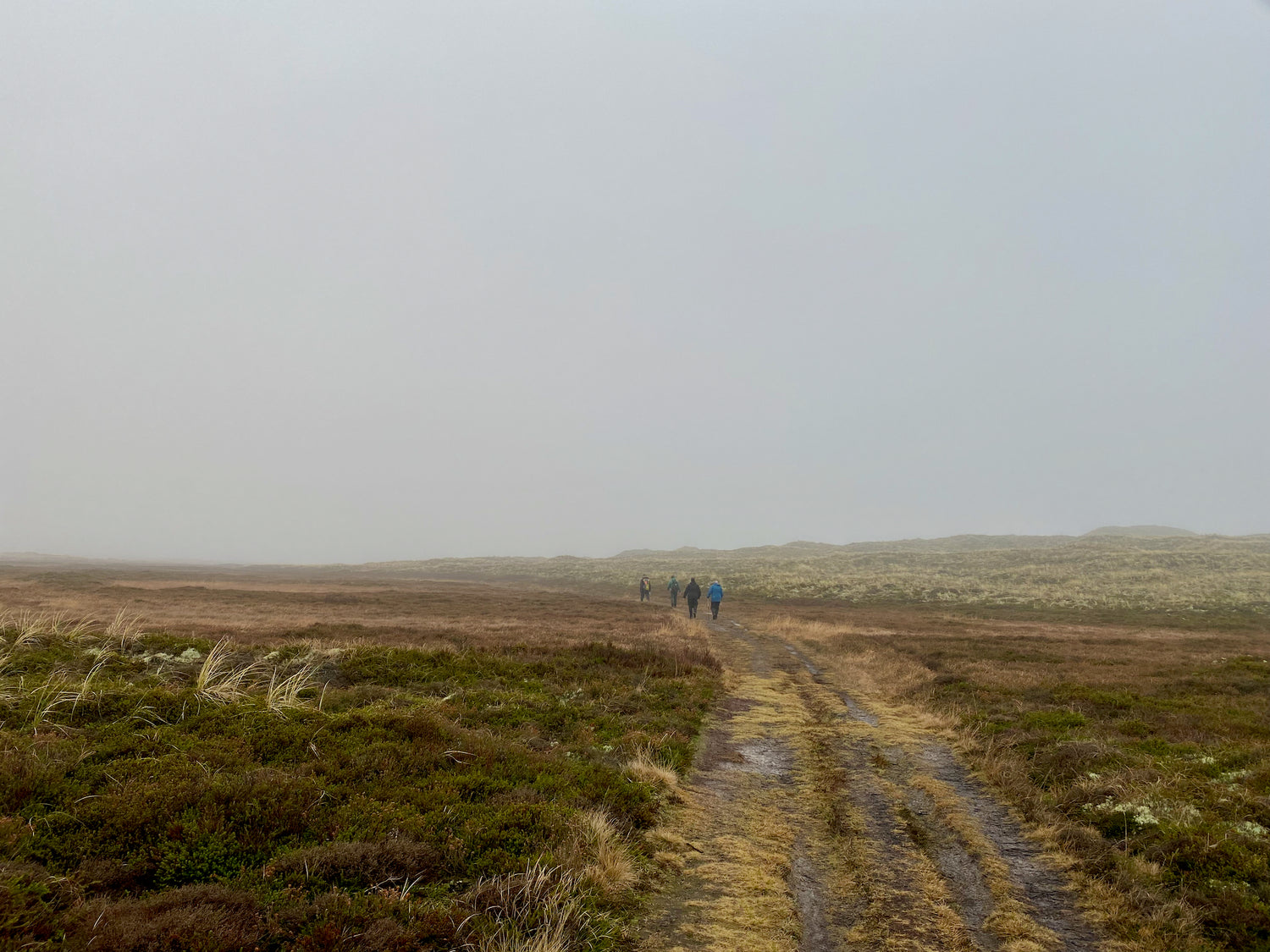
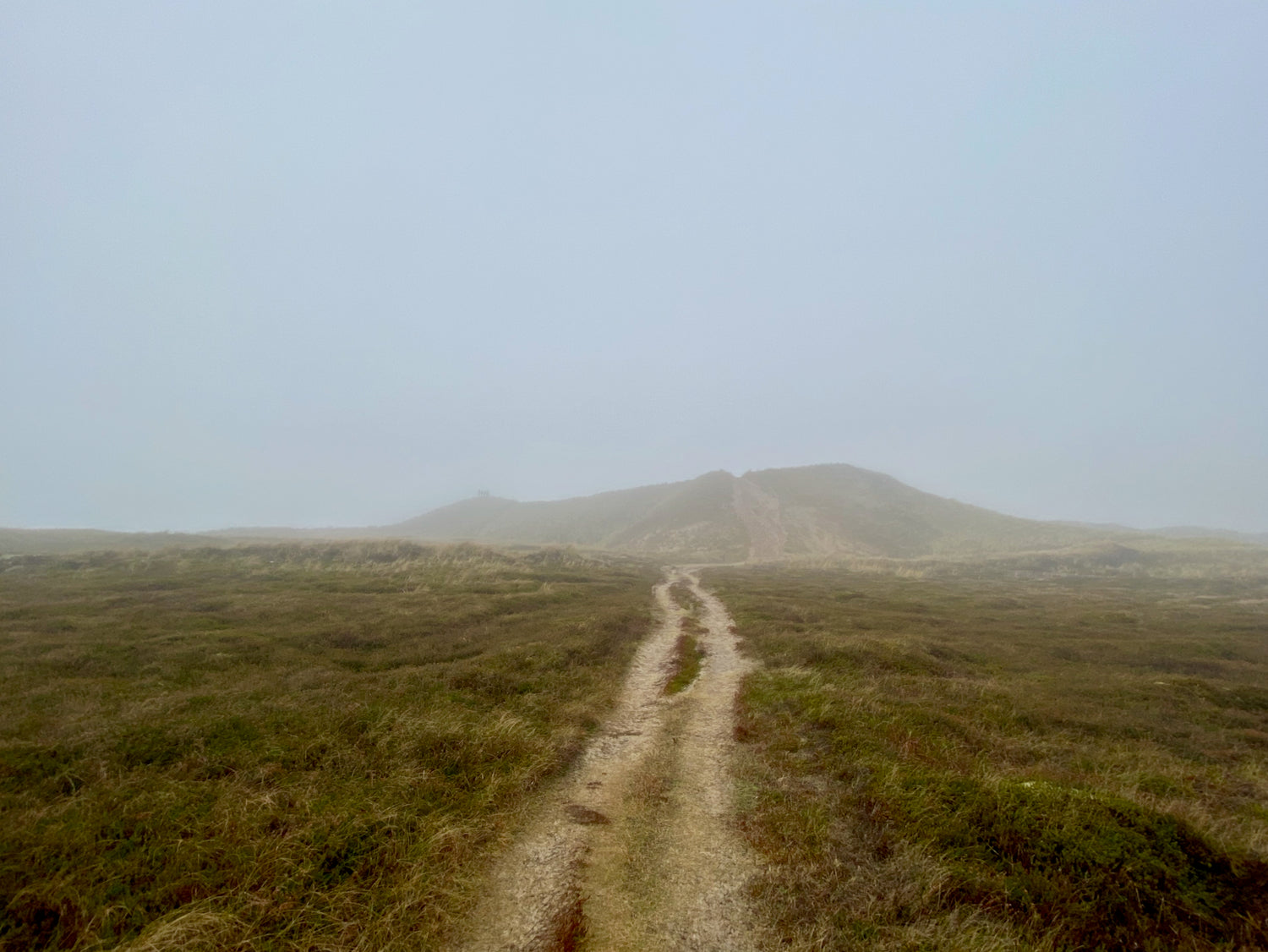
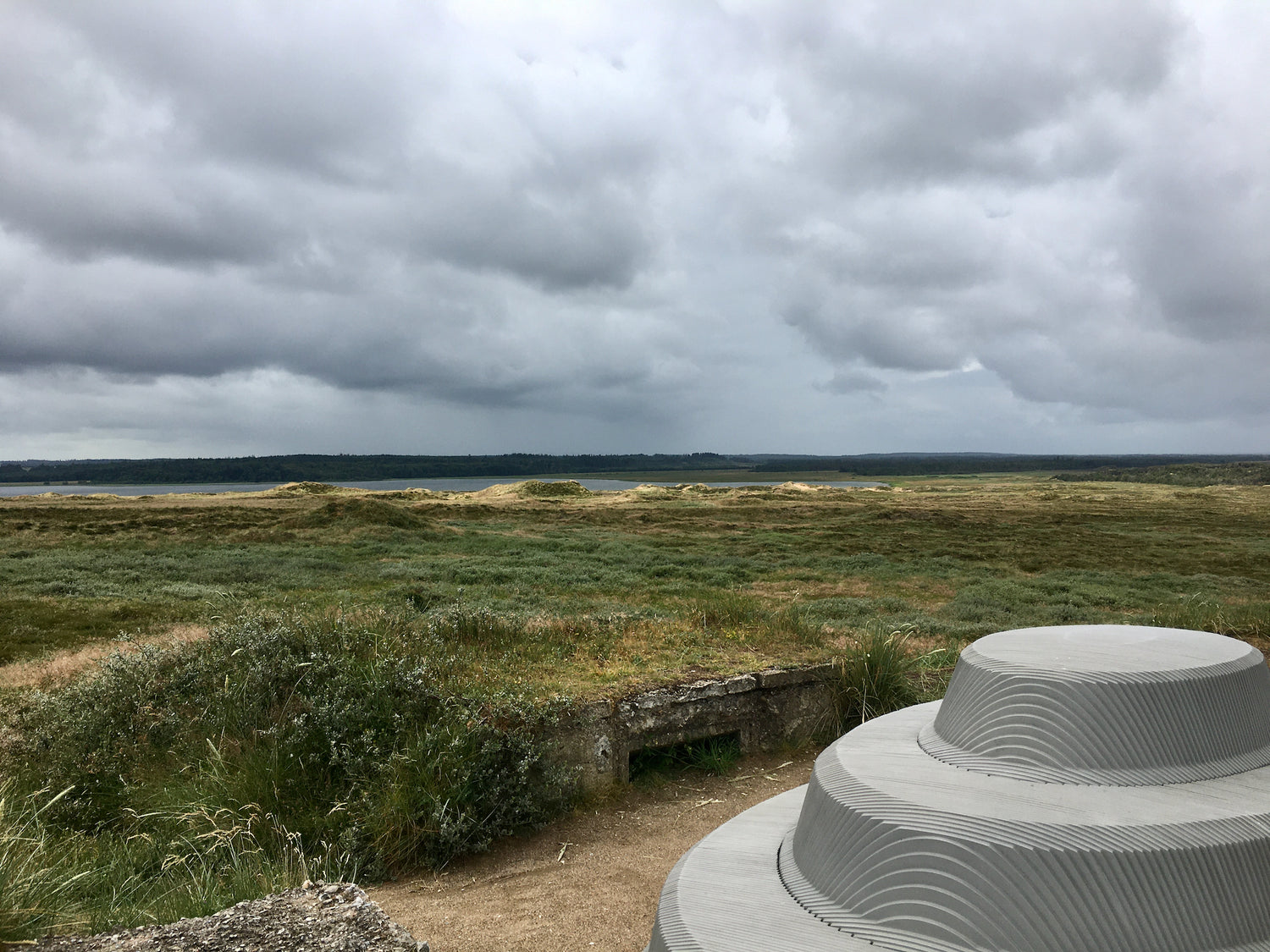
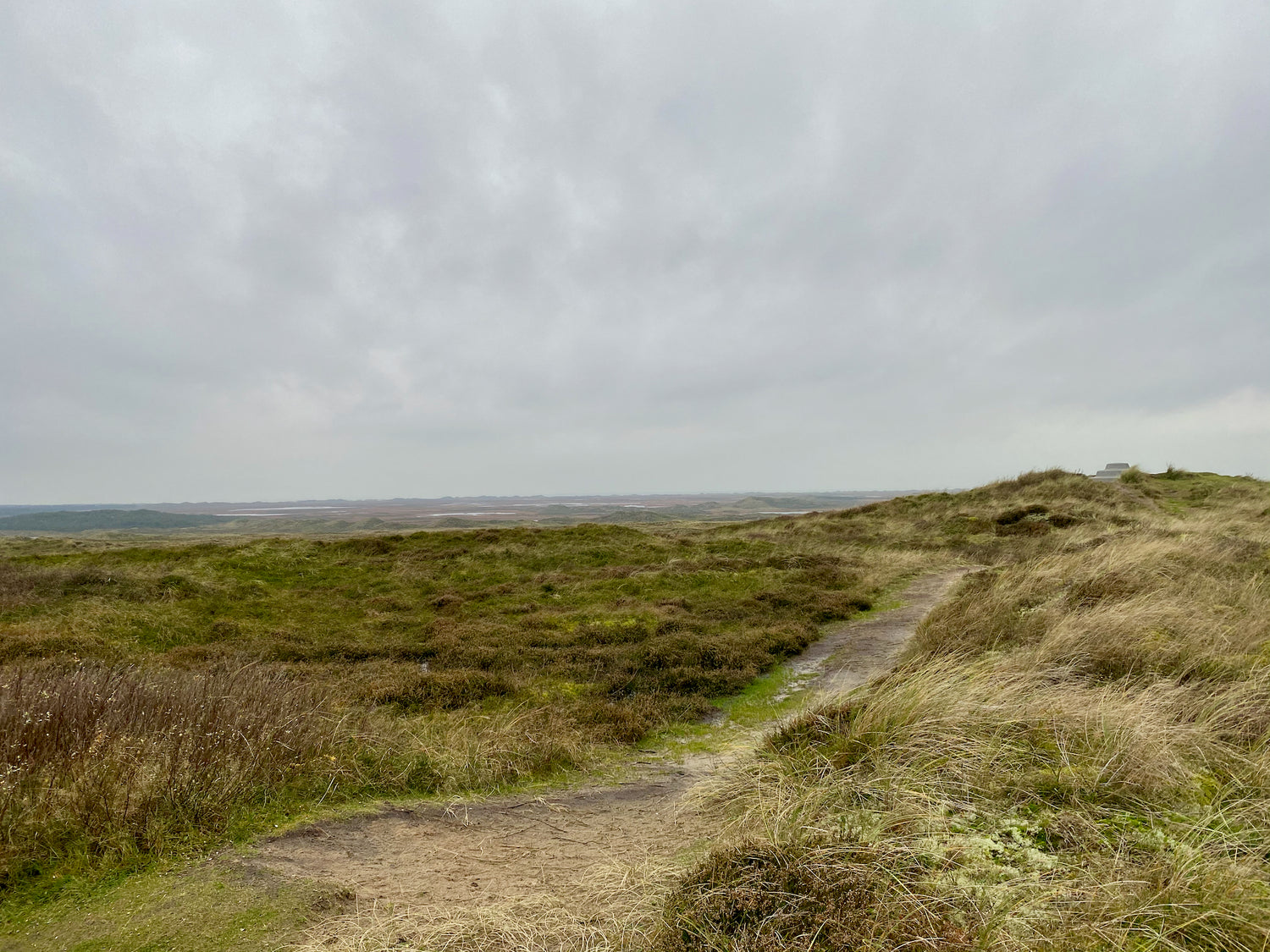
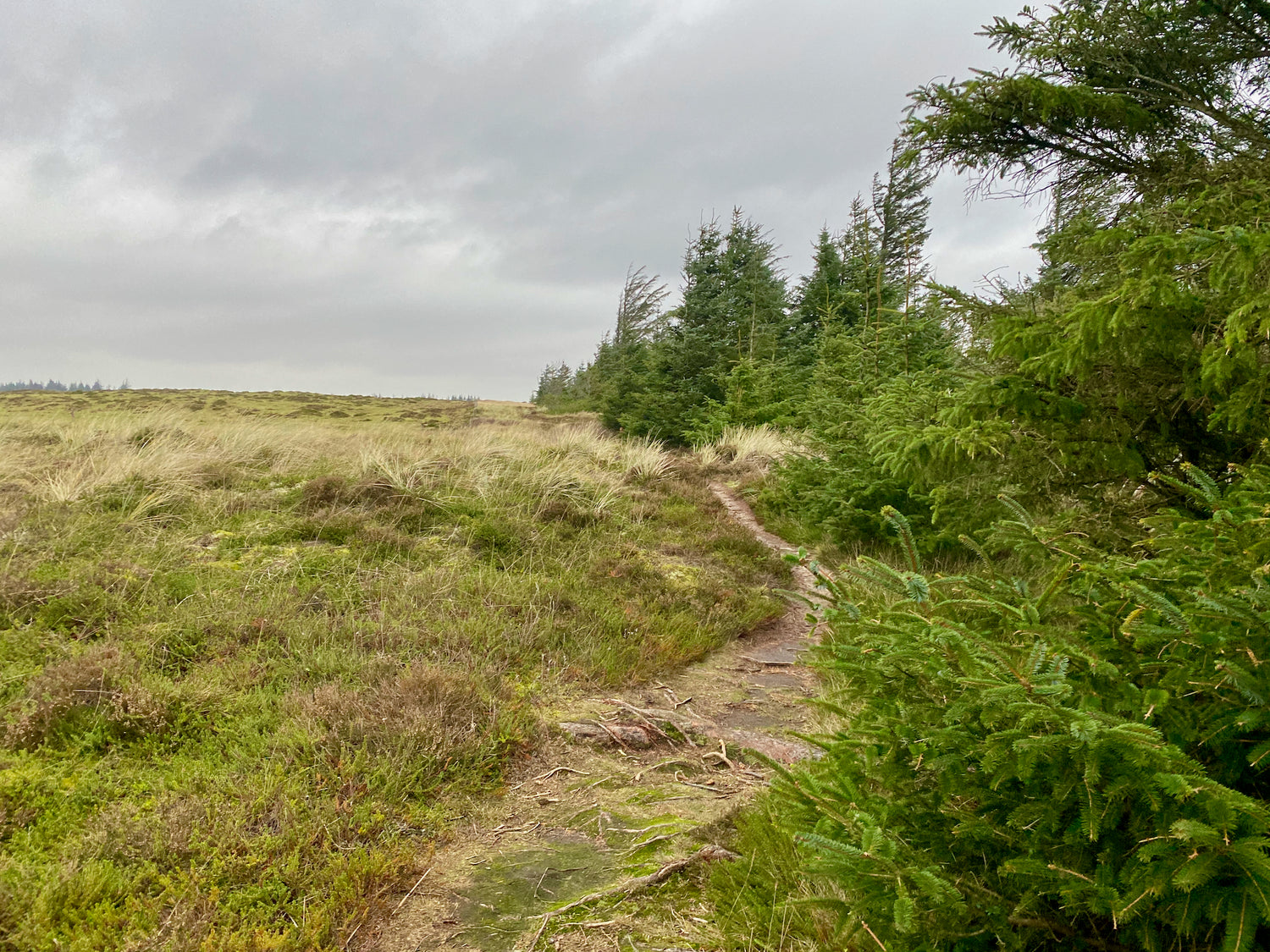
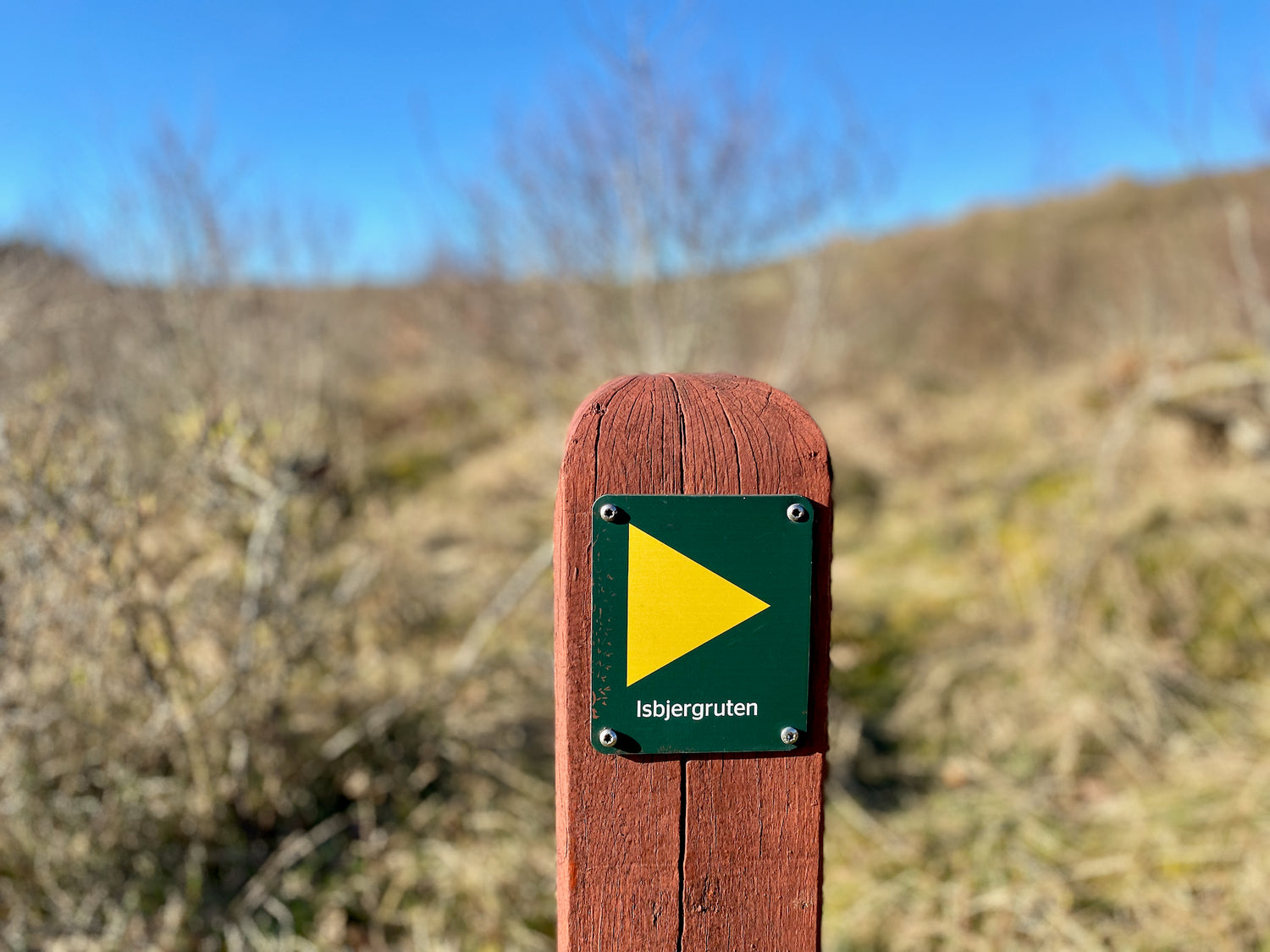
The Isbjerg route goes to Isbjerg, which is Hanstholm Wildlife Reserve's highest point 56 m above sea level.

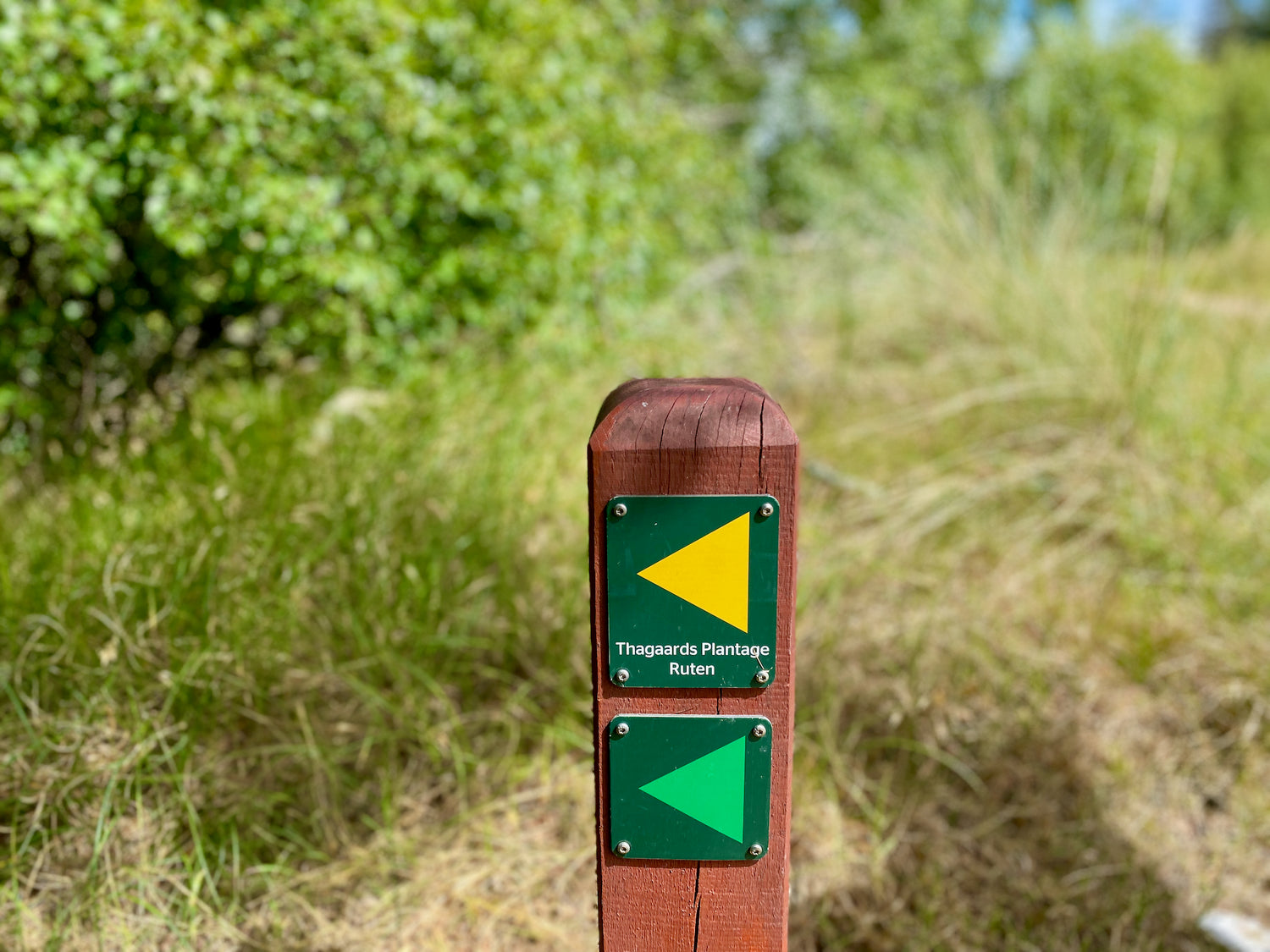
Thagaards Plantage route 2.9 km
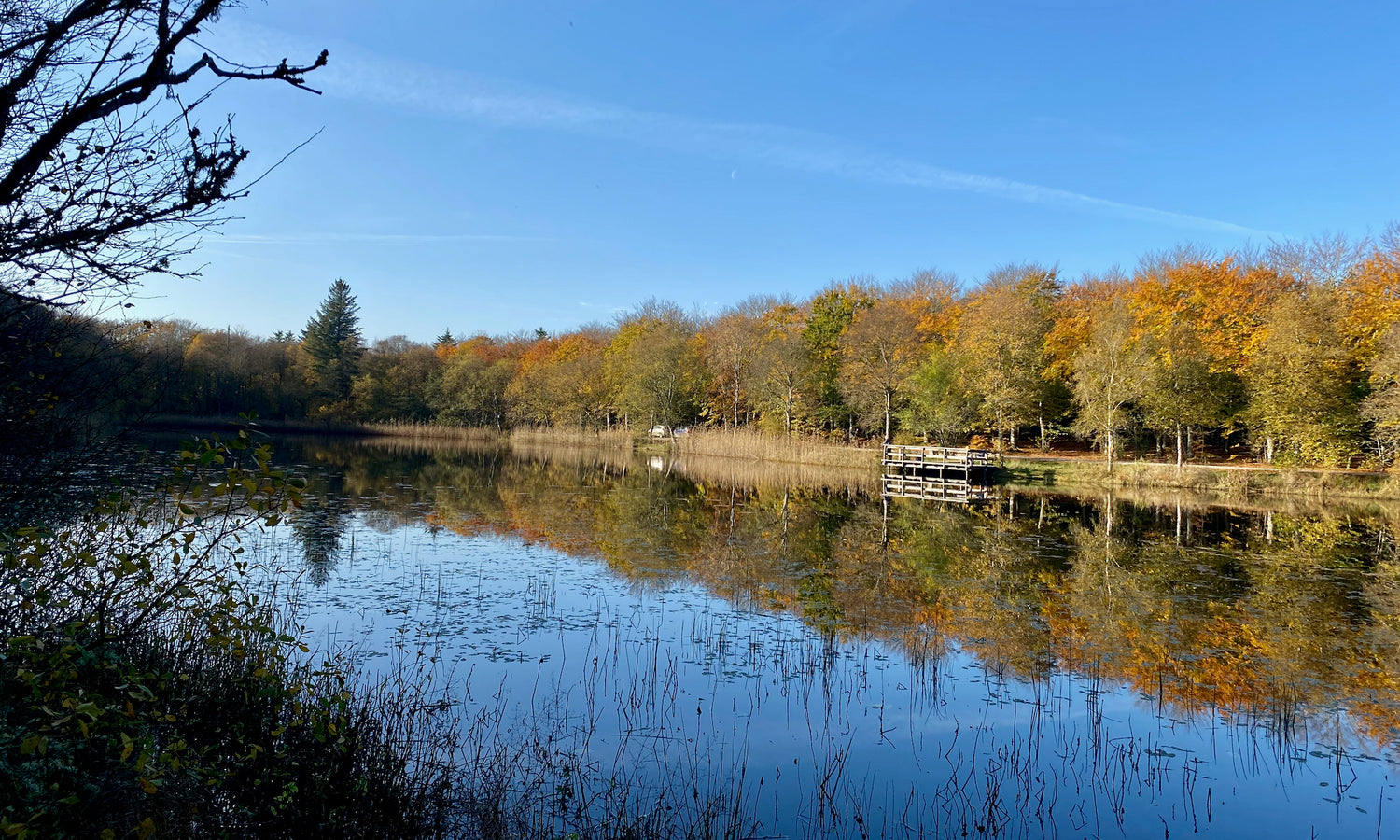
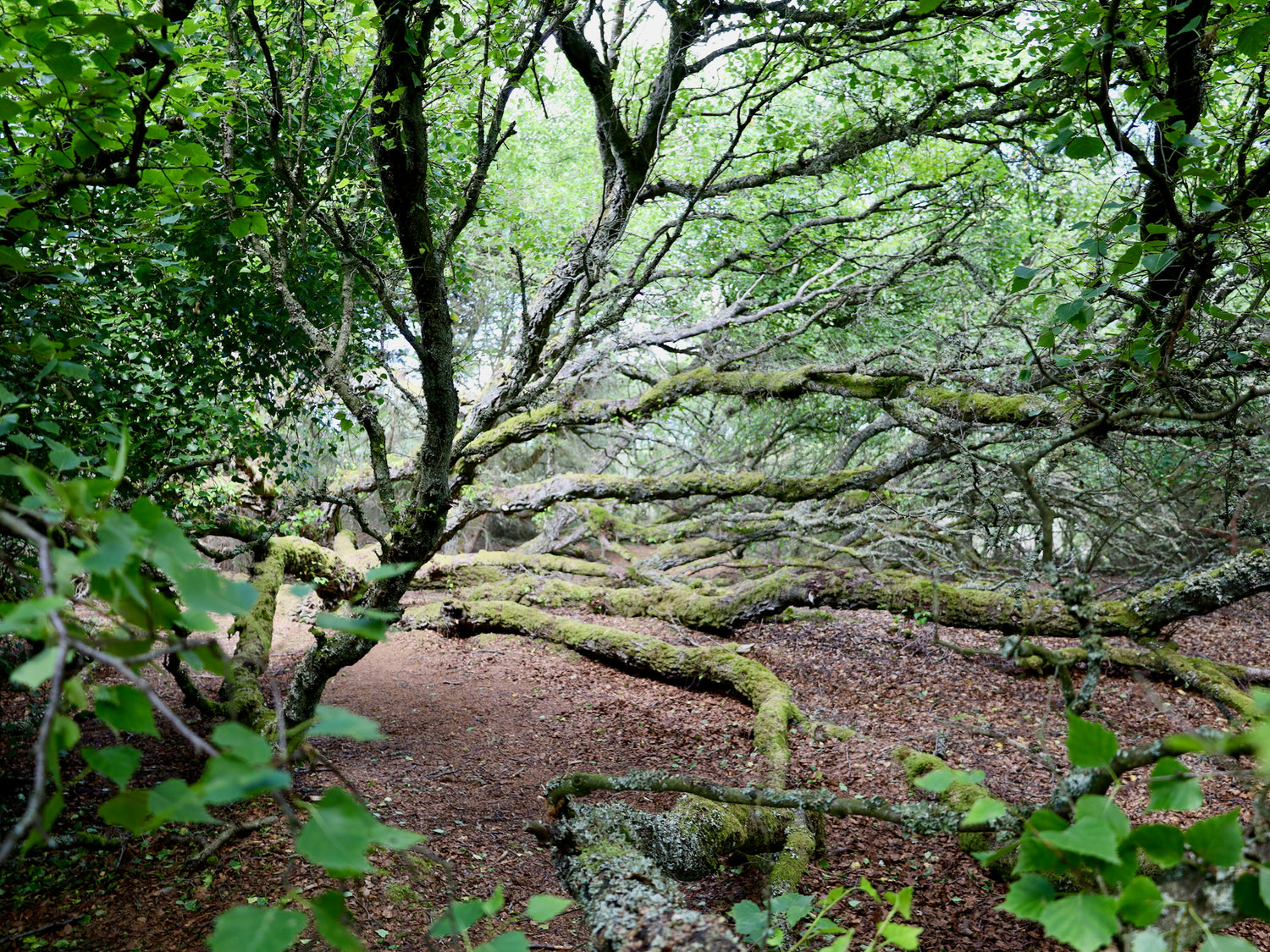
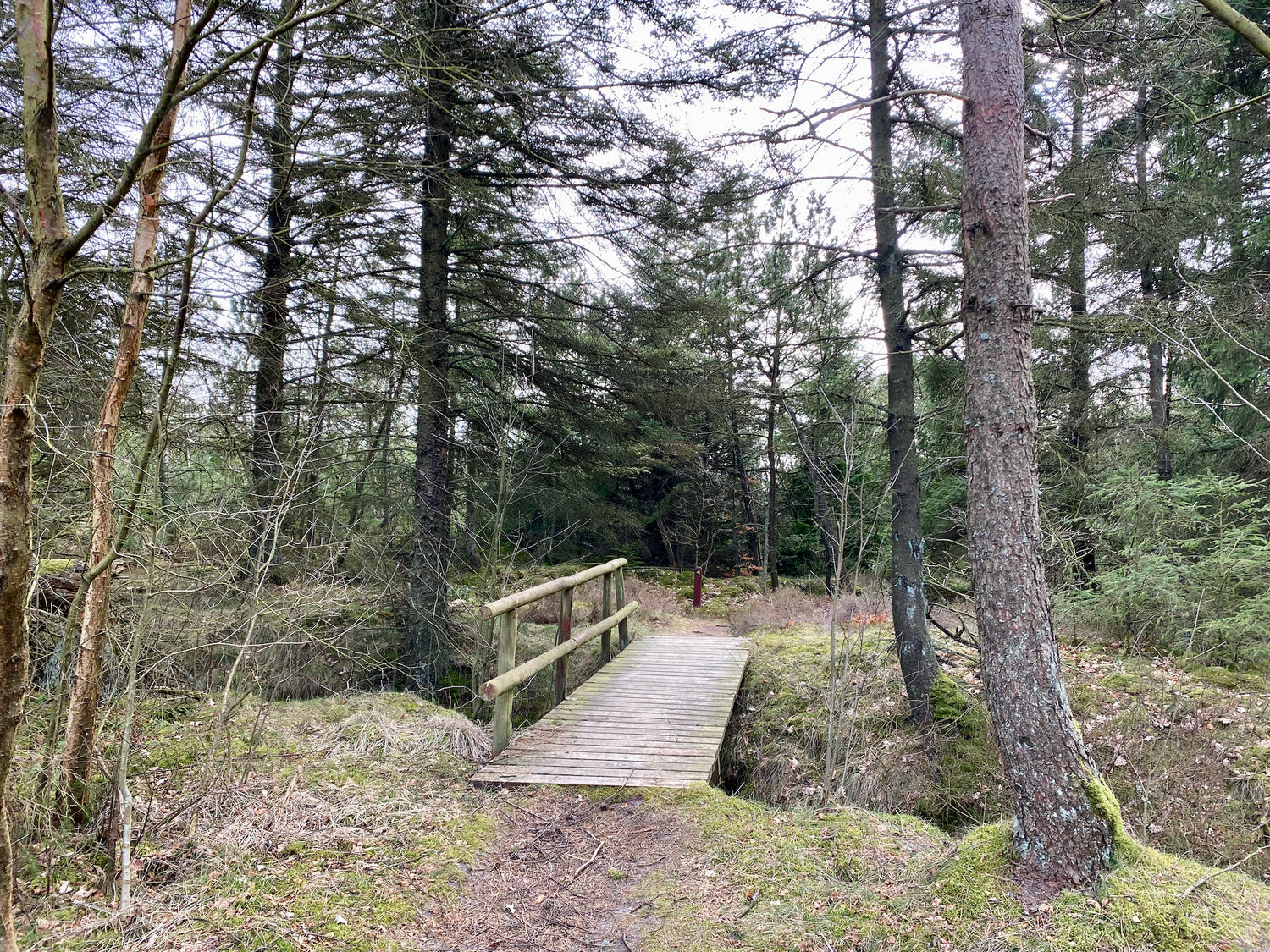
The Thagaards Plantage route is a fantastic hike through one of Thy's oldest plantations, and along the way you get the feeling of being in a fairytale forest.
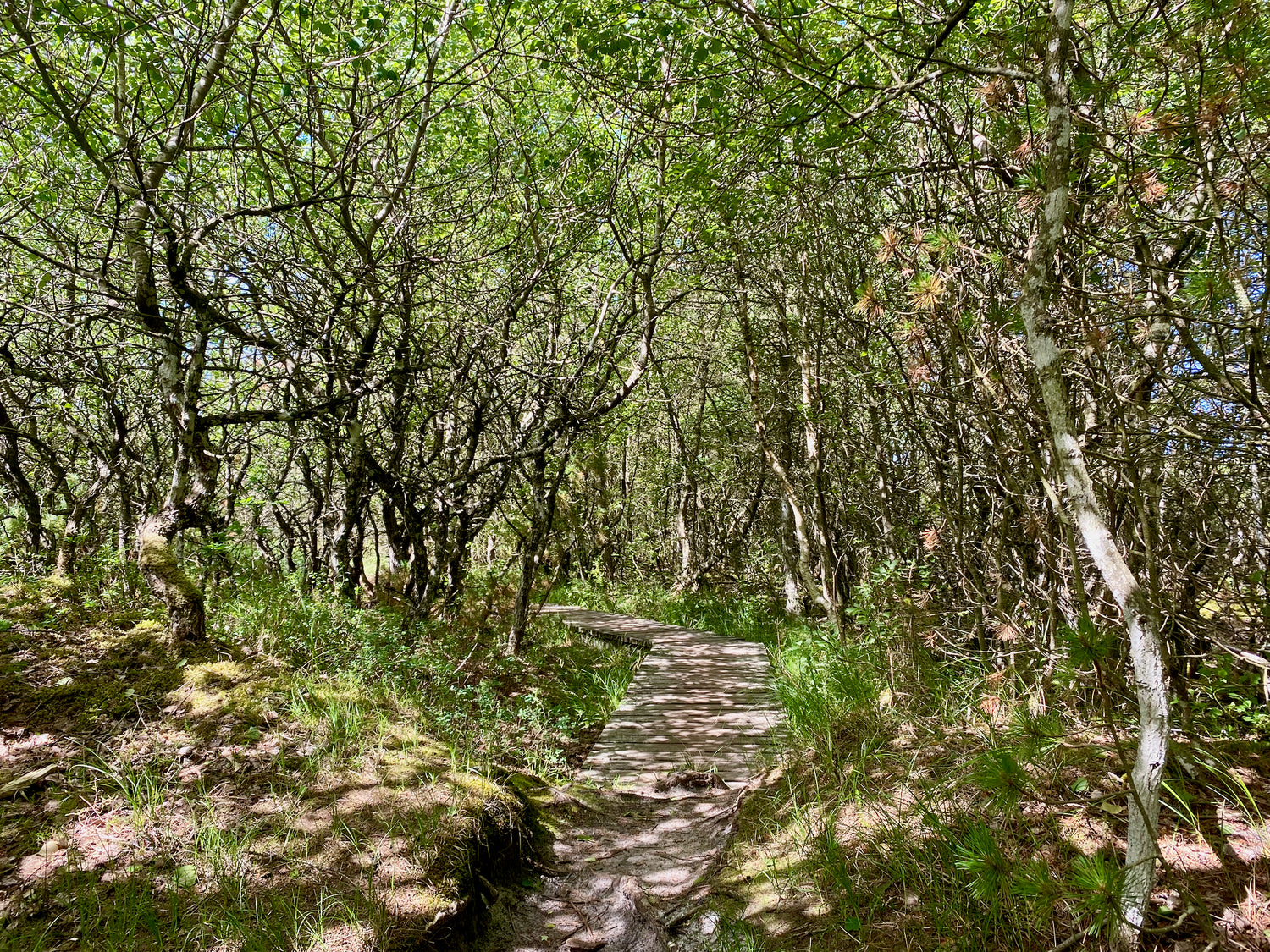
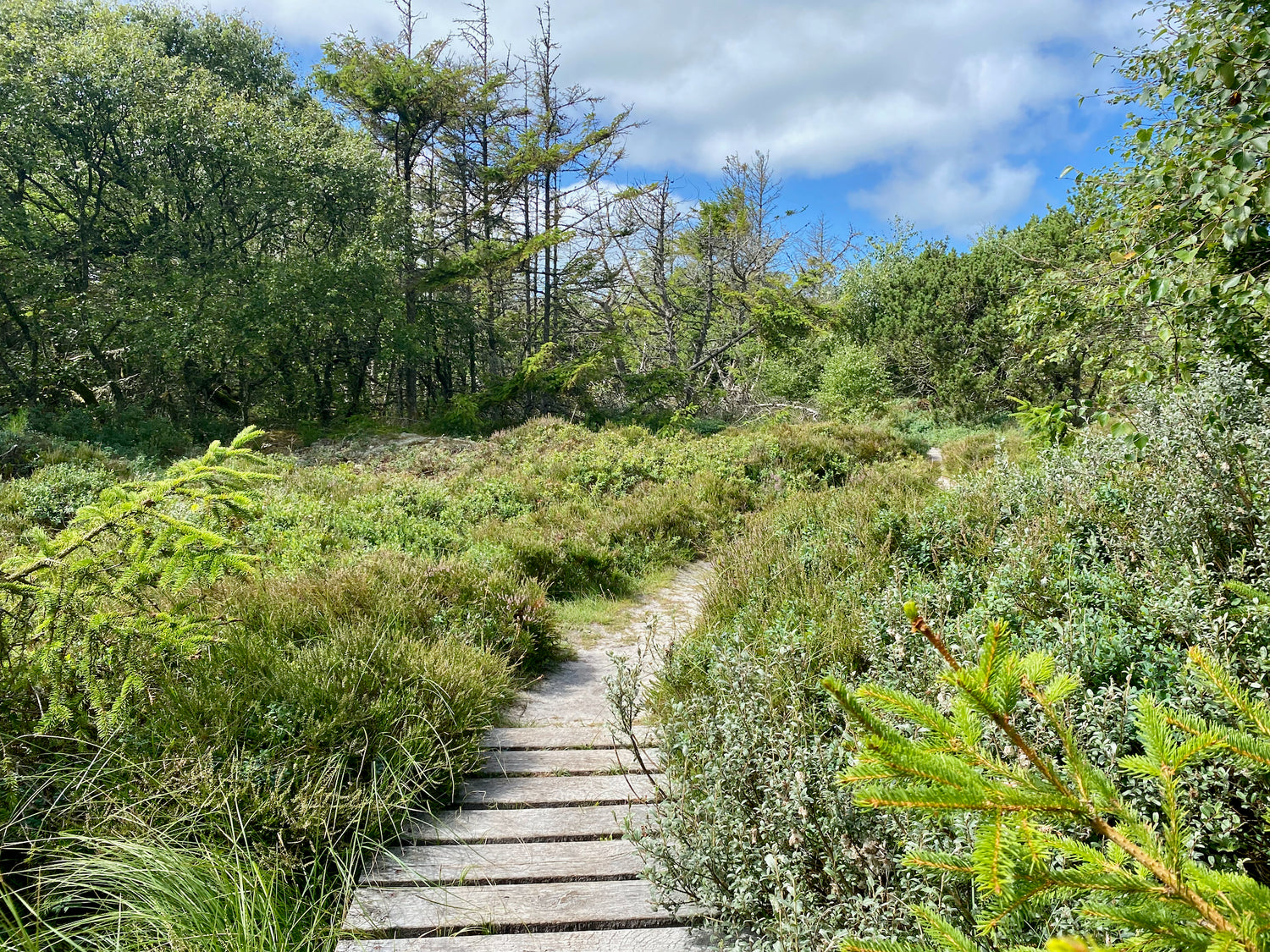
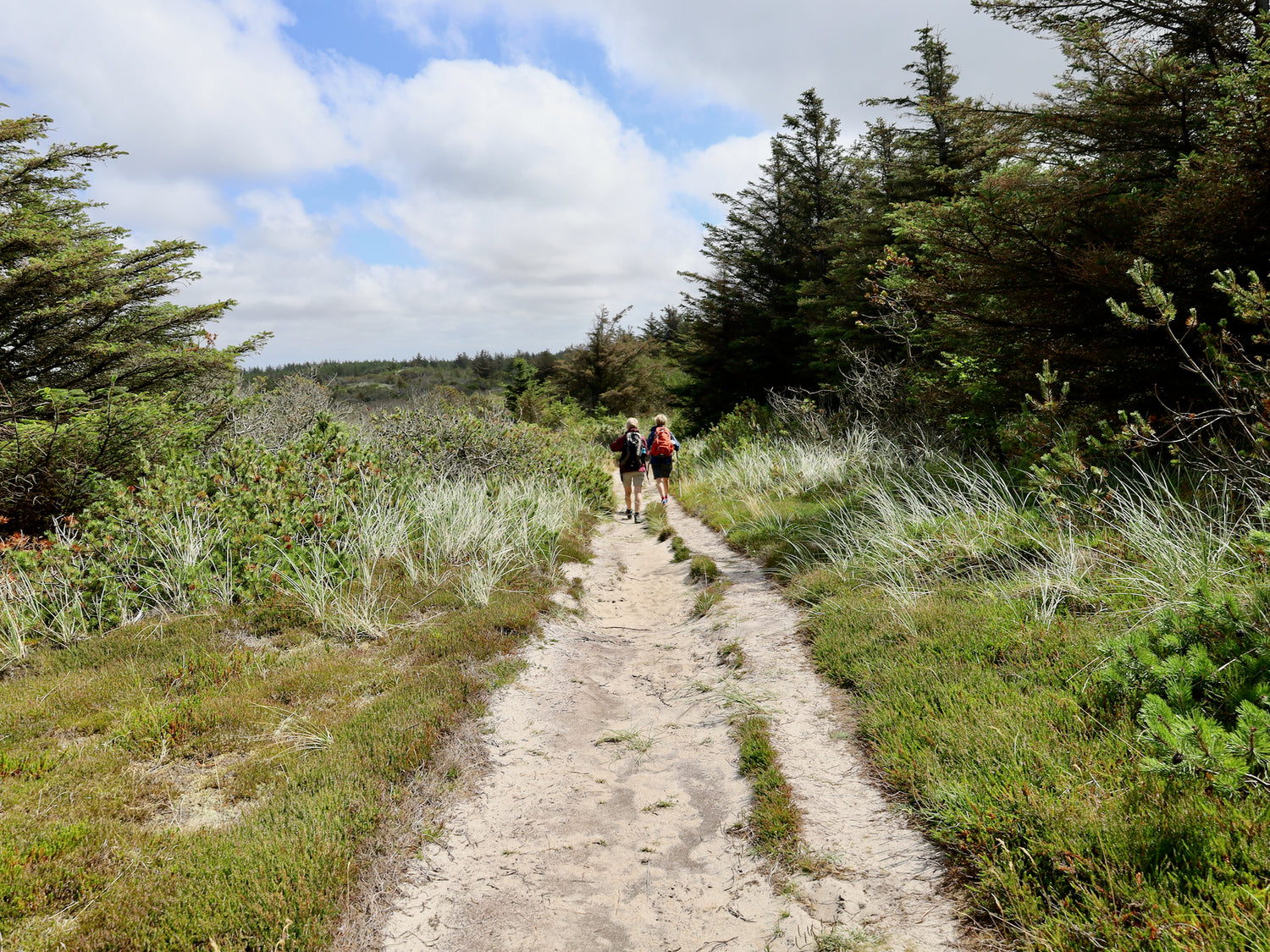
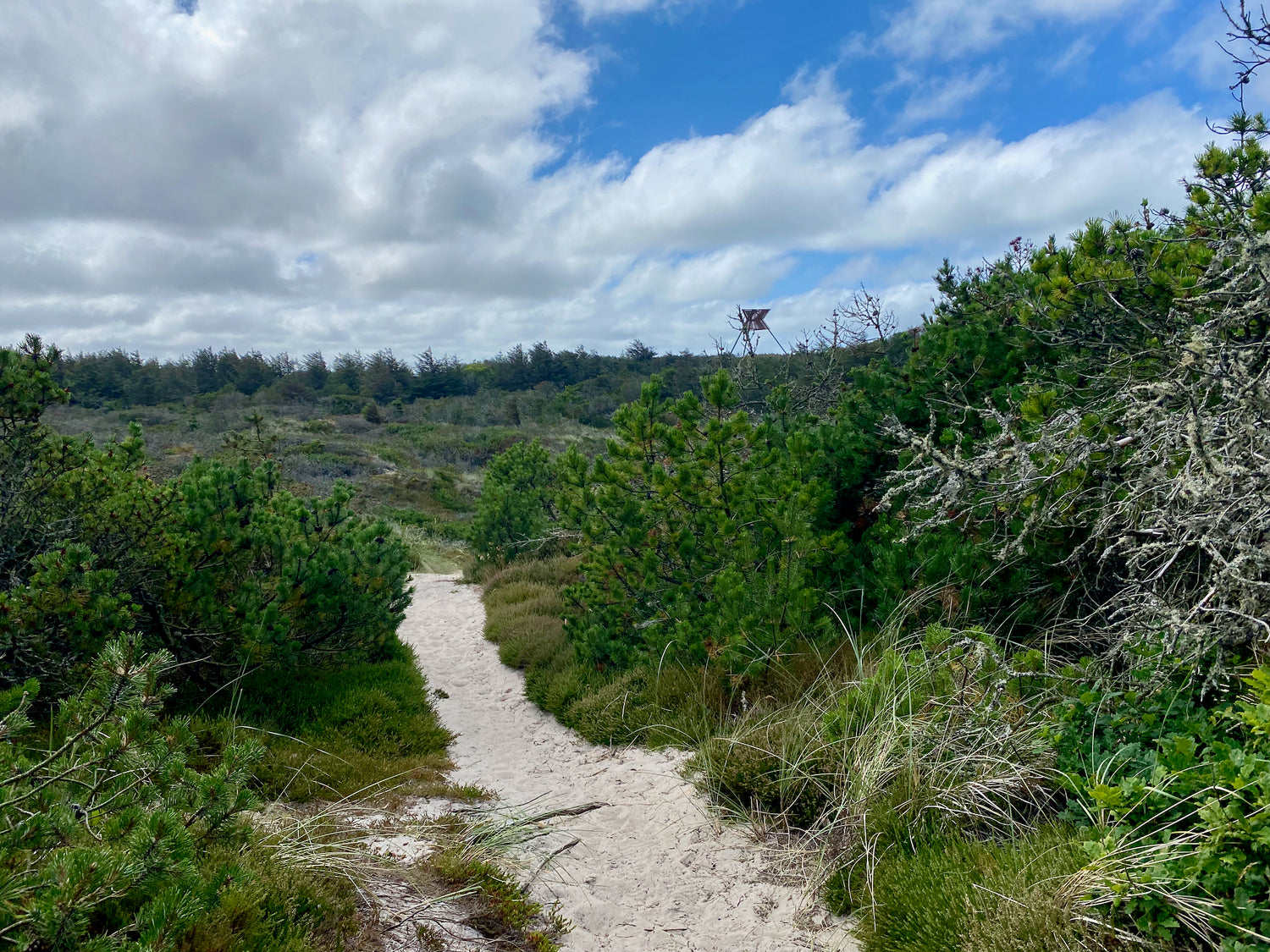
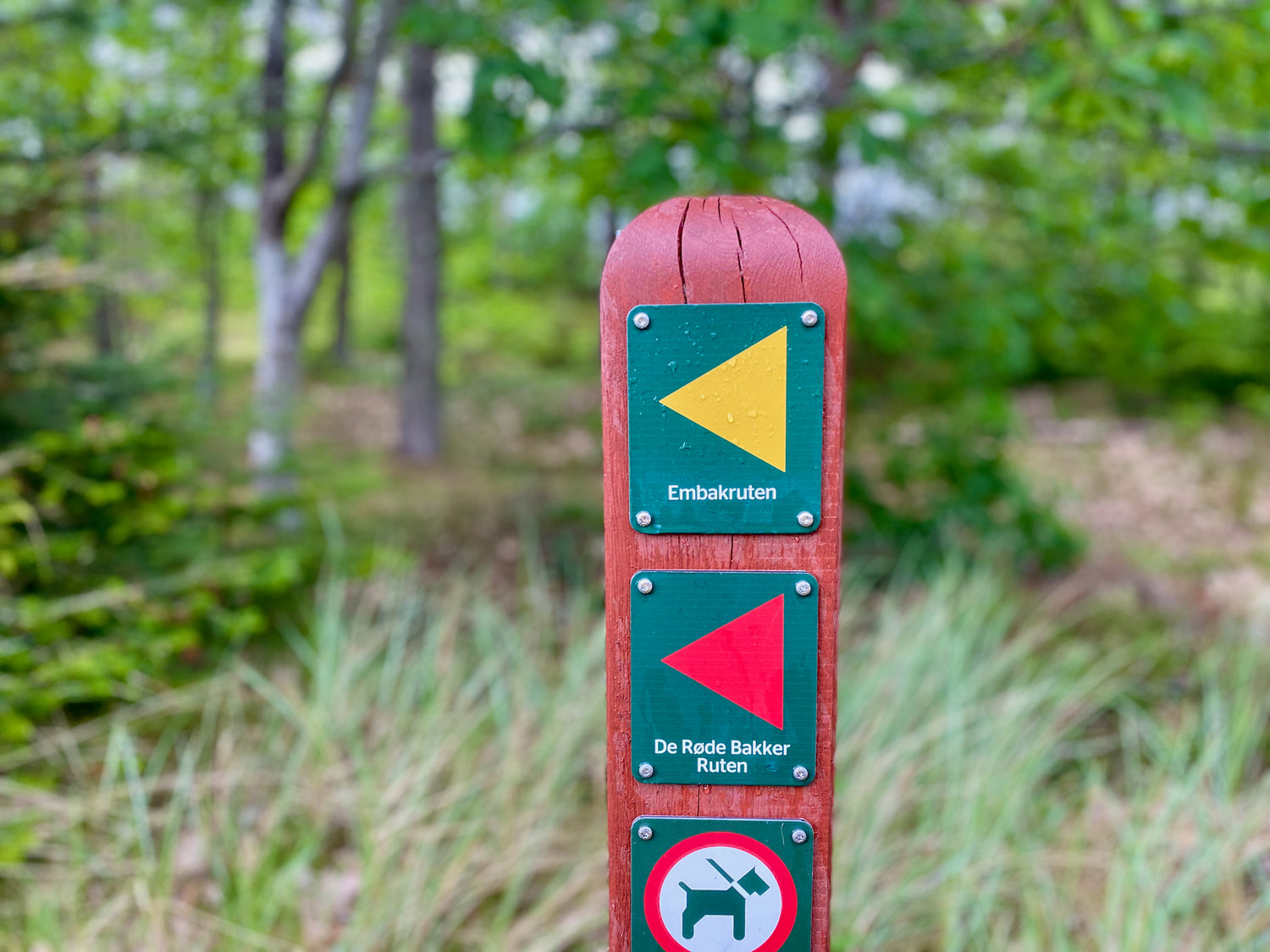
Embak route 5.6 km
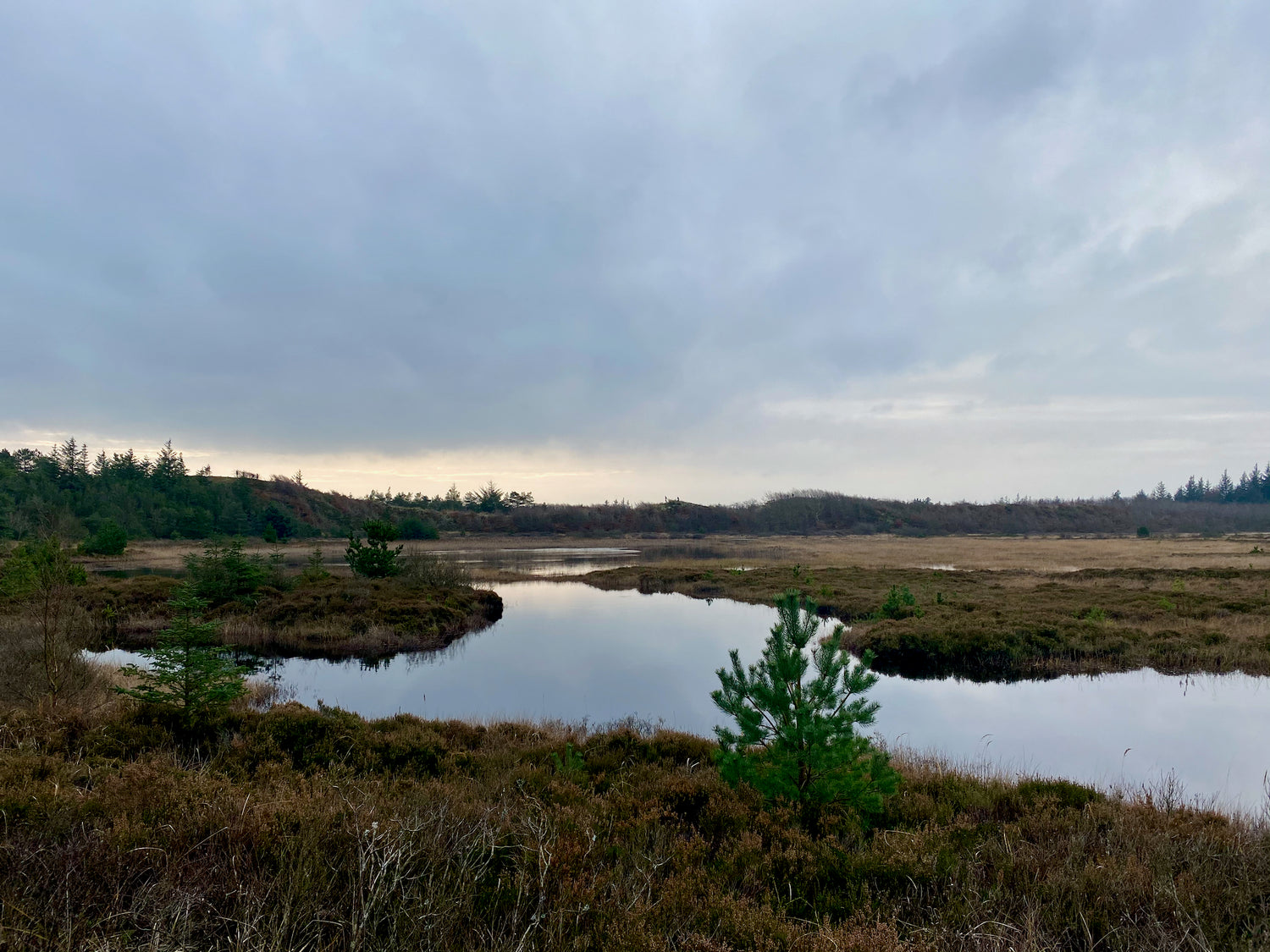
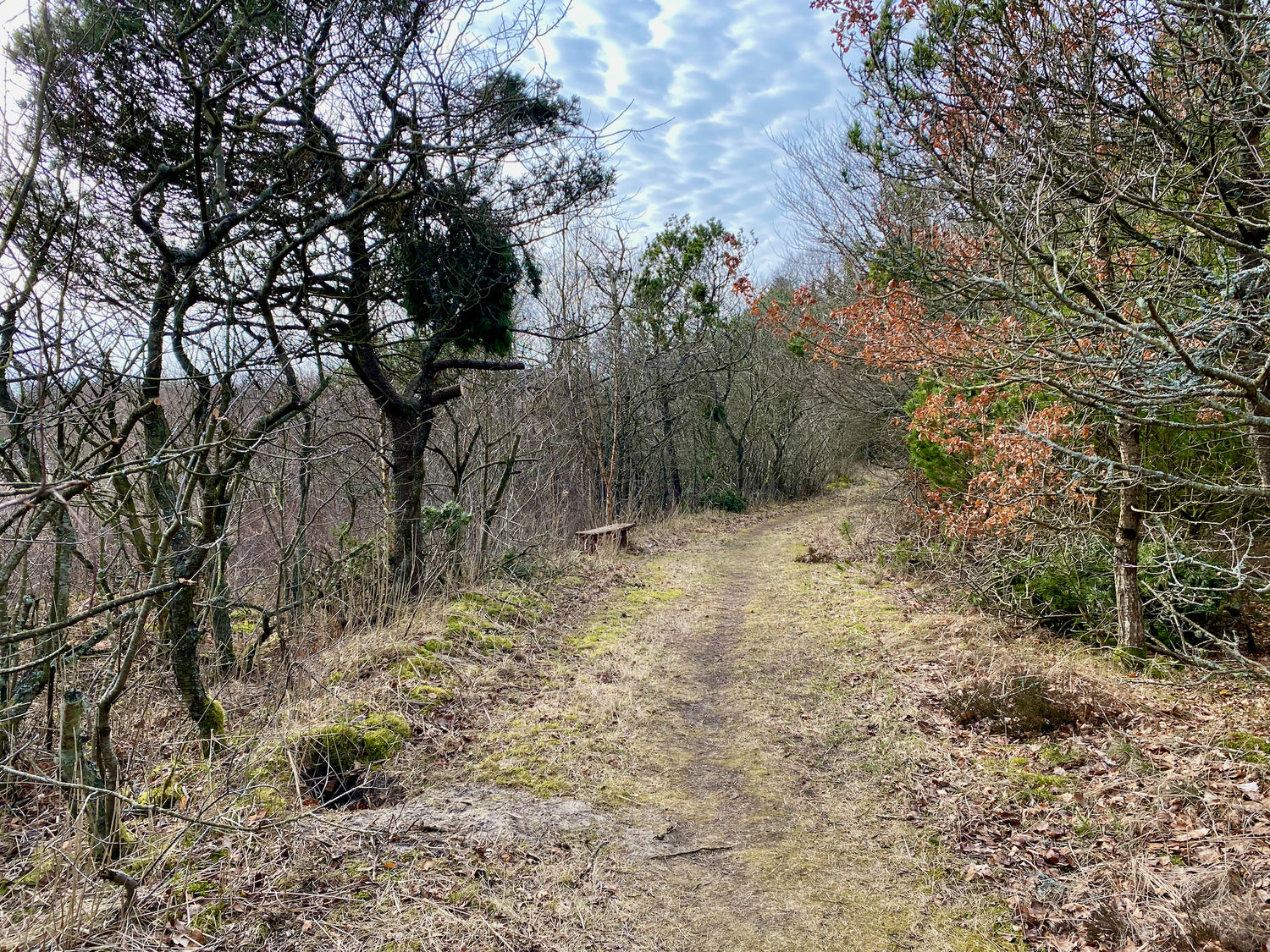
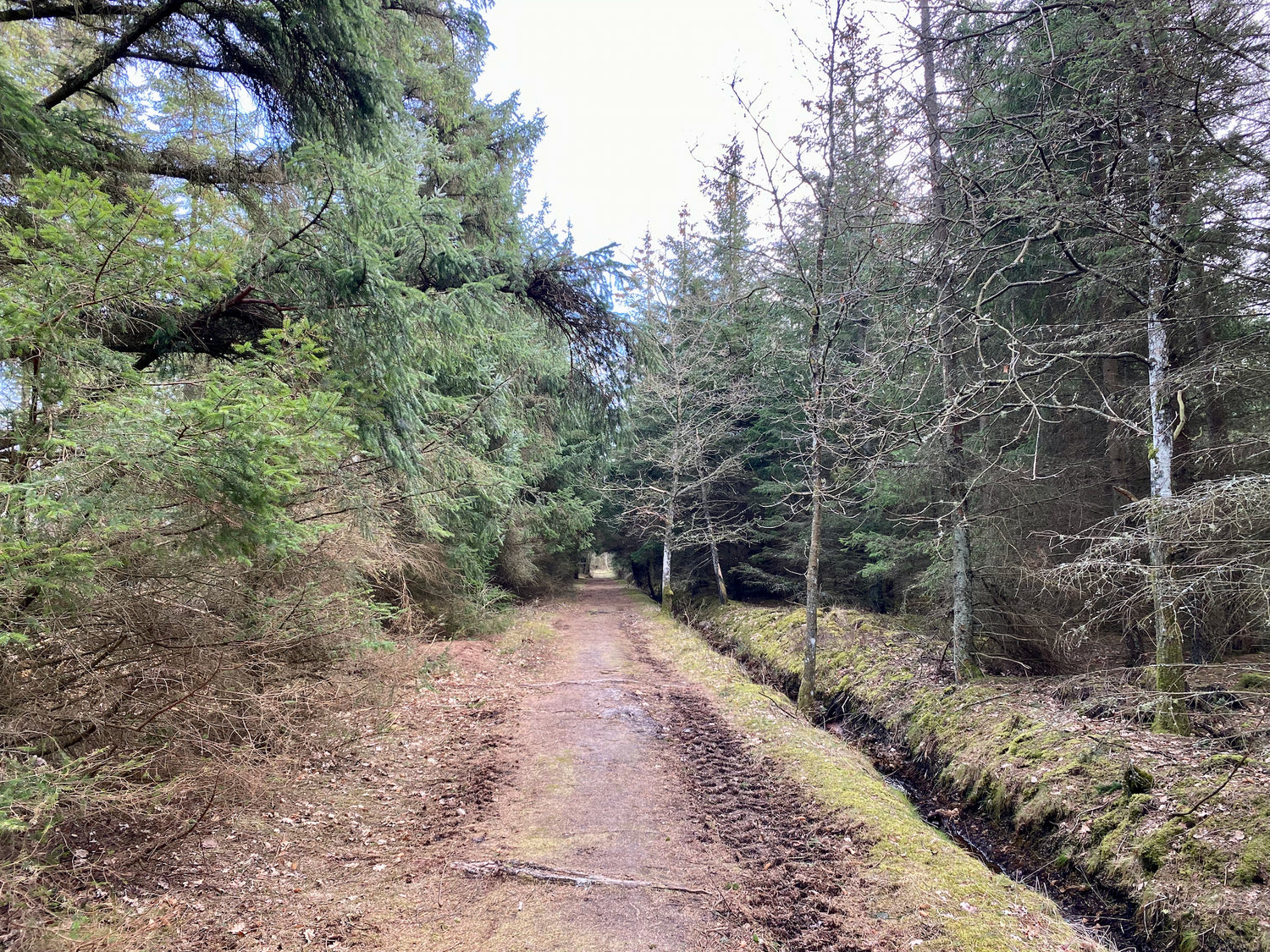
The Embak route is a beautiful and varied hiking route that stretches through diverse landscapes. The route contains both wide and narrow forest paths and offers changing terrain, including steep dunes.
Ideal order of the trails in relation to transportation
We recommend that you walk the hiking trails in the following order to minimize the distance between trails:
- Penbjerg route 5.7 km
- Embak route 5.6 km
Grubebakke route 4.5 km - Thagaards Plantage route 2.9 km
- Isbjerg route 2.6 km
You can choose to skip paths so that the distance fits what you want to walk.
For example, if you want to walk 10 km, you simply skip the Penbjerg route and follow the Thagaards Plantage route and the Isbjerg route after you have followed the Grubebakke route.
Be aware:
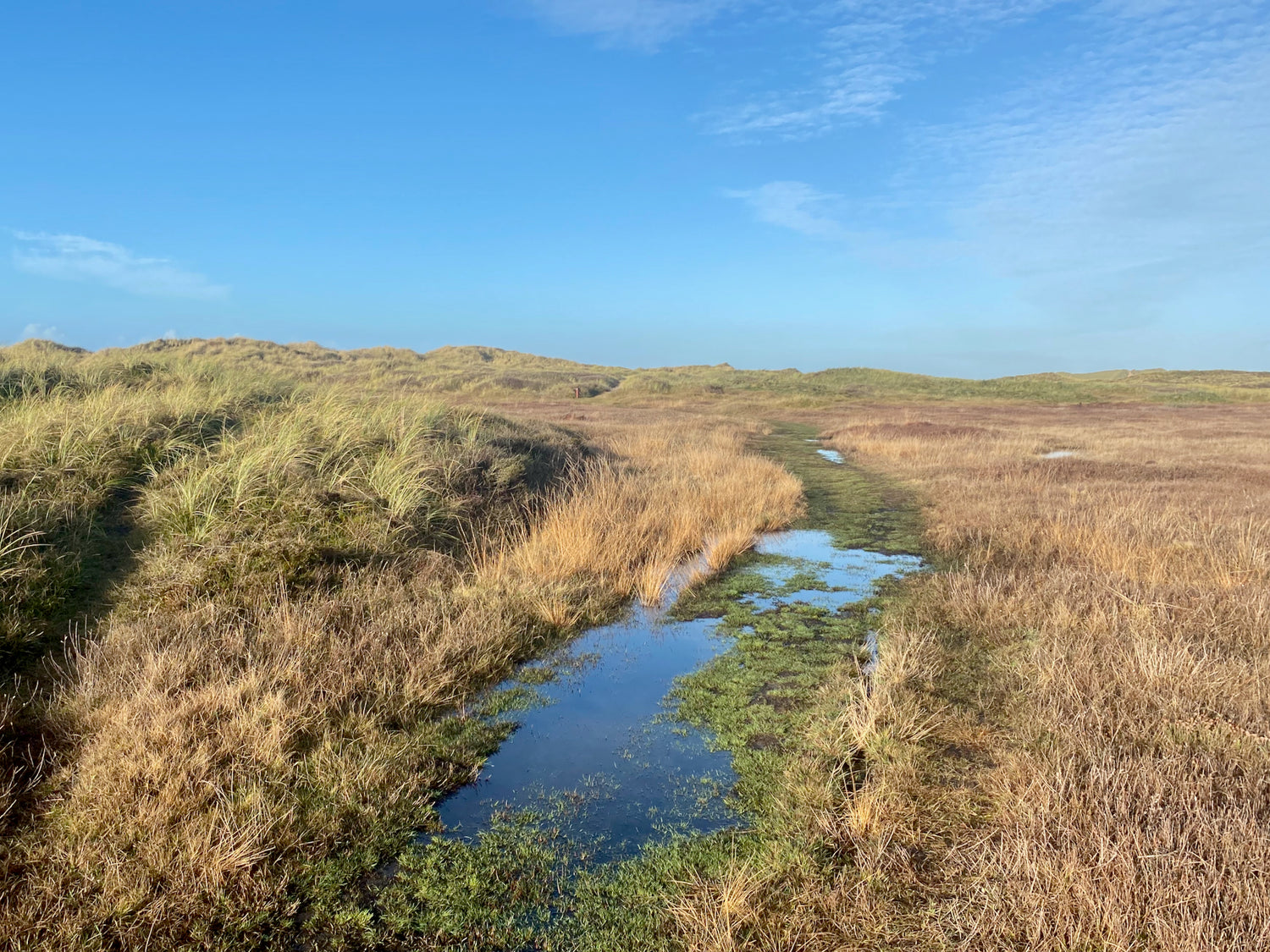
You must be prepared for the fact that there may be a lot of water on the Penbjerg route after heavy rain for longer periods. You can almost always find an alternative route around the water.
Experiences and sights
-
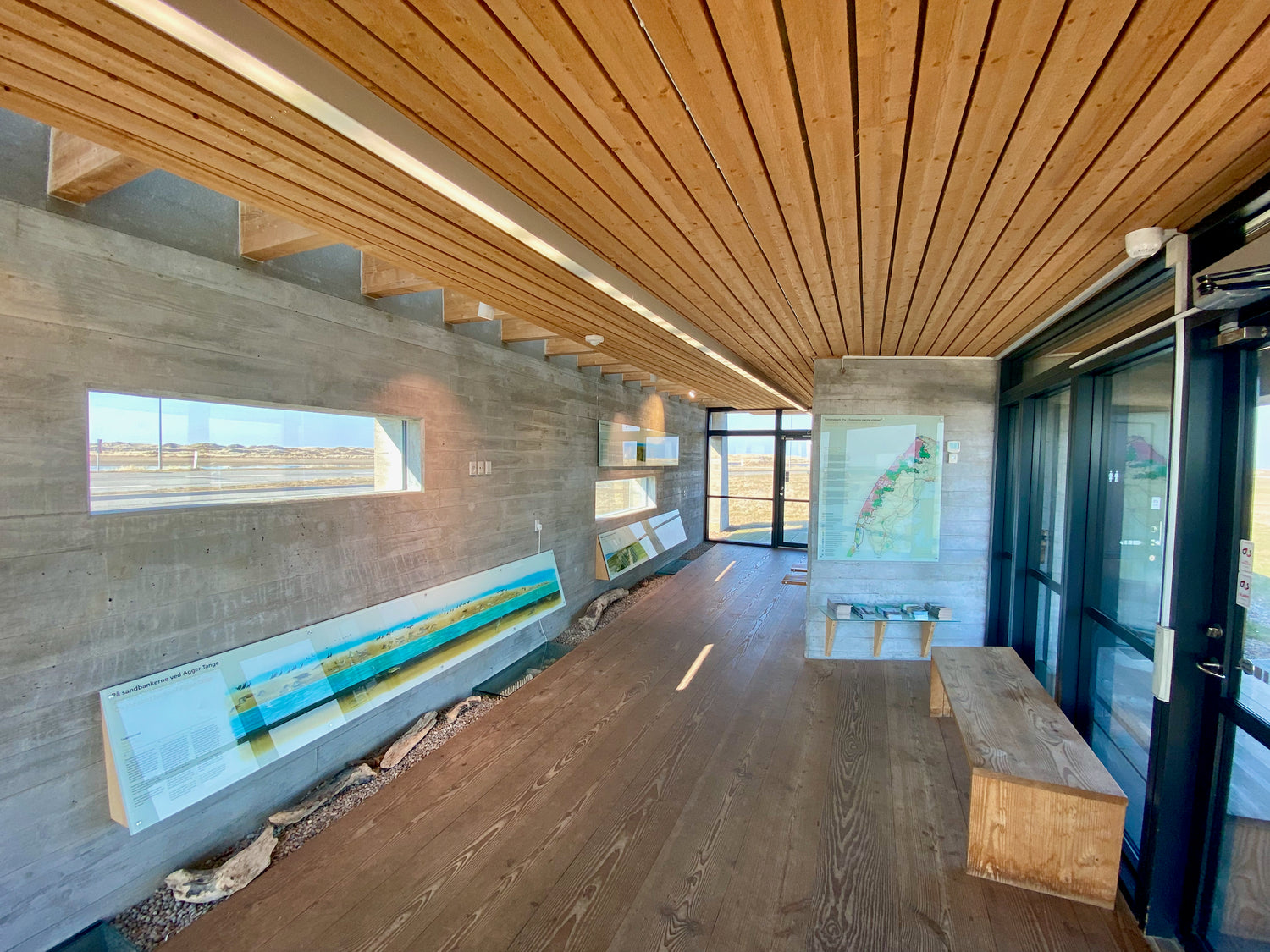
Agger Tange with Svaneholmhus
Agger Tange with the information house Svaneholmhus is the southernmost tip of Thy and the National Park.
The landscape on the isthmus and just east of it differs, with lagoons and beach meadows distinct from the natural types in the rest of the national park..
It is one of Northern Europe's most important resting areas for waterfowl and at the same time an important breeding site for endangered meadow birds. Spotted seals are often seen on the banks at Agger Tange. -
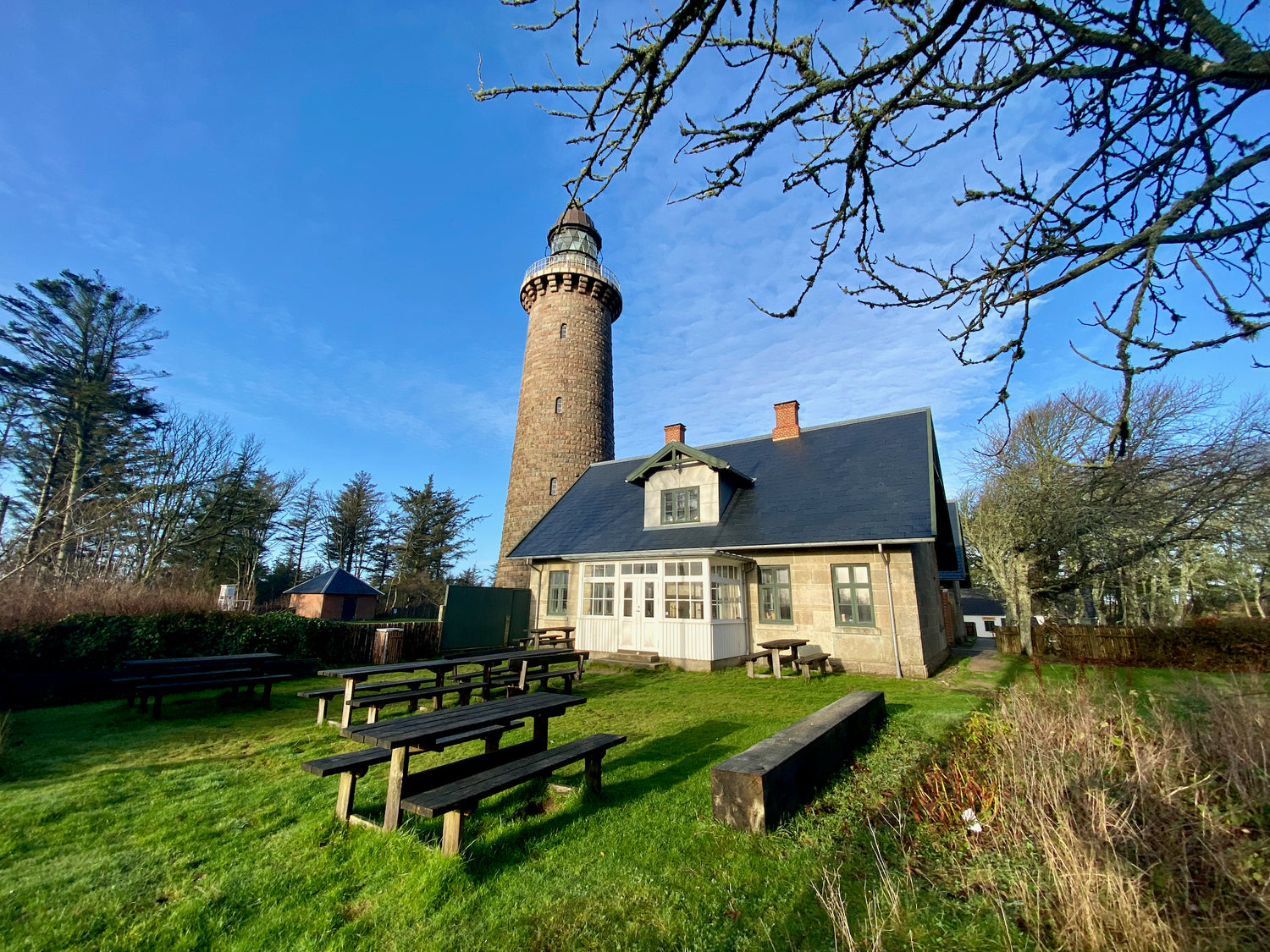
Lodbjerg Lighthouse
Lodbjerg Lighthouse was built in 1883 from beautiful granite stones from Bohus in Sweden. The lighthouse is 35 m high and in clear weather the view from the lighthouse is magnificent.
Lodbjerg Lighthouse was restored in 2019 and has a nice exhibition with the history of the lighthouse from the beginning of construction to the present day.
In the old lighthouse keeper's residence at Lodbjerg Lighthouse, there is now a cozy café where you can eat freshly baked home-baked goods and enjoy a good cup of coffee or tea. -
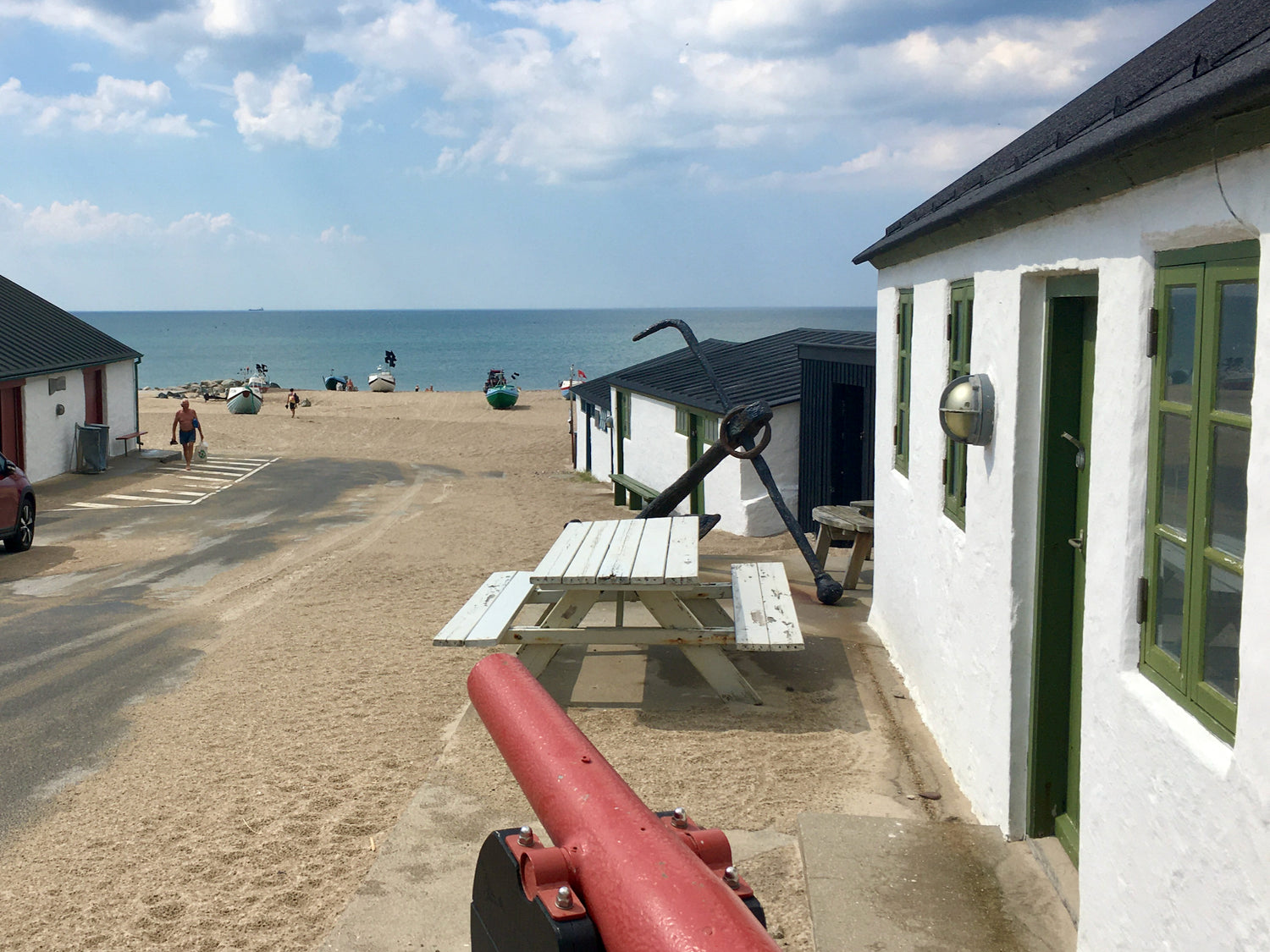
Stenbjerg Landingplads
At Stenbjerg Landingsplads, there is a collection of the distinctive white fishing houses from the time when coastal fishing was conducted from the shore.
The rescue house contains an exhibition about the history of Stenbjerg, featuring a rowing rescue boat from 1892.
One of the fishing houses at Stenbjerg Landing Place houses an information center for the Thy National Park. -
National Park Center Thy
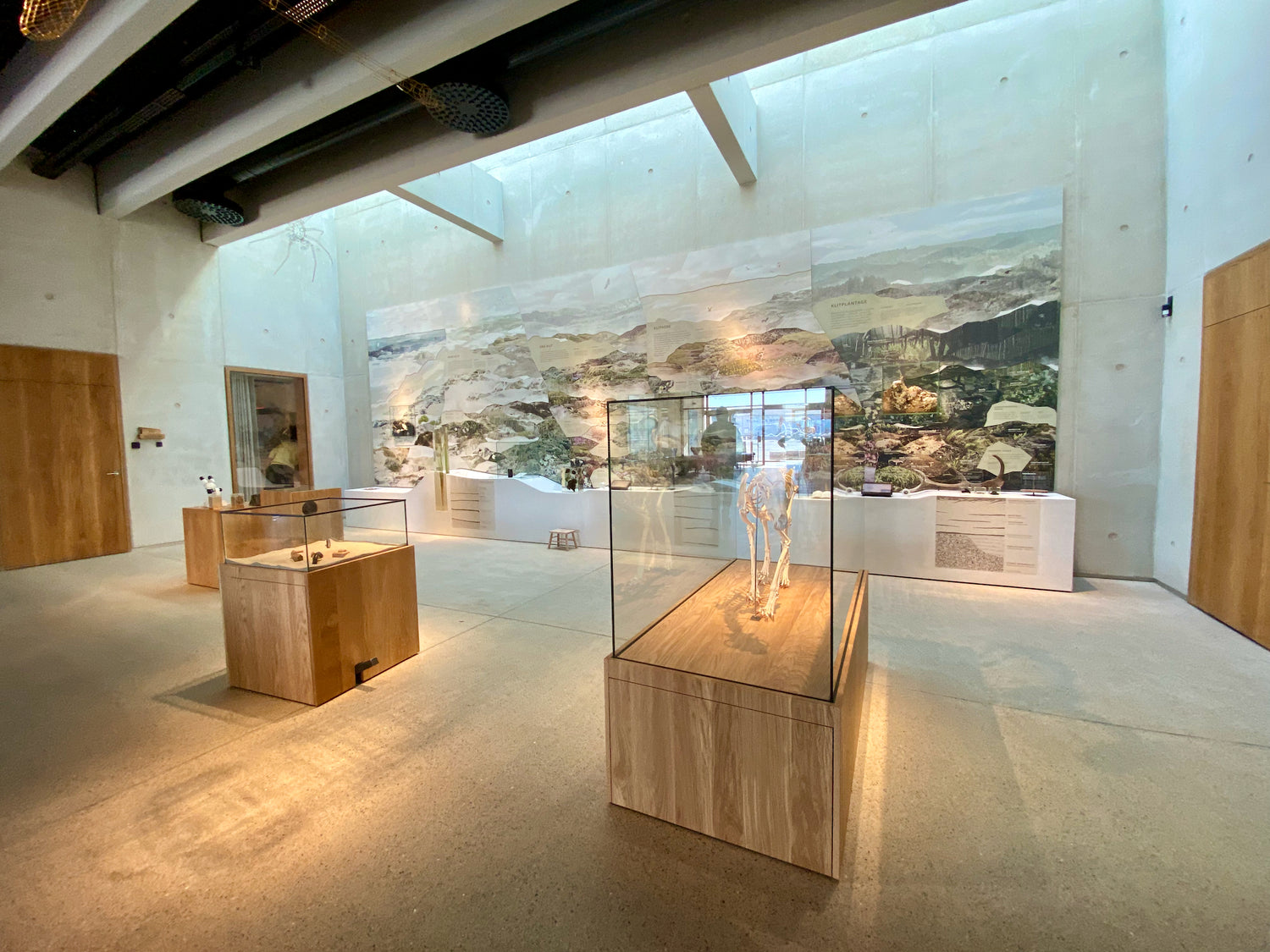
In Denmark's first national park center you can get knowledge about National Park Thy and inspiration for all its experiences.
Here you can experience, among other things, an interactive landscape model that gives an overview of the nature of the landscape, paths, towns, experiences and stories.
In addition, there is the skeleton from Denmark's first confirmed wolf in 200 years, which was first seen in Thy National Park in 2012. -
Cold Hawaii
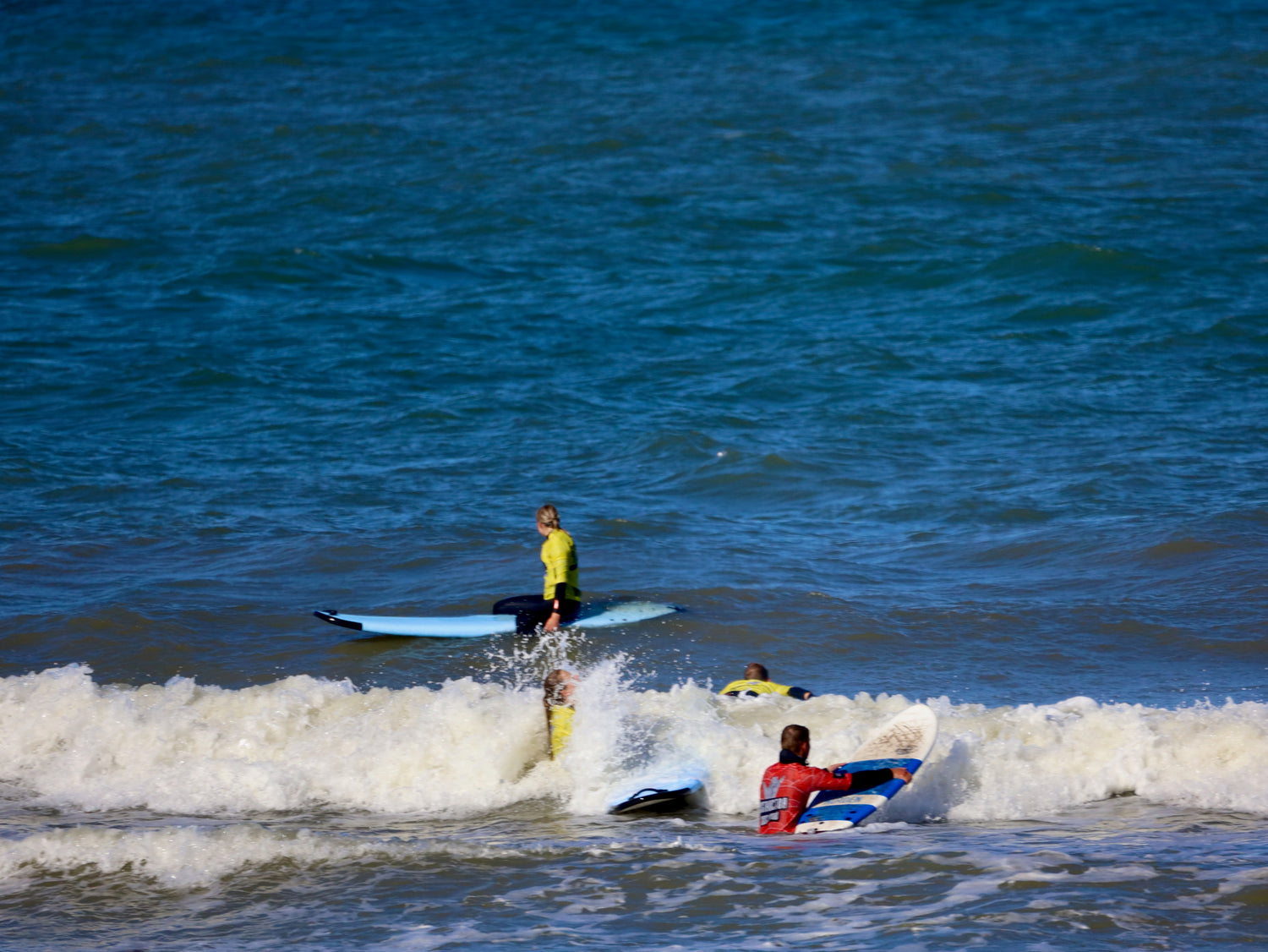
Thy's Cold Hawaii is one of Europe's leading surfing destinations and is considered a surfer's paradise.
Cold Hawaii refers to the impressive 31 registered surf spots that stretch along the West Coast in Thy, from Agger Tange in the south to just north of Hanstholm.
Cold Hawaii in Thy is not only a place for enthusiastic surfers, but also a beautiful and unique destination all year round. Whatever the season, the area attracts locals, families, children and tourists who want to try their hand at surfing. -
Klitmøller
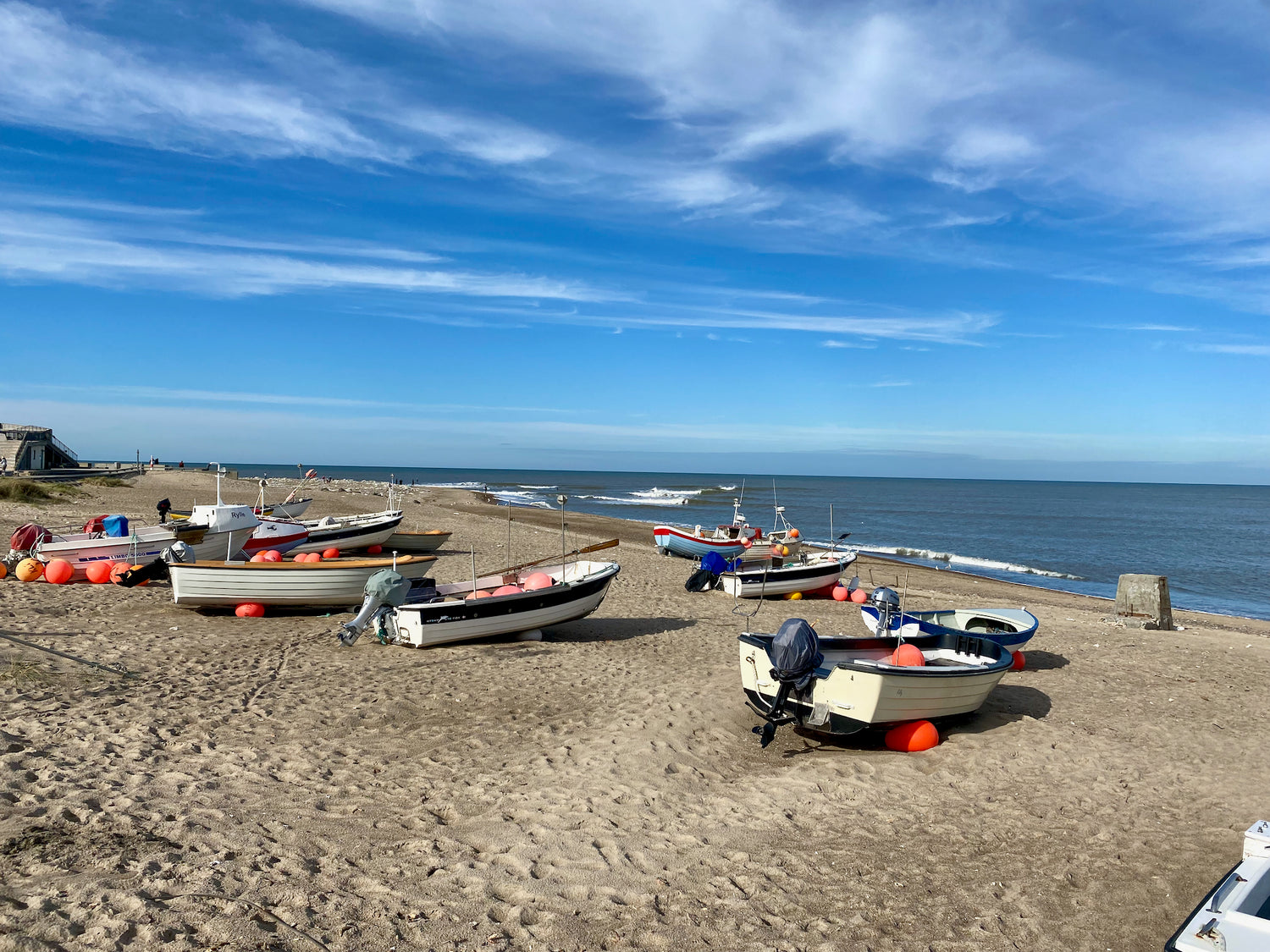
Klitmøller is known for having exceptional conditions for surfing along the coast. From the beach you can admire surfers challenging themselves and the waves with their board.
The atmosphere in Klitmøller is a characteristic mix of local culture and international influence, just as it was in the heyday of the schooner trade.
The beach promenade, known as "Foreningsvejen", connects the coastal area and the city together. -
Isbjerg
When Isbjerg is climbed and the gaze is turned over the fantastic open expanses, it will be crystal clear why Hanstholm Wildlife Reserve is called Denmark's largest wilderness.
Up here at the top, you stand 56 meters above sea level. It gives a completely unobstructed view over Denmark's largest total dune of a total of 40 km2.
You can see the sea and maybe see cormorants and cranes – or ospreys and sea eagles on a lucky day. -
Hanstholm Lighthouse
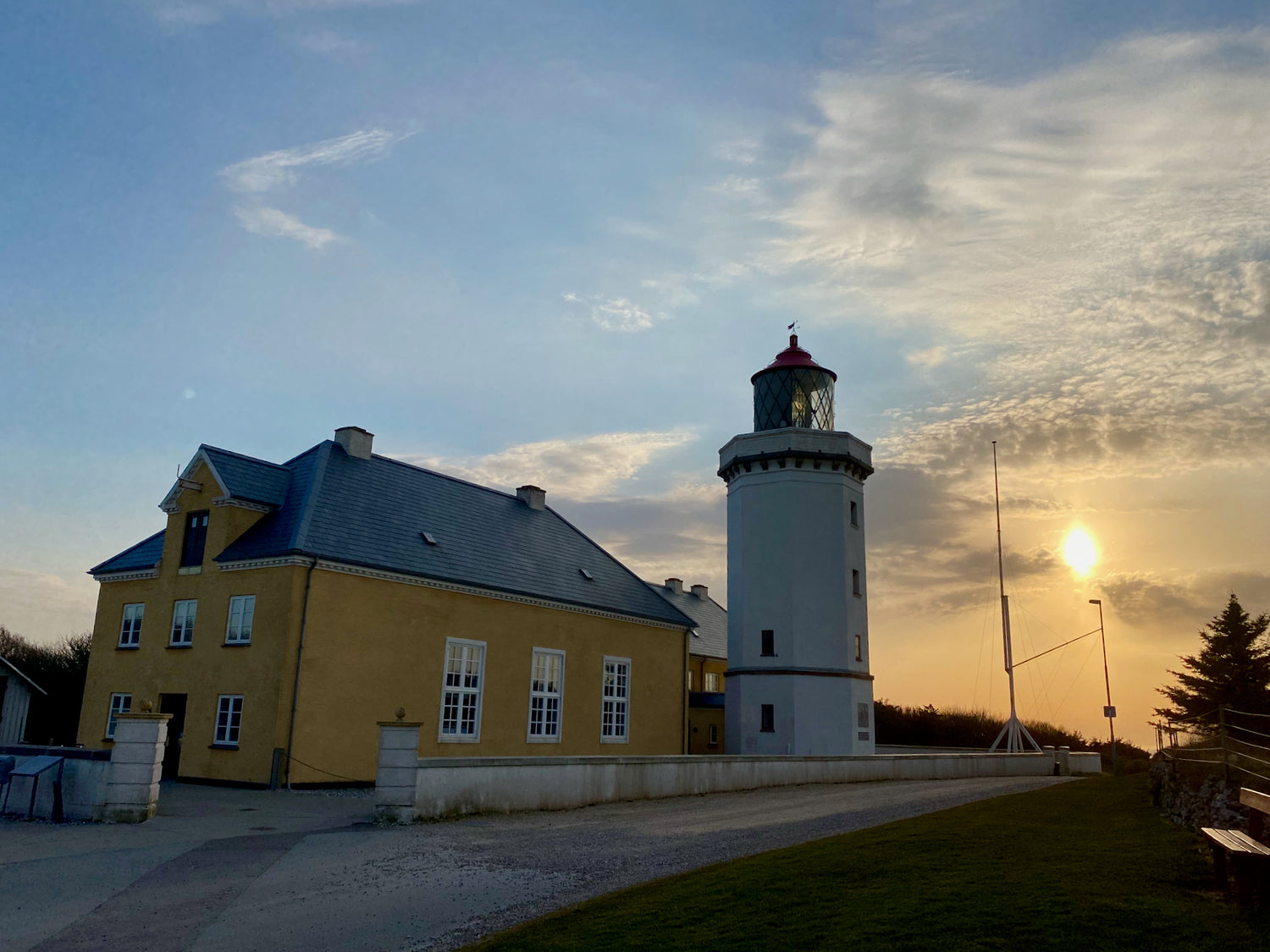
Hanstholm Lighthouse was built in 1842-43 close to Hansted Church high up on Hanstholmknuden.
South of the lighthouse, a residence was built for the lighthouse keeper, and the associated garden is a wonderful, sheltered spot where you can take a rest and eat the food you have brought.
The lighthouse is 23 m high, and thanks to its high location, the lighthouse emits light at a height of 65 m above sea level.
From the lighthouse there is a wide view over the northern part of the national park. -
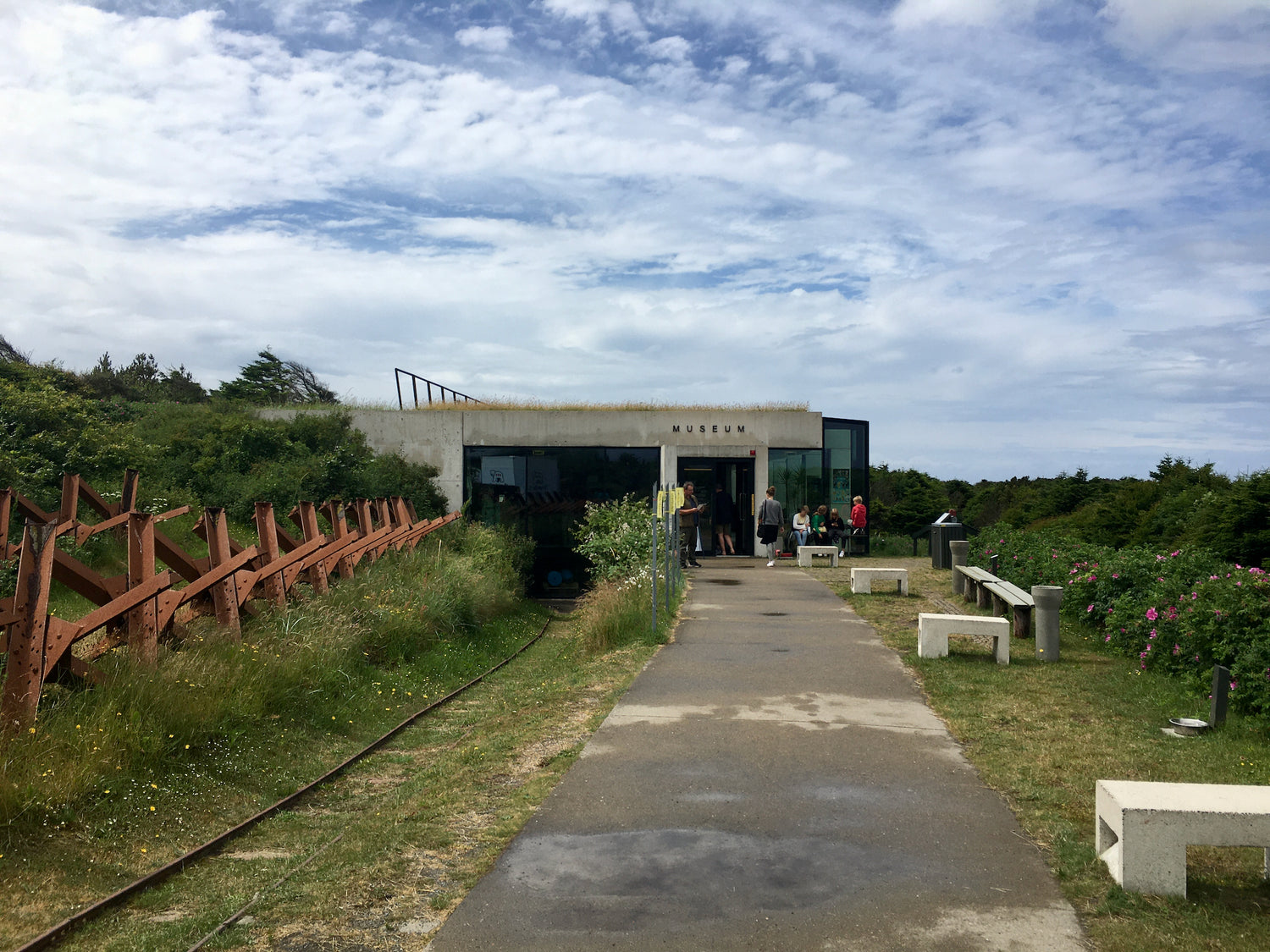
The bunker museum
On that approx. 100,000 m2 large area at Bunkermuseum Hanstholm you get very close to World War II in the strongest German fortress in Denmark.
The museum's huge bunker was home to 90 German soldiers, but also housed one of the huge 38 cm guns. The bunker has a total area of approx. 3000 m2, and is thus one of the largest the Germans built in Denmark.
In the other rooms, there are exhibitions which shed light on various aspects of the history of the fortifications.
Restaurants and cafés
-
-
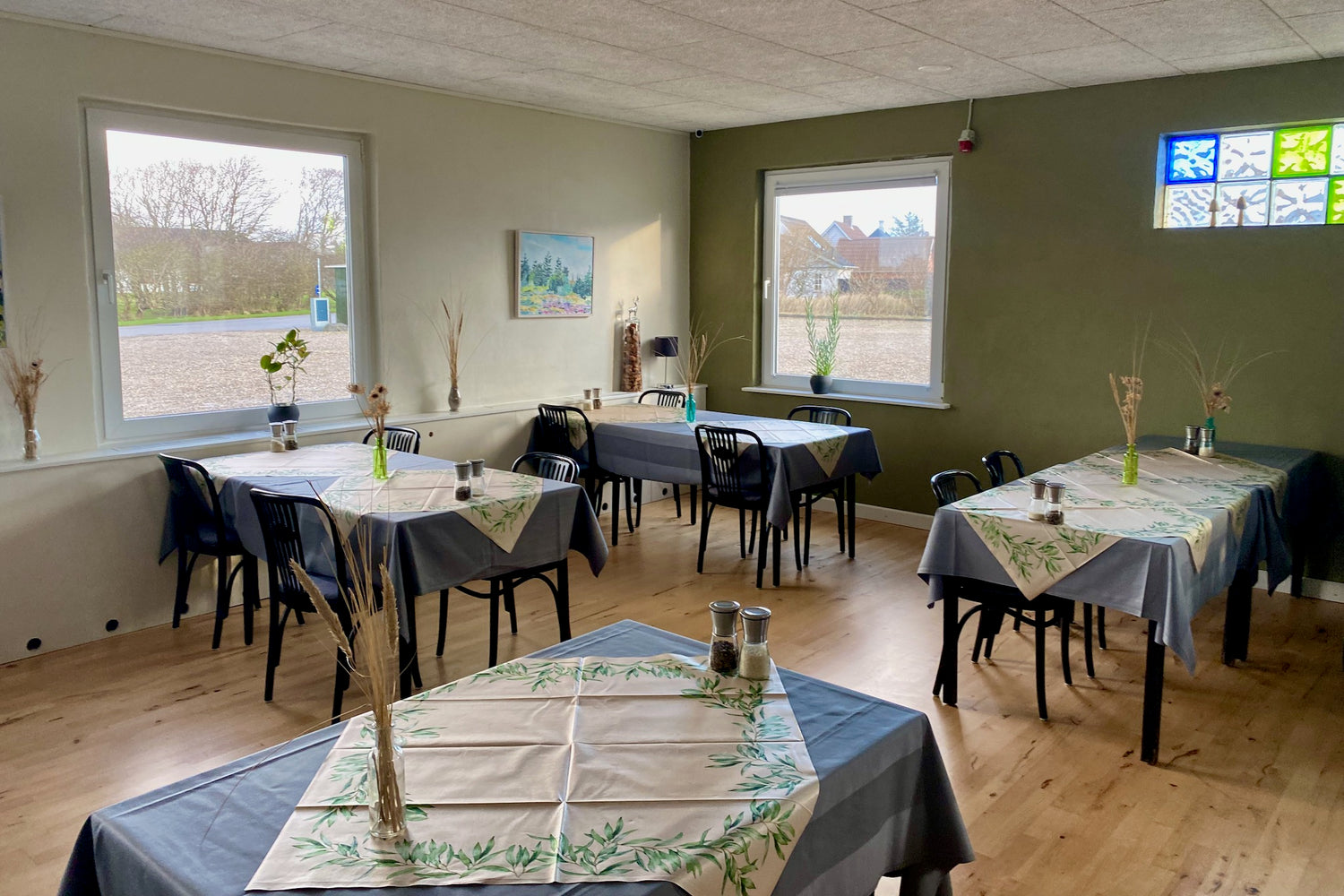
Stenbjerg Inn
Visit Stenbjerg Kro & Badehotel by the North Sea and experience Thy National Park on the first floor.
The à la carte restaurant offers dishes based on some of what lives and grows in the North Sea and the National Park. From their own herb garden to the region's naturally occurring supply of berries and fruit, fish landed by local fishermen and game killed in the area's forests, all with respect and concern for the environment and animal welfare. -
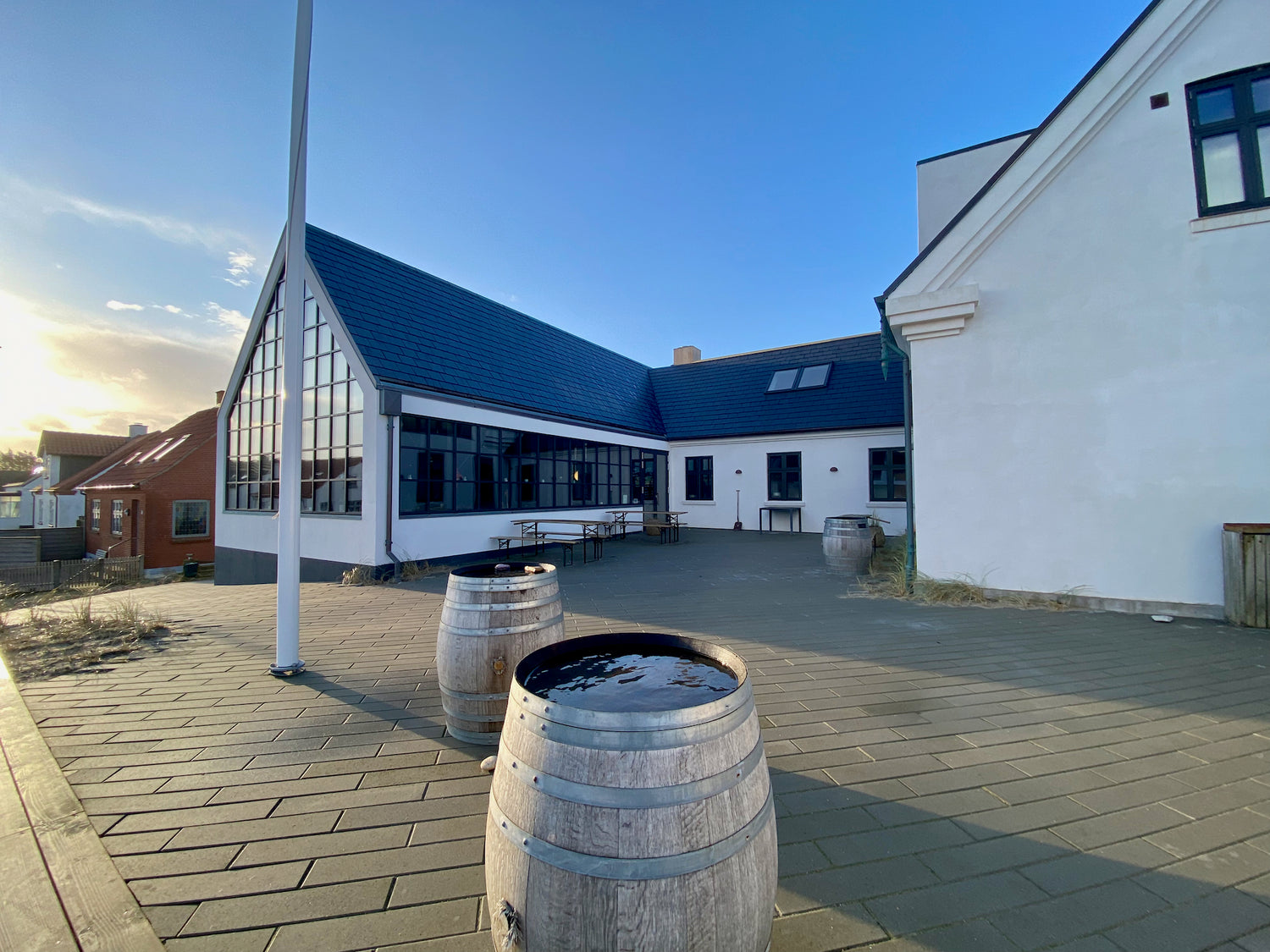
Bistro 123
In the newly renovated premises, you'll experience classic bistro ambiance, coziness, and exceptional flavors with French, rustic dishes based on seasonal local ingredients. The open space creates a relaxed atmosphere ideal for extended conversations.
Bistro 123 welcomes regulars, tourists, and locals alike. Enjoy coffee and homemade treats by the fireplace in the lounge or indulge in an enchanting bistro dinner in the traditional restaurant. -
-
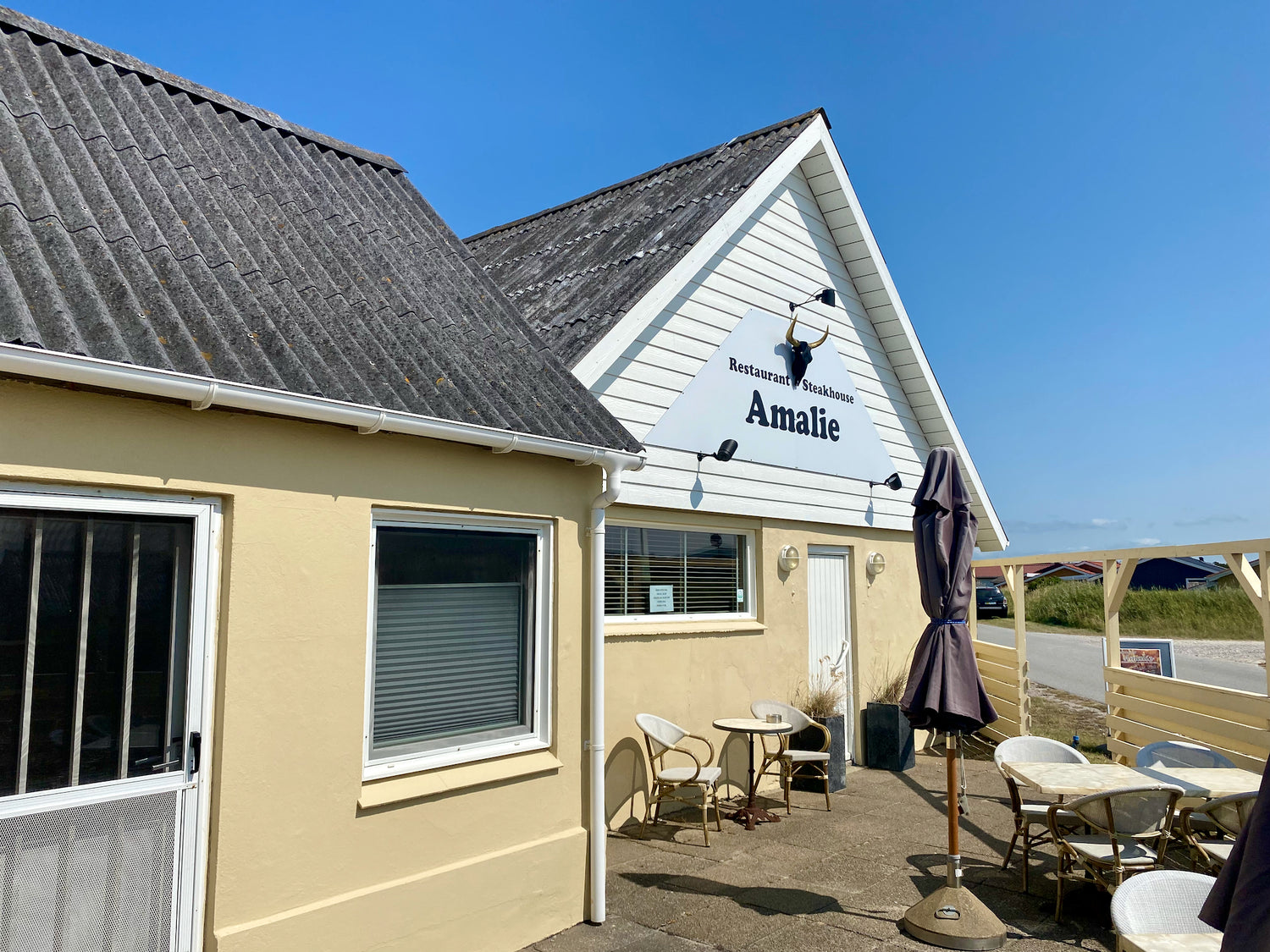
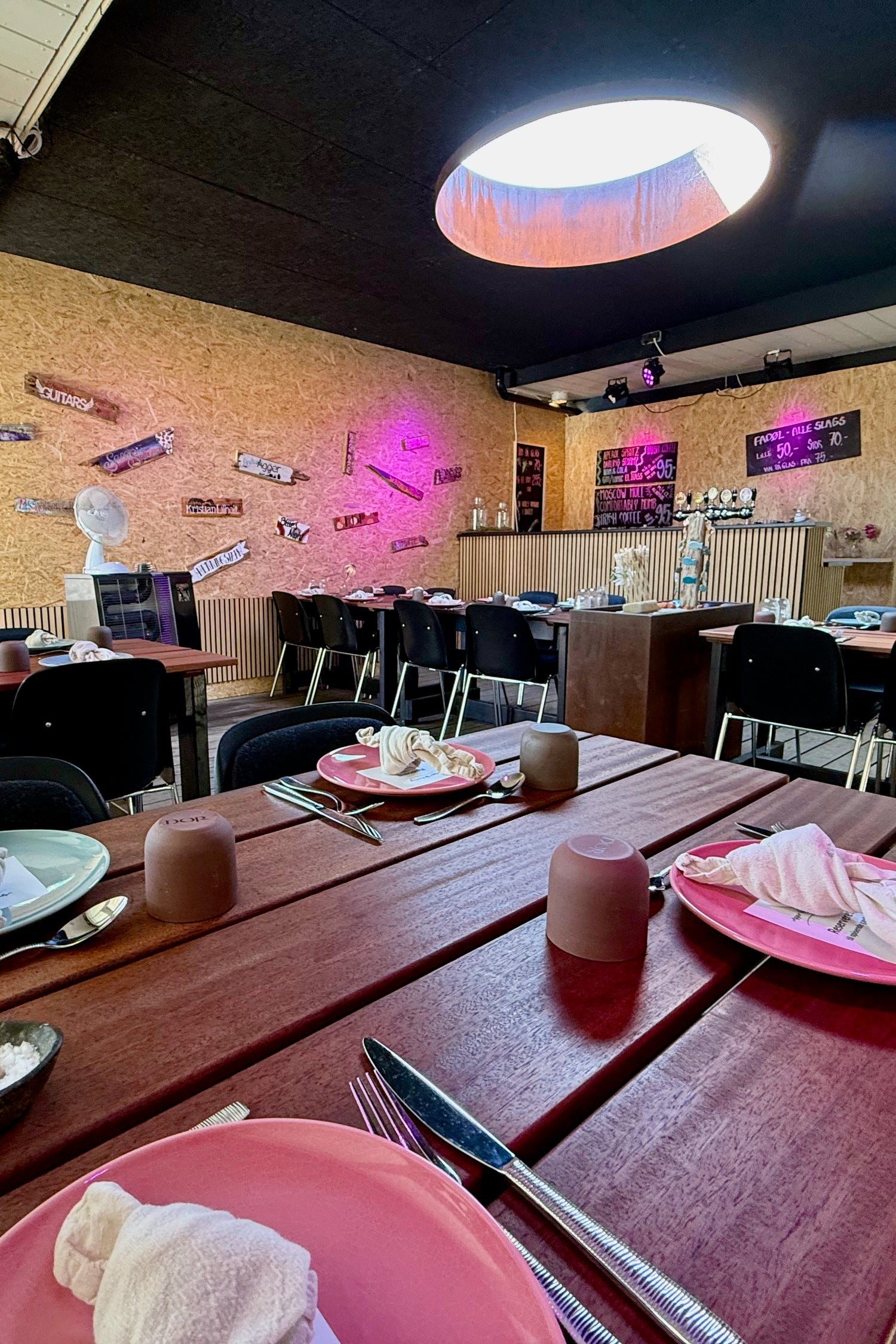
Restaurant & Steakhouse Amalie
Restaurant Amalie is located in Thy's largest holiday town Nørre Vorupør, in the middle of National Park Thy.
Delicious, tender steaks, prepared on the grill, are served here. You can get steaks, chicken bones and cutlets. In addition, a huge salad and potato bar is offered, with seasonal specialties and sauces. -
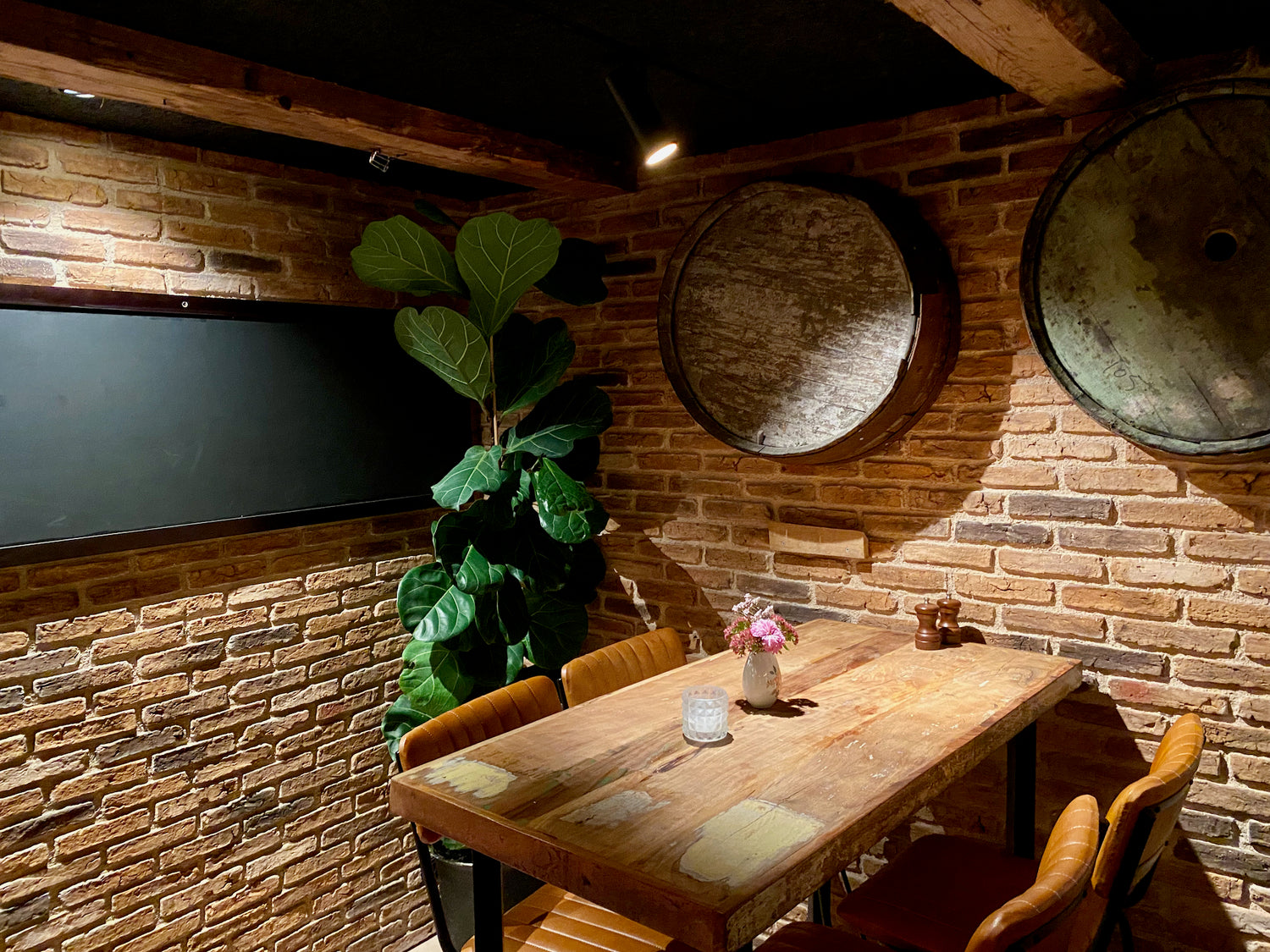
Juliette - Bistro & wine bar
It is a simple, informal and cozy bistro, where the food is inspired by French comfort food - mixed with international/ethnic inspirations.
In addition to good food, you can also get tasty beer, good French and international wines in the wine bar, fresh cider and lovely bubbles. -
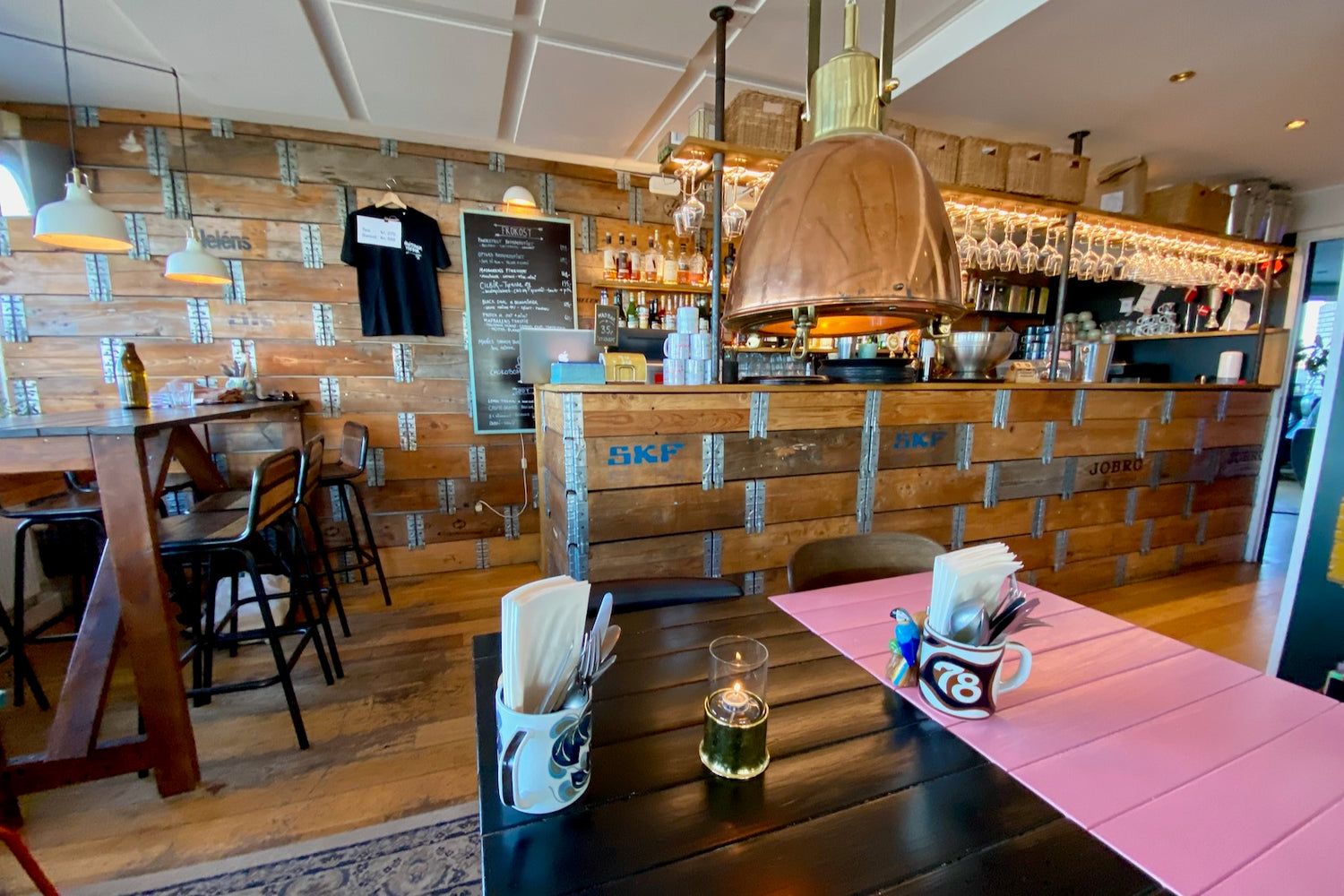
Hanstholm Madbar
We serve simplicity, quality and taste. And most importantly - what we ourselves can enjoy. Forget all about gourmet and fine dining, instead expect real cooking, relaxed atmosphere, humour, joy and lots of love and hospitality.
There is no large fixed menu here, but instead boards that can change from day to day. The food is determined by the season, seasonal produce and fresh seafood from Thy.
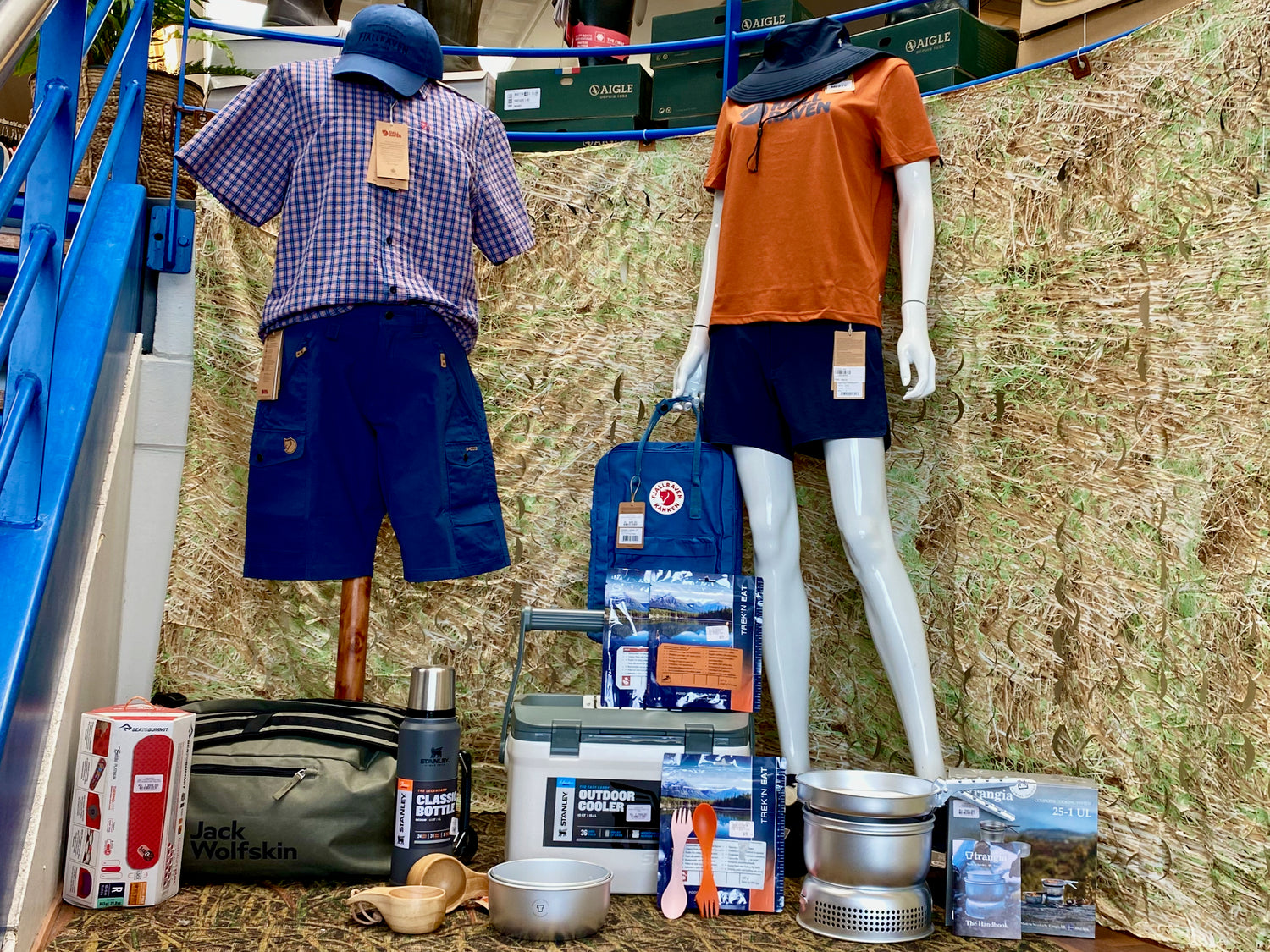
Equipment for your hike
Thy Outdoor - Thisted
Thy Outdoor is a shop that sells equipment for nature lovers, hunters, anglers and families with dogs and cats.
The nearly 1000 m2 store, which is located in Thisted, contains everything you need for your hiking adventure!
In the webshop you can find products that are also represented in the store.