
Thy National Park
- Lodbjerg
Hiking trails, adventures and places to eat
Lodbjerg Klitplantage
Lodbjerg Plantage was started in 1923 and is thus a relatively young plantation.
The interesting thing about this plantation is that it was established at a time when the main purpose was no longer to dampen the sand, as was the case in most dune plantations. Therefore, several natural considerations were taken into account in Lodbjerg Plantage from the beginning.
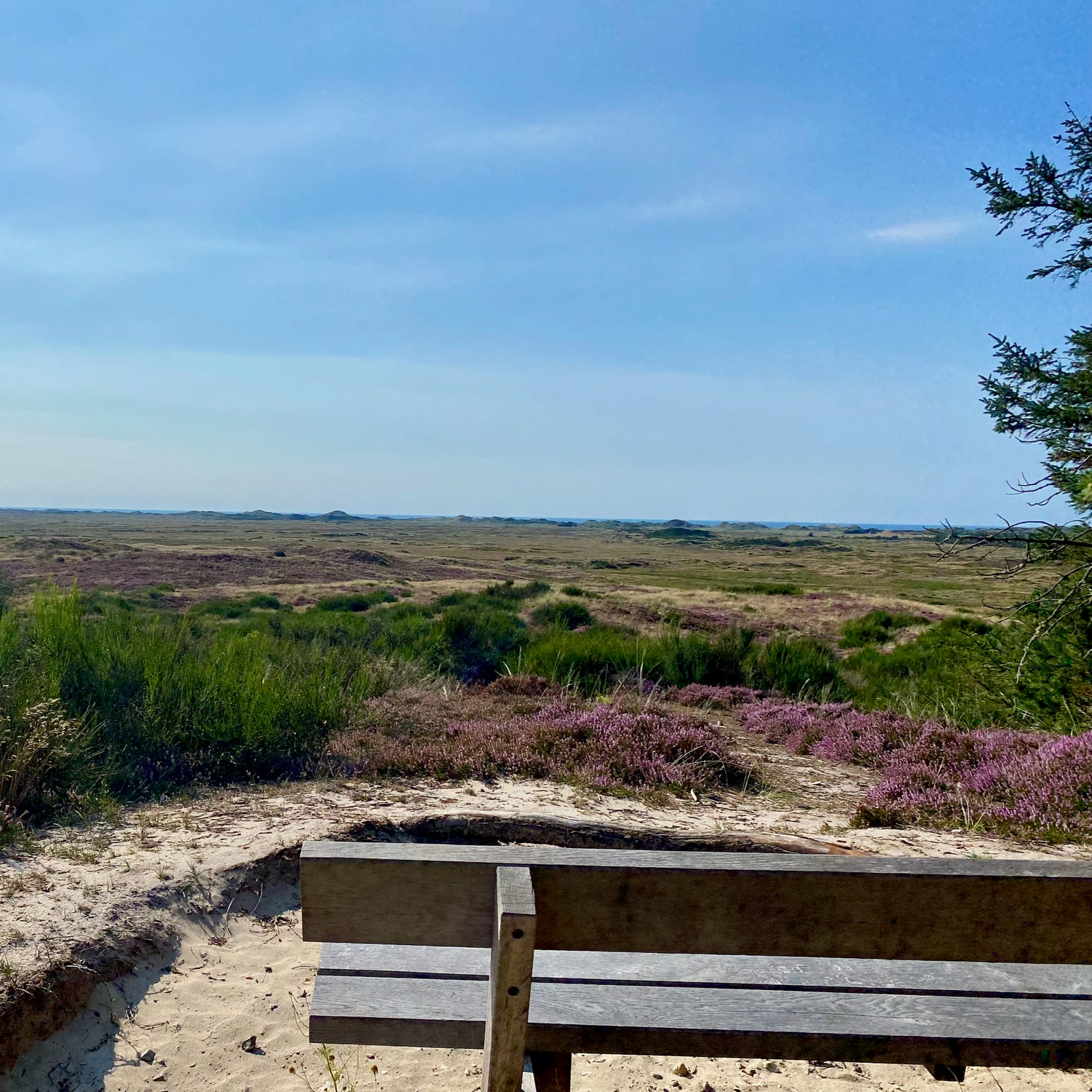
The result is that there are large areas that are not planted, but instead lie as heath, grassland, plains and fields. This variation, combined with the forest, creates an area of great diversity that benefits flora, insects, wildlife and people.
Approx. one kilometer northwest of Lodbjerg Lighthouse, the wind and human activity have created an impressive hole in the vegetation on the sea dunes. The sand from this area moves as a "mile" (a formation of floating sand) across the dune. Elsewhere along the coast there are dunes that can be up to 30 meters high.
The dune heaths
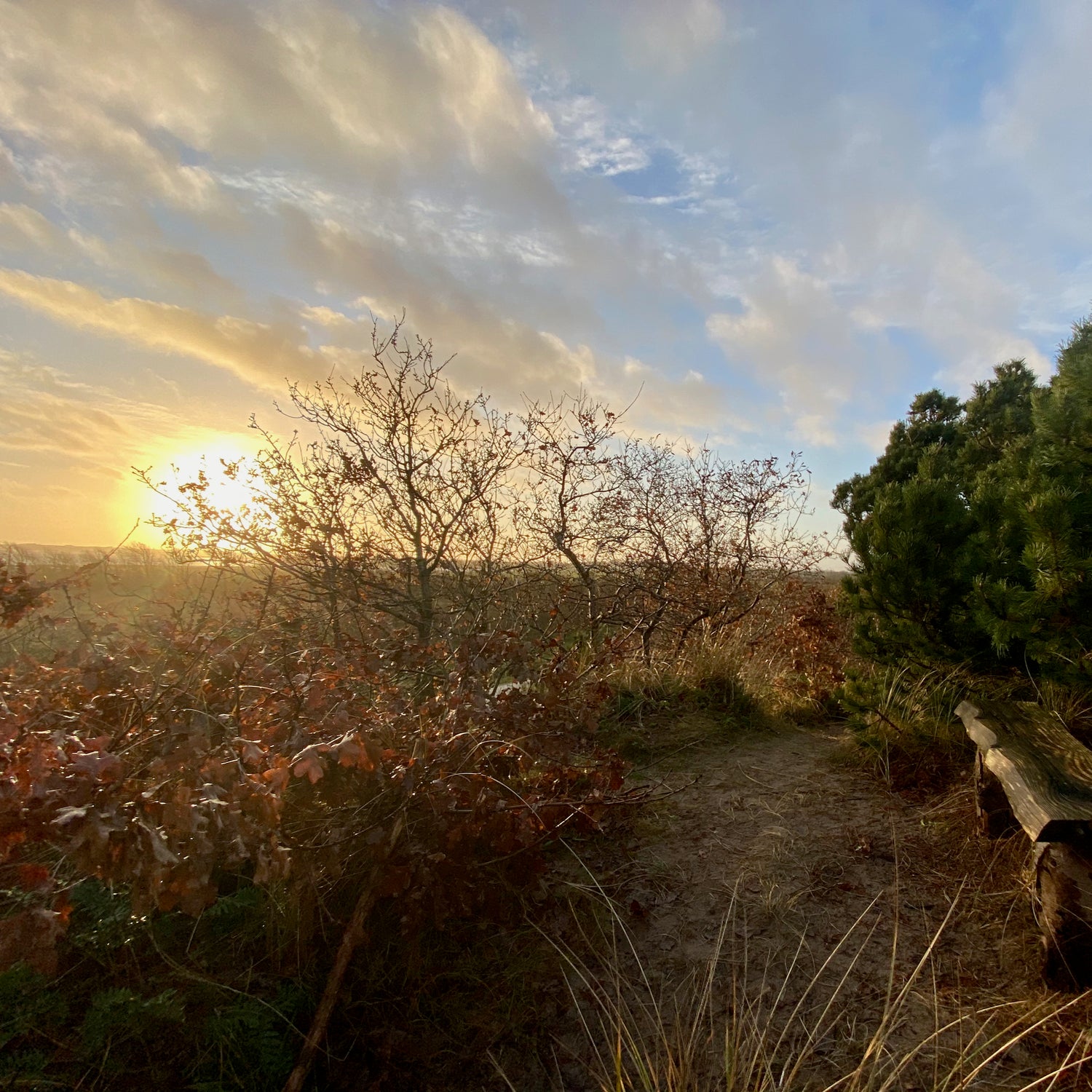
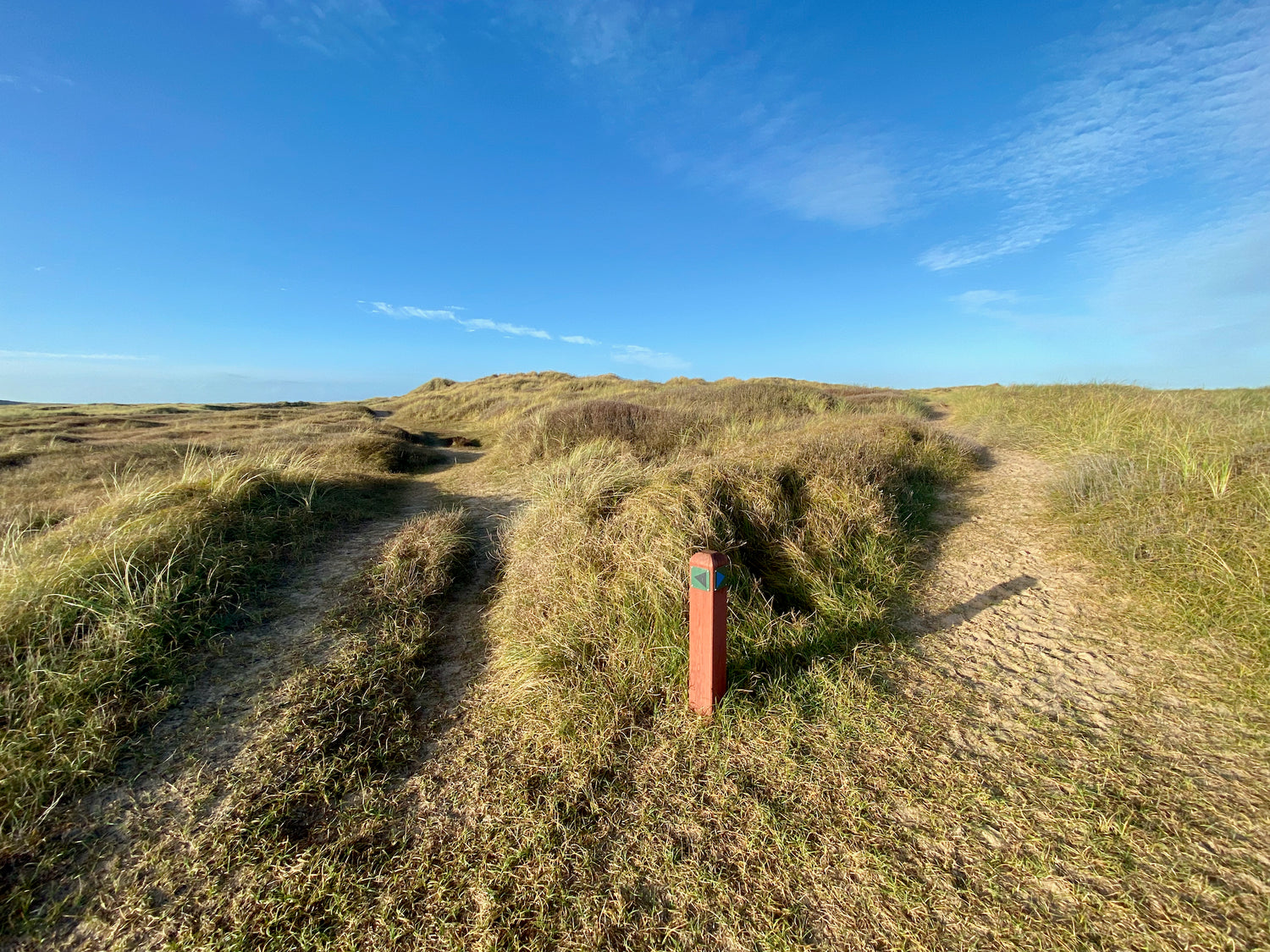
A number of plant species thrive on the dunes, including creeping willow and heather, which contribute to the characteristic landscape.
There are also crowberry, cranberry, bog bilberry, Myrica, cross-leaved heath, mouse-ear hawkweed and various species of sundew.
The outermost dunes are home to the tough and hardy beachgrass. With its powerful root system and ability to grow quickly, the helmet plays an important role in stabilizing and binding the dunes together.
North of Lodbjerg Lighthouse you will find two beautiful groups of burial mounds, nine in total.
Pollen analyzes from archaeological excavations reveal that the area was covered in forest in the Stone Age, where linden, oak and hornbeam were among the dominant tree species.
Later, the pollen analyzes show an increase in heather pollen, which indicates that the first farmers in the area cleared the forest to cultivate the land. After a short period of agricultural activity, heather has gradually taken over the landscape.
The coastal cliff
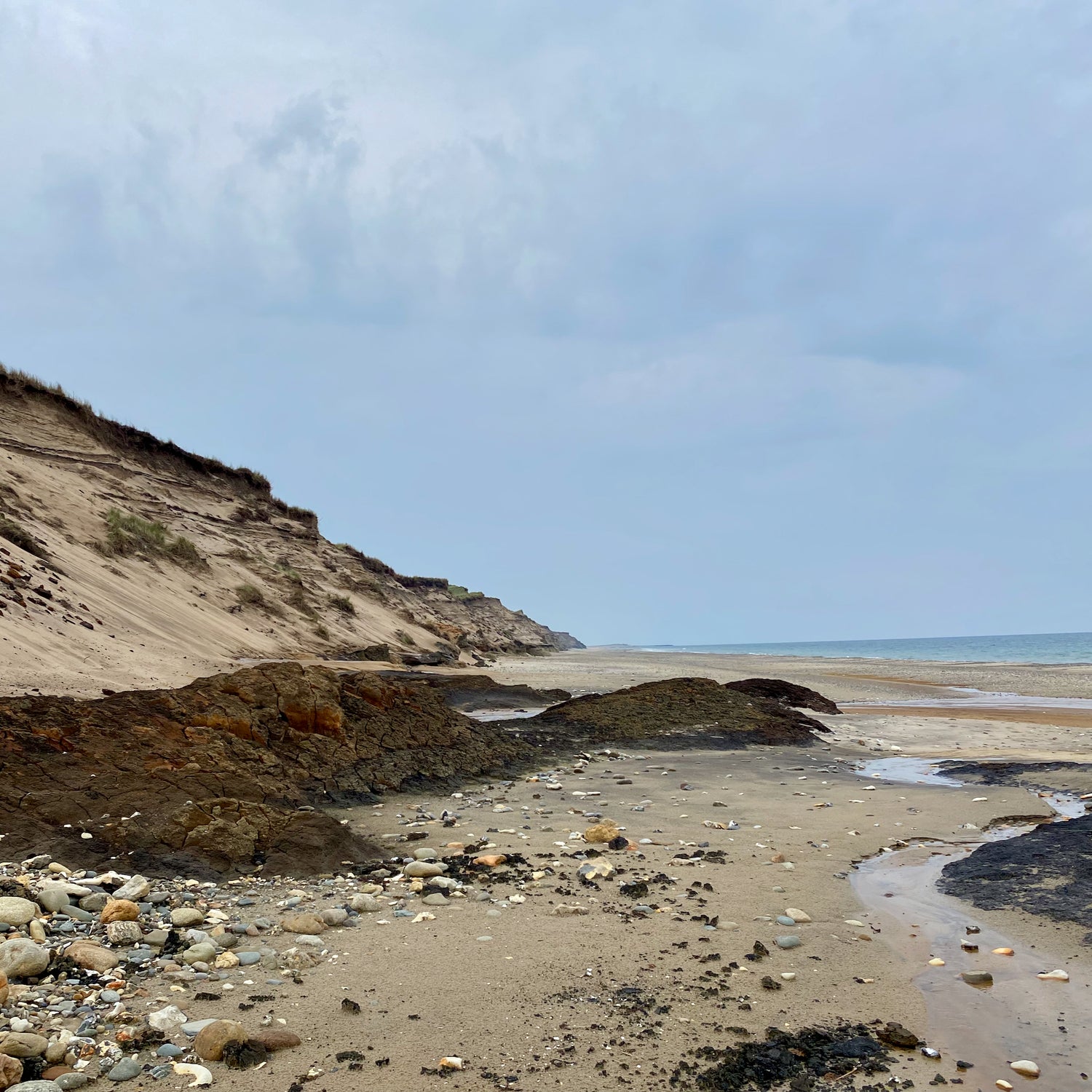
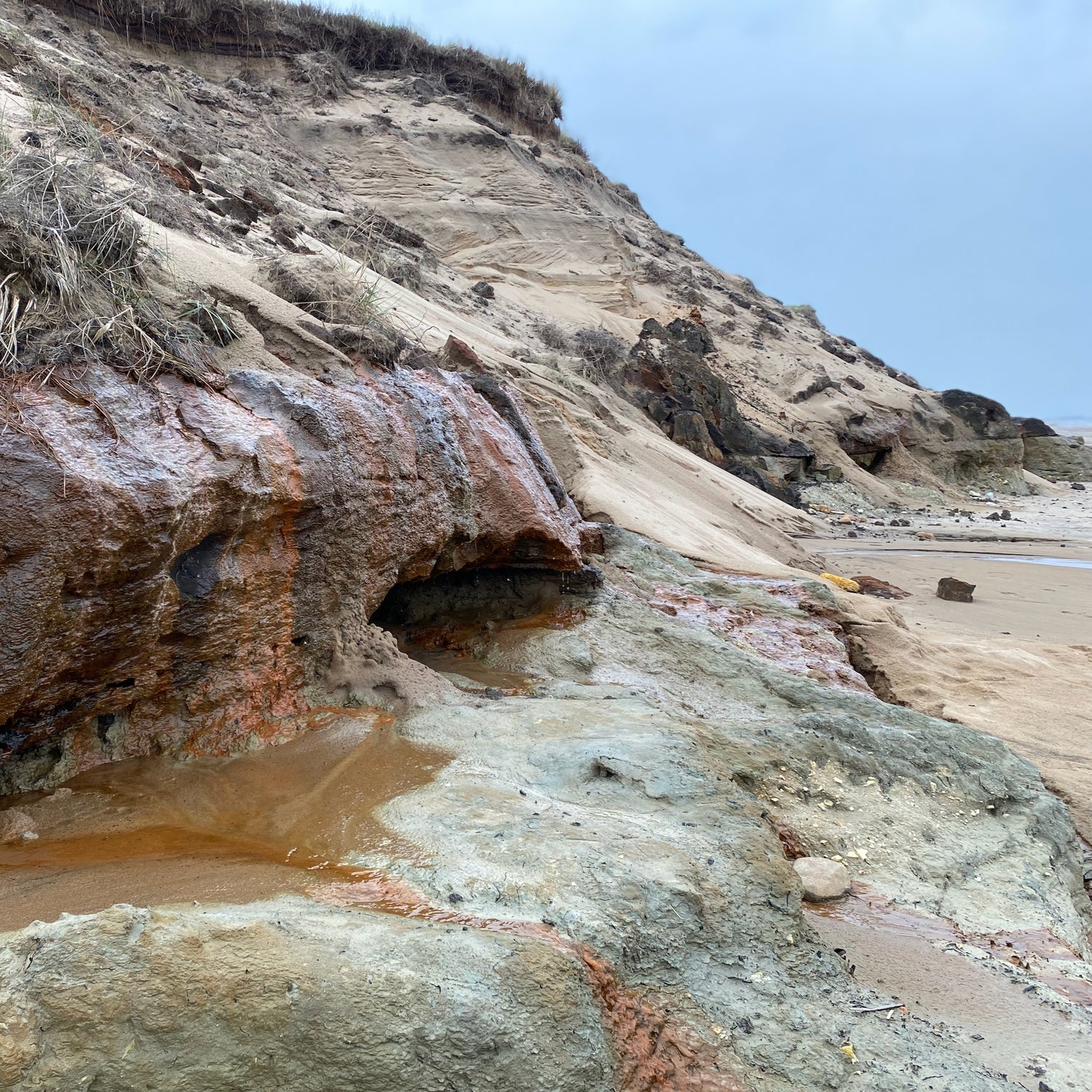
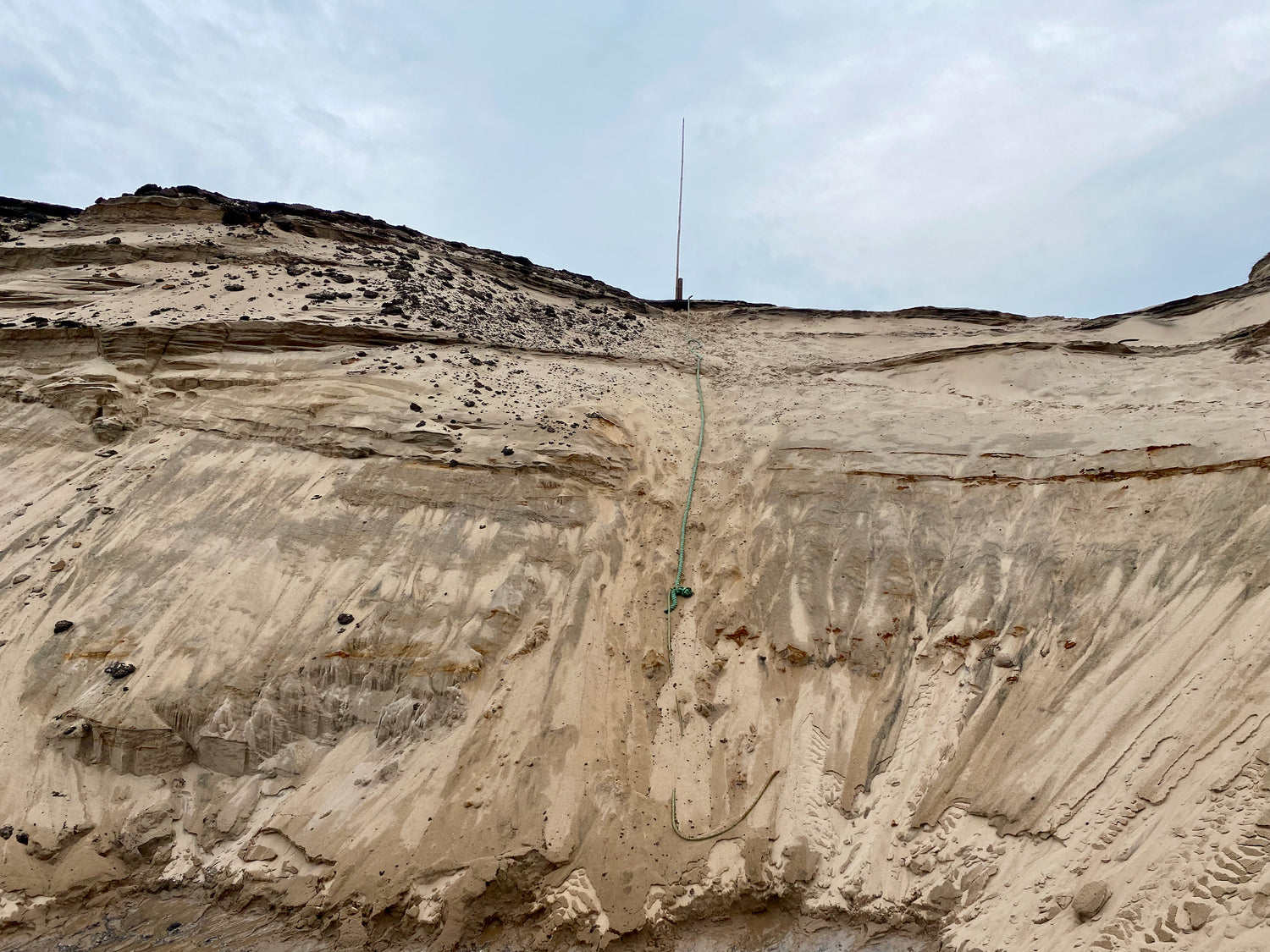
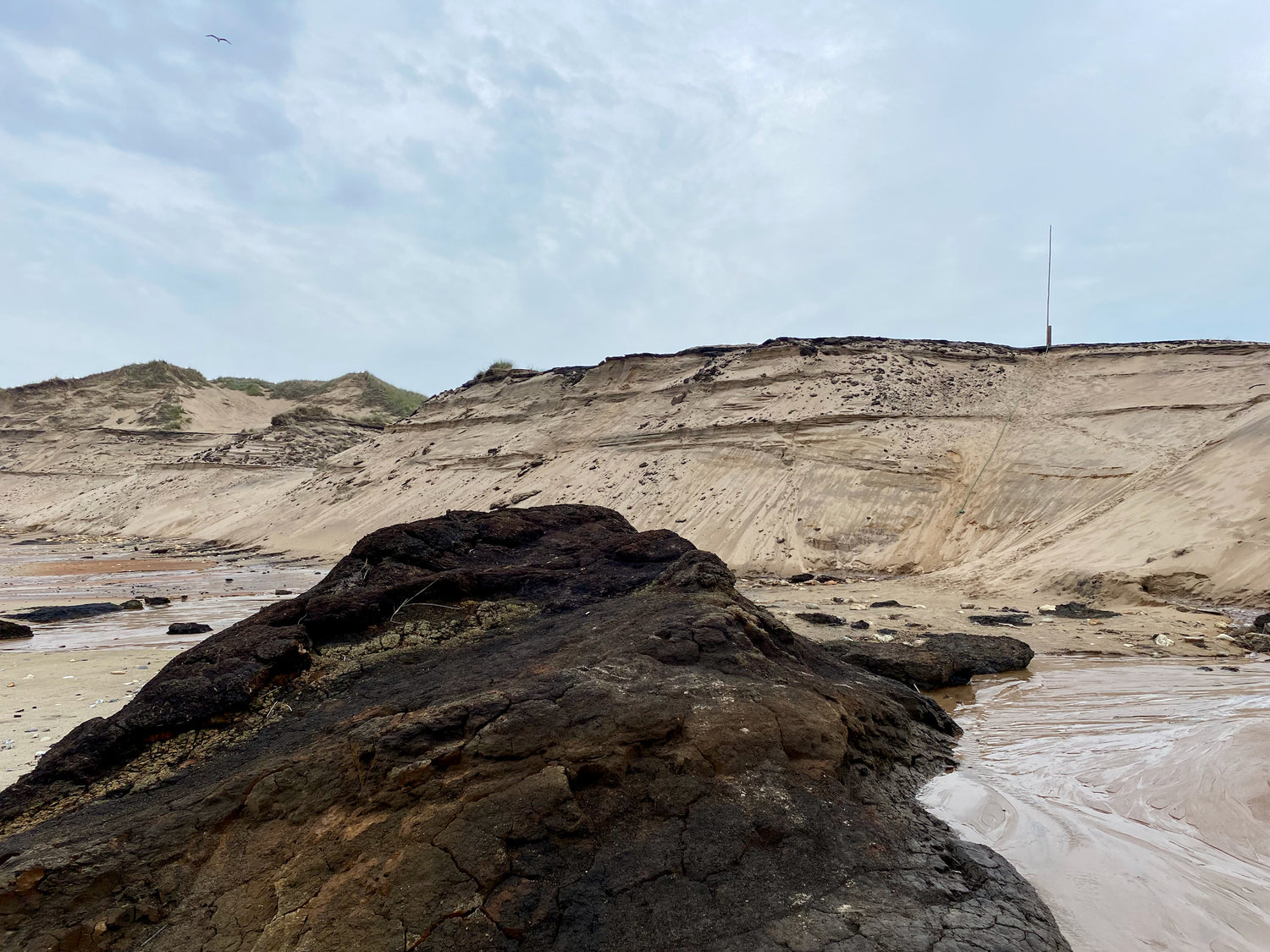
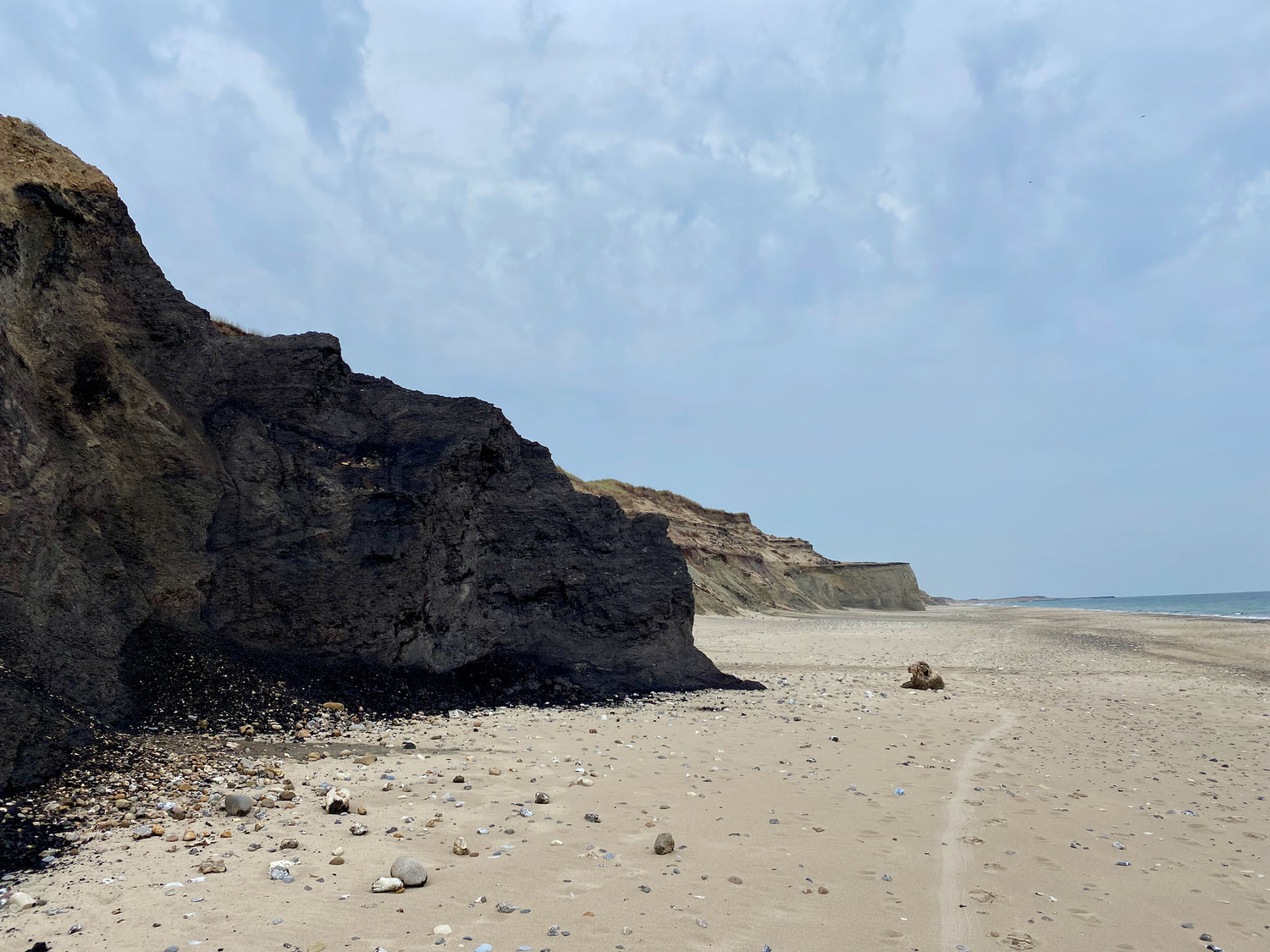
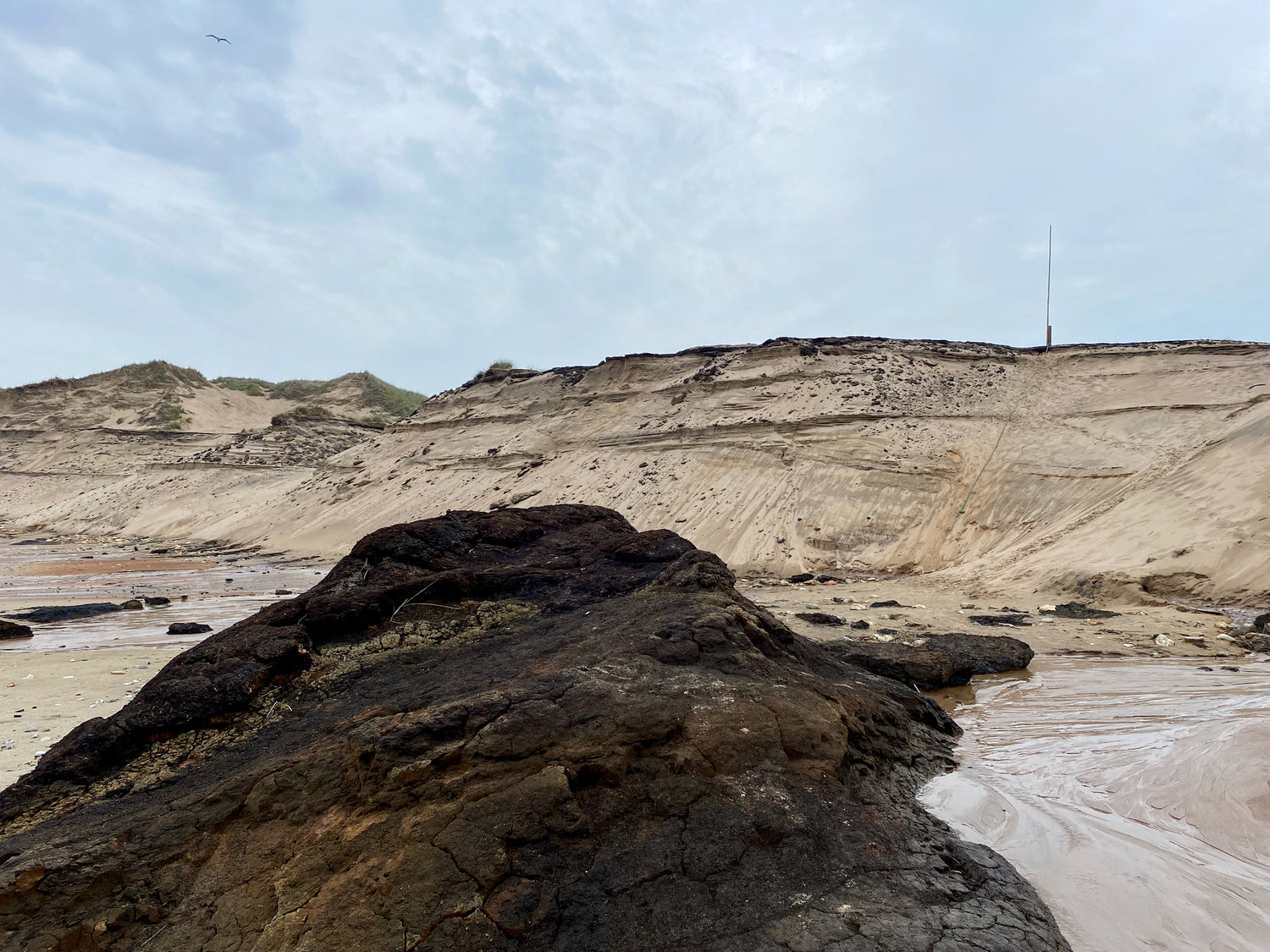
The coastal cliff at Lodbjerg is impressive and can reach a height of up to 10 metres. It consists primarily of moraine clays and mica clays that protrude from the dune.
Among other things, it creates the characteristic formation known as "black nose".
The mica clay, which makes up the lower part, is a sedimentary deposit formed under the sea and contains fossils of snails and clams.
Above the mica clay, there is drifting sand that has accumulated and formed layers above the clay. Between the layers of clay and sand, peat layers from old bogs can be found, as well as cultural layers from previous settlements. The coastline undergoes constant erosion processes, and occasionally, old objects and antique items become visible when the cliffs are exposed to erosion.
The hiking trails
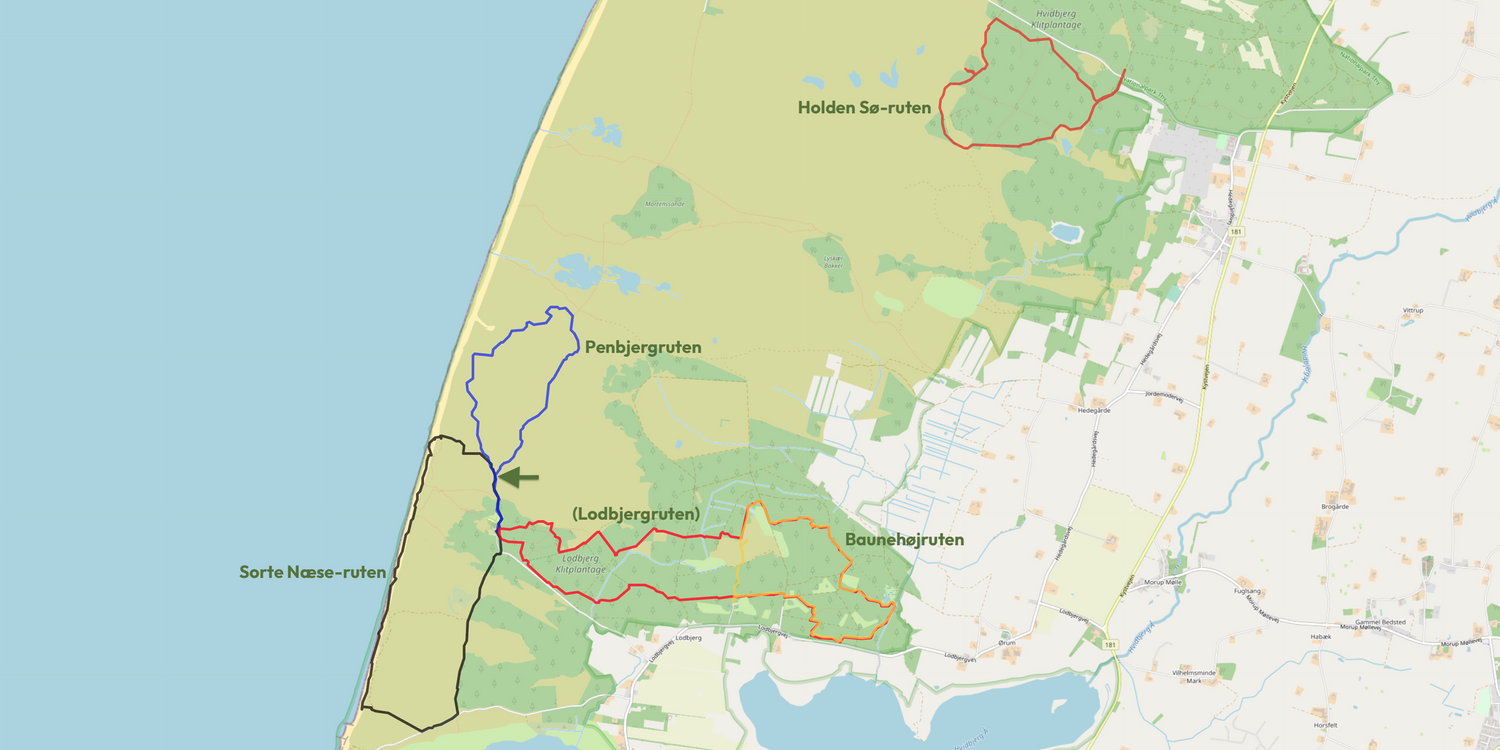
Below you see the selected hiking trails from the hiking area with mileage.
We have prioritized the trails with our favorite trail in the area as the first.
You get information about each hiking trail by clicking on the pictures.
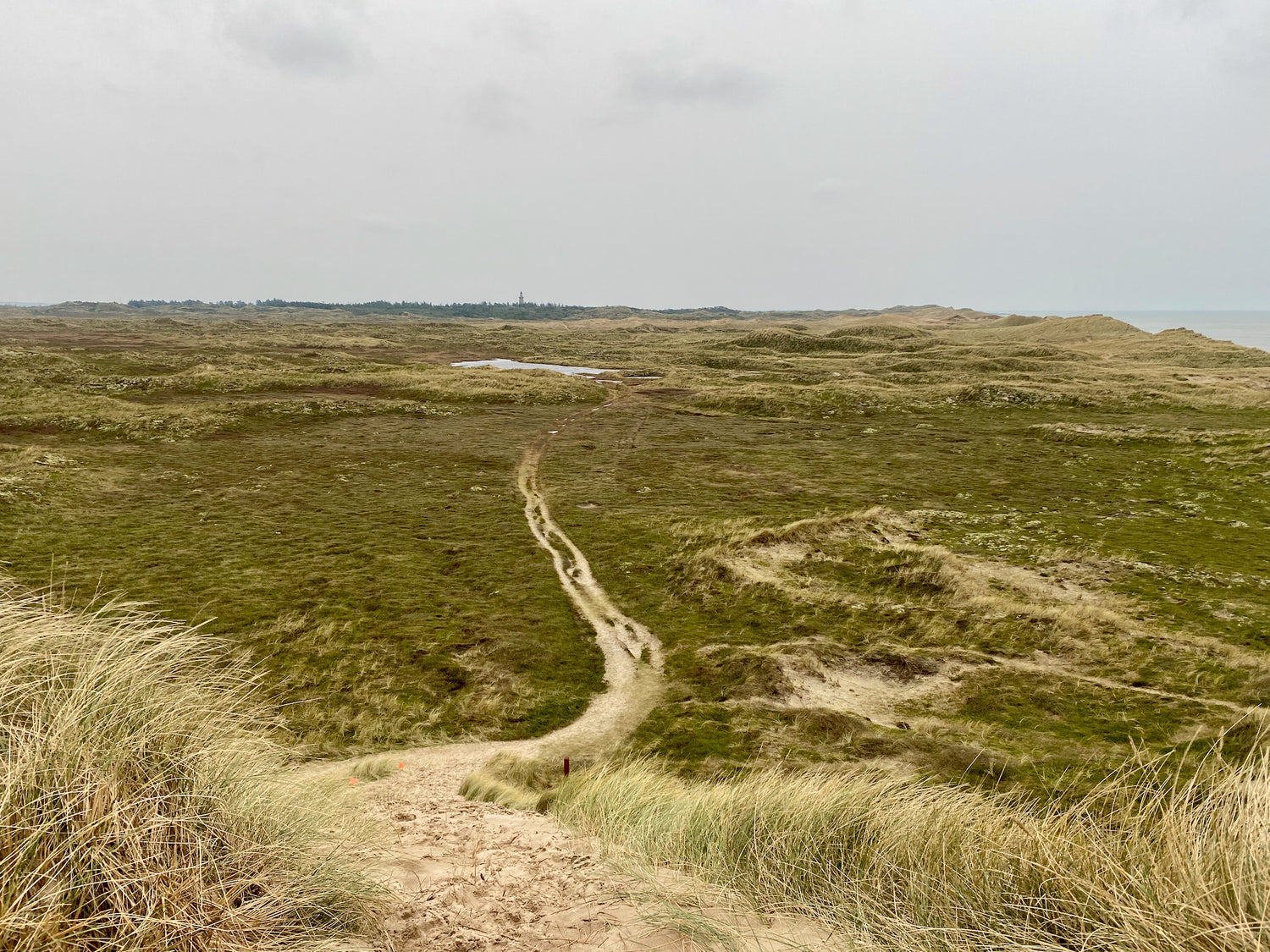
Penbjerg route 5.7 km
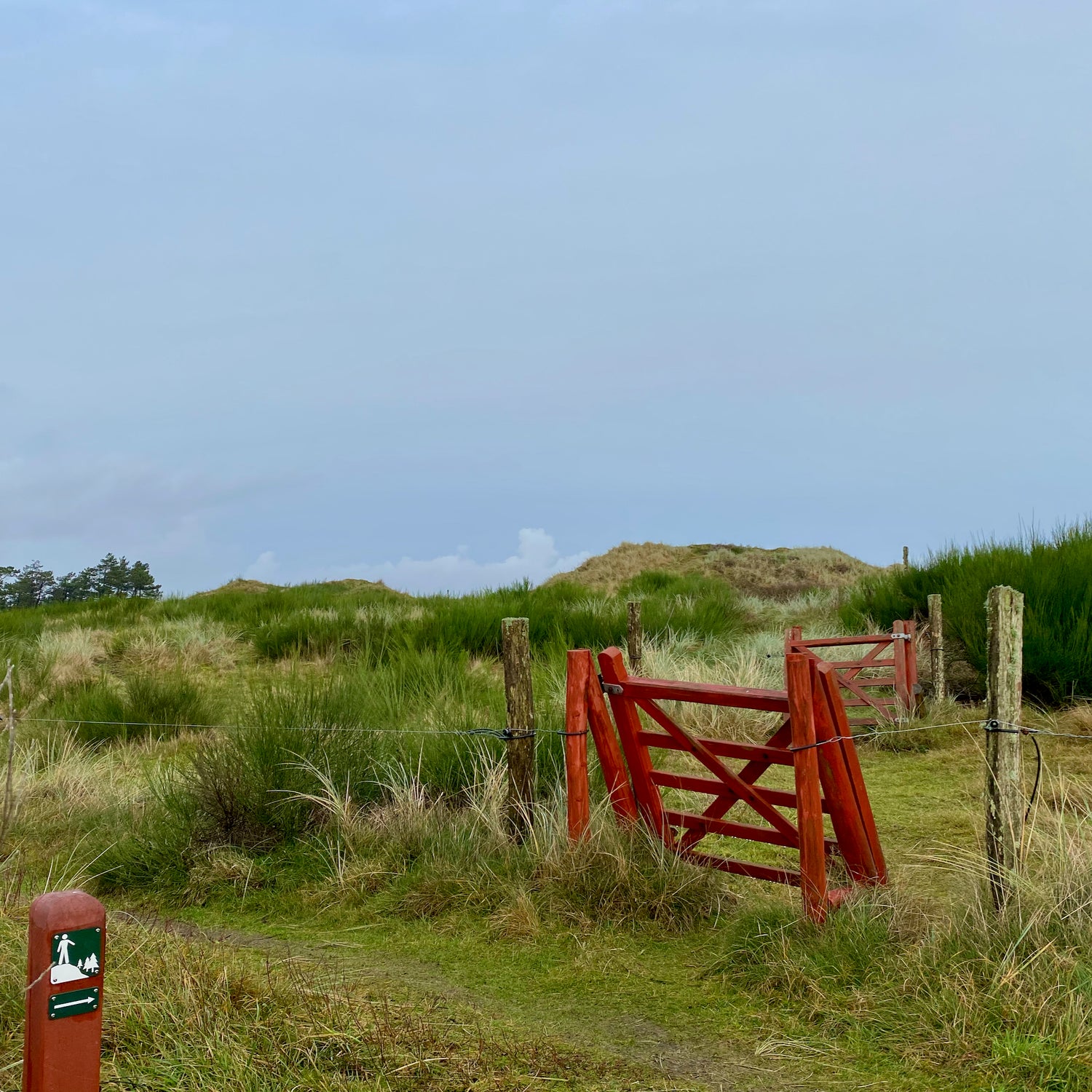
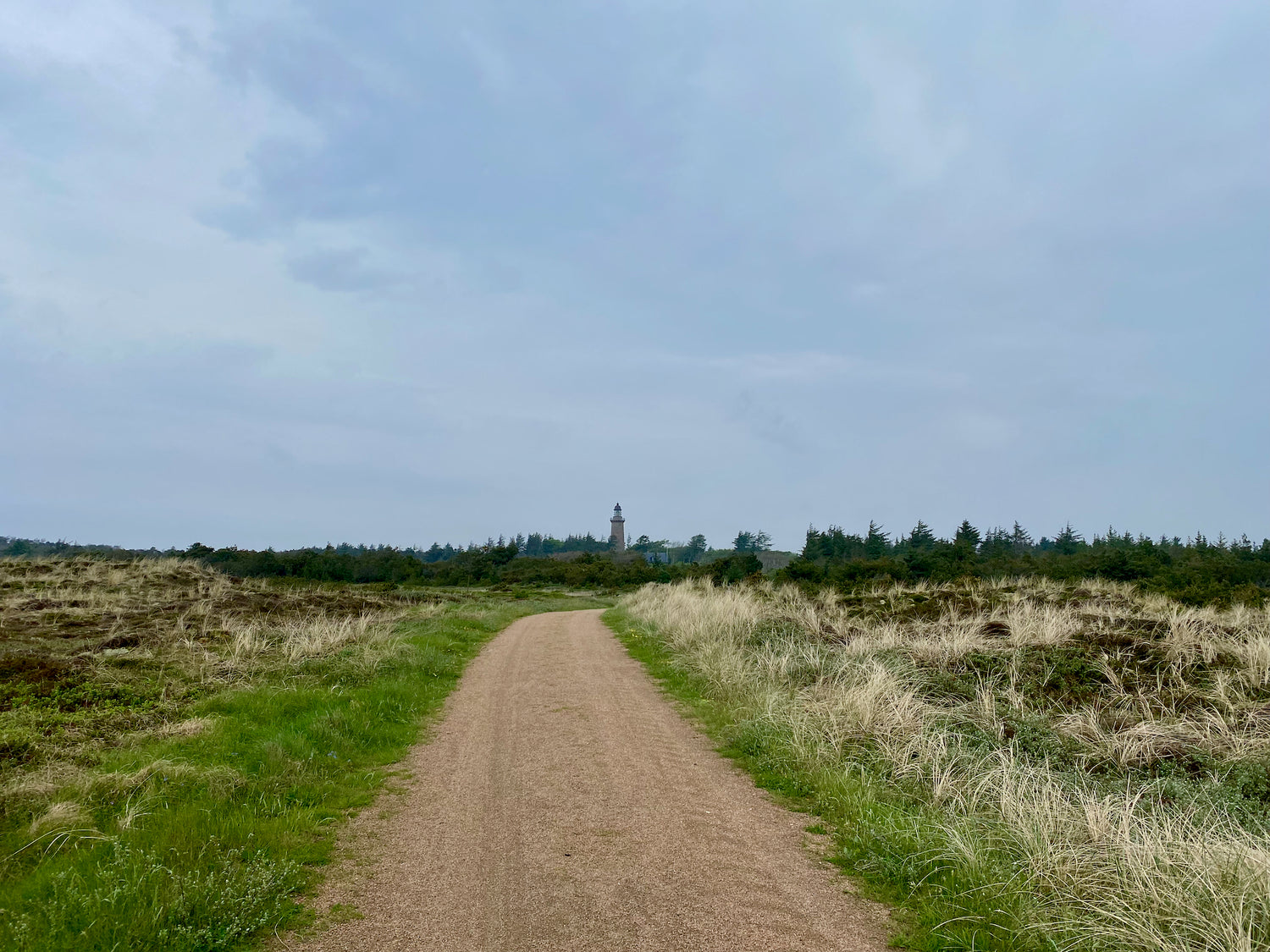
The Penbjerg route follows the first part of the road from Lodbjerg Lighthouse and then continues along the path to the north over the dune to the Penbjerg viewpoint.
The route then goes east to Redningsvejen and follows this back.
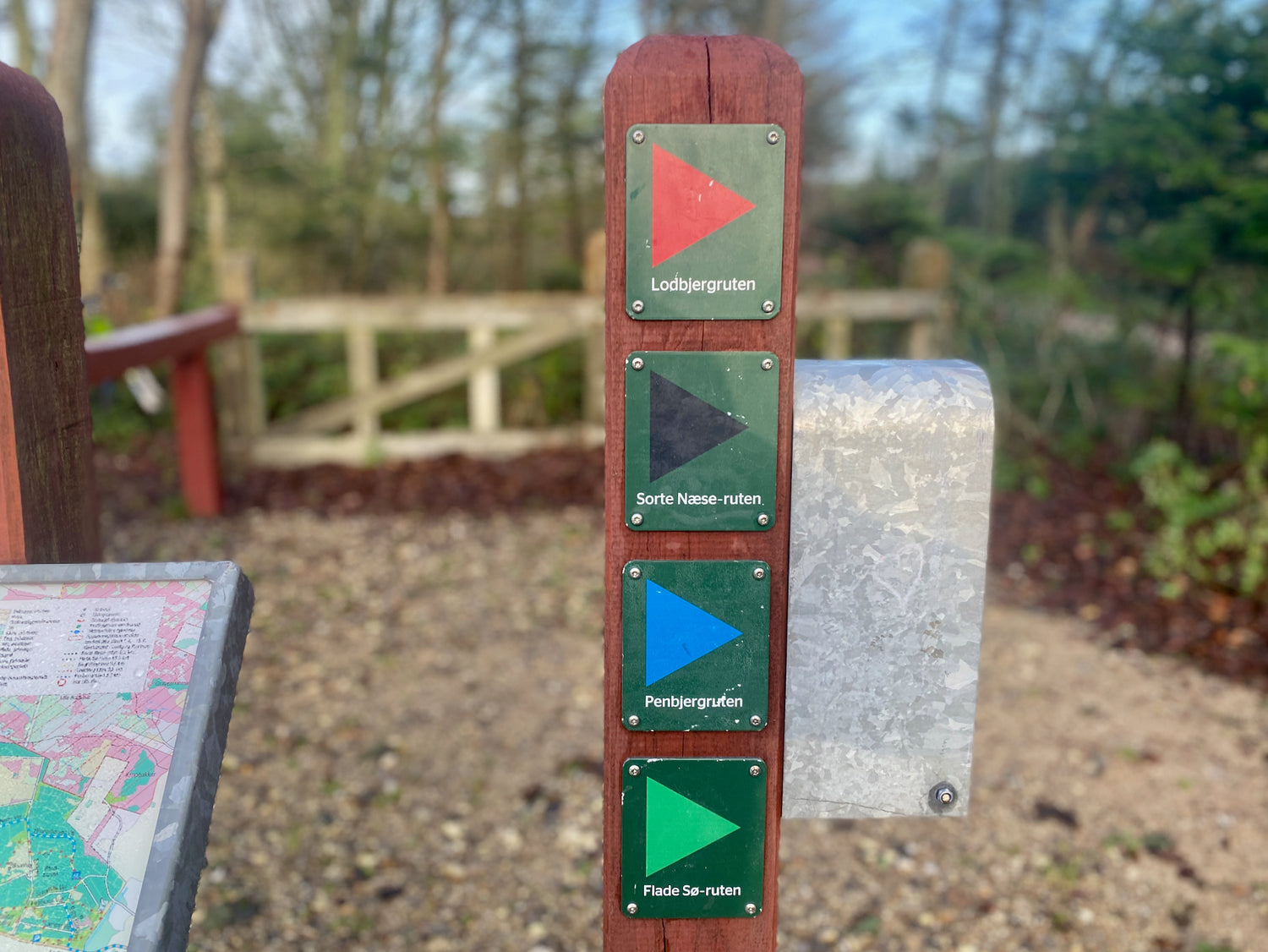
Sorte Næse route 6.2 km
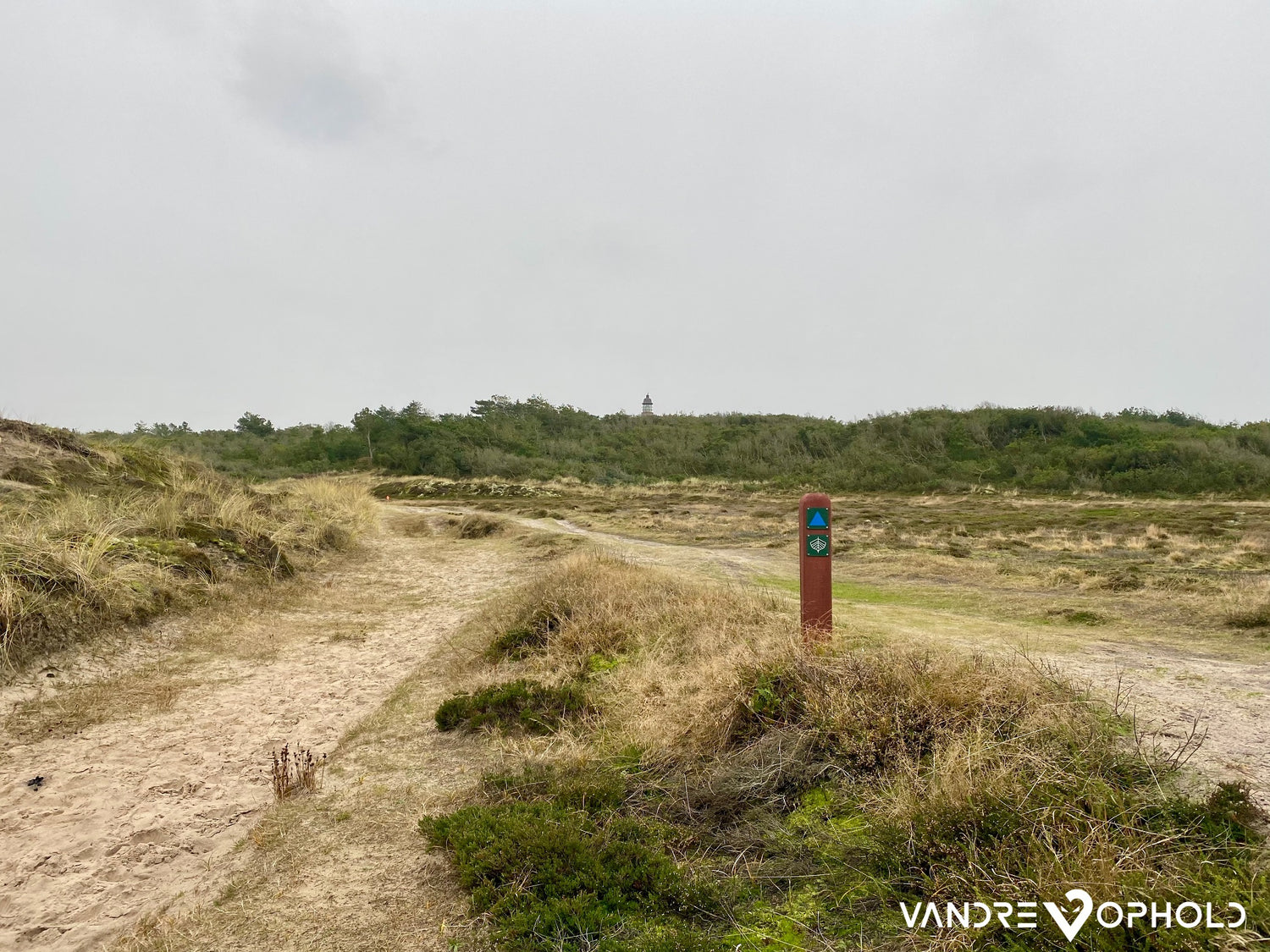
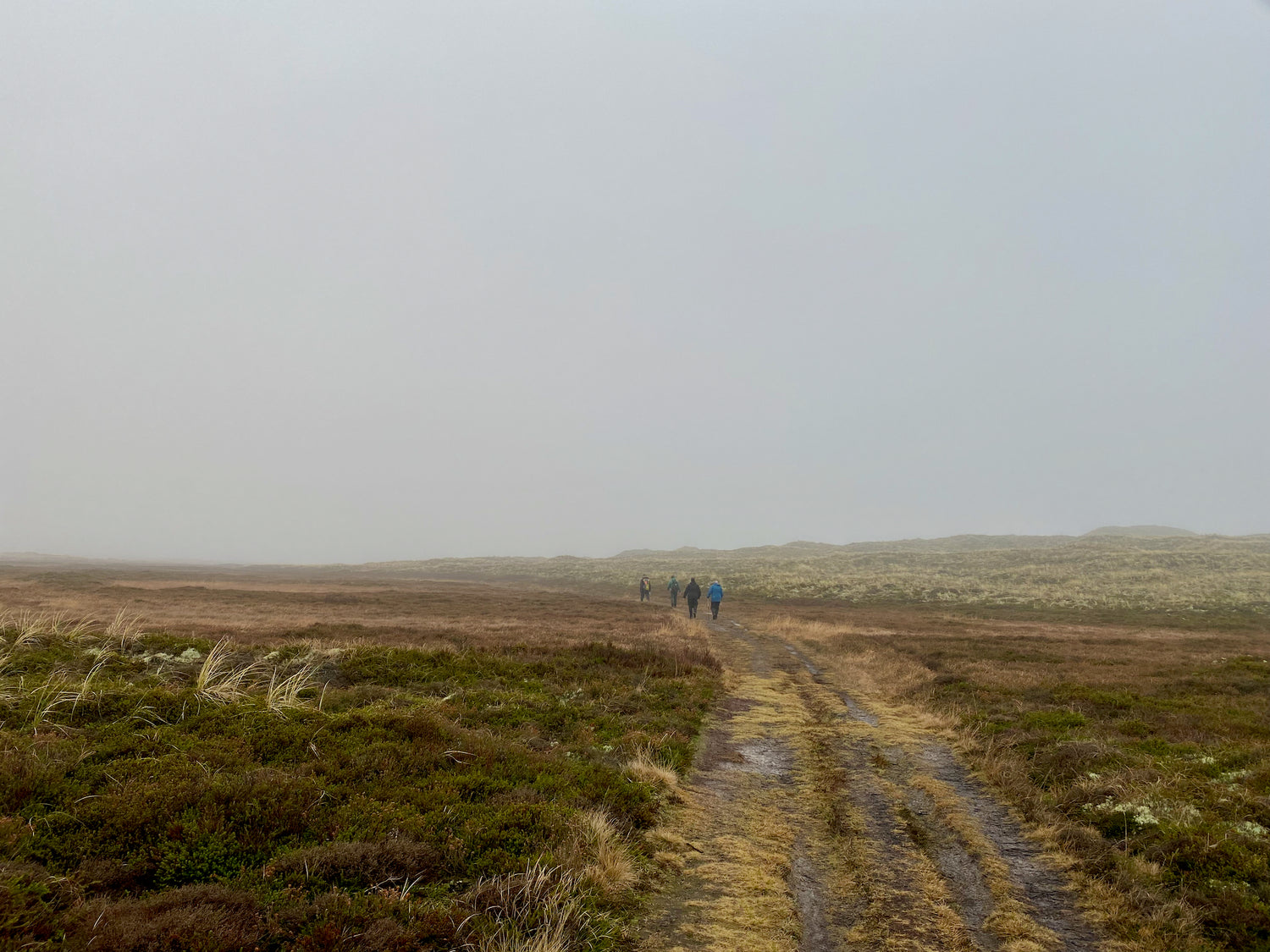
The Sorte Næse route goes over Lodbjerg Sande and down to the beach and follows it before the trip goes back to Lodbjerg Lighthouse. It is a beautiful but physically demanding trip.
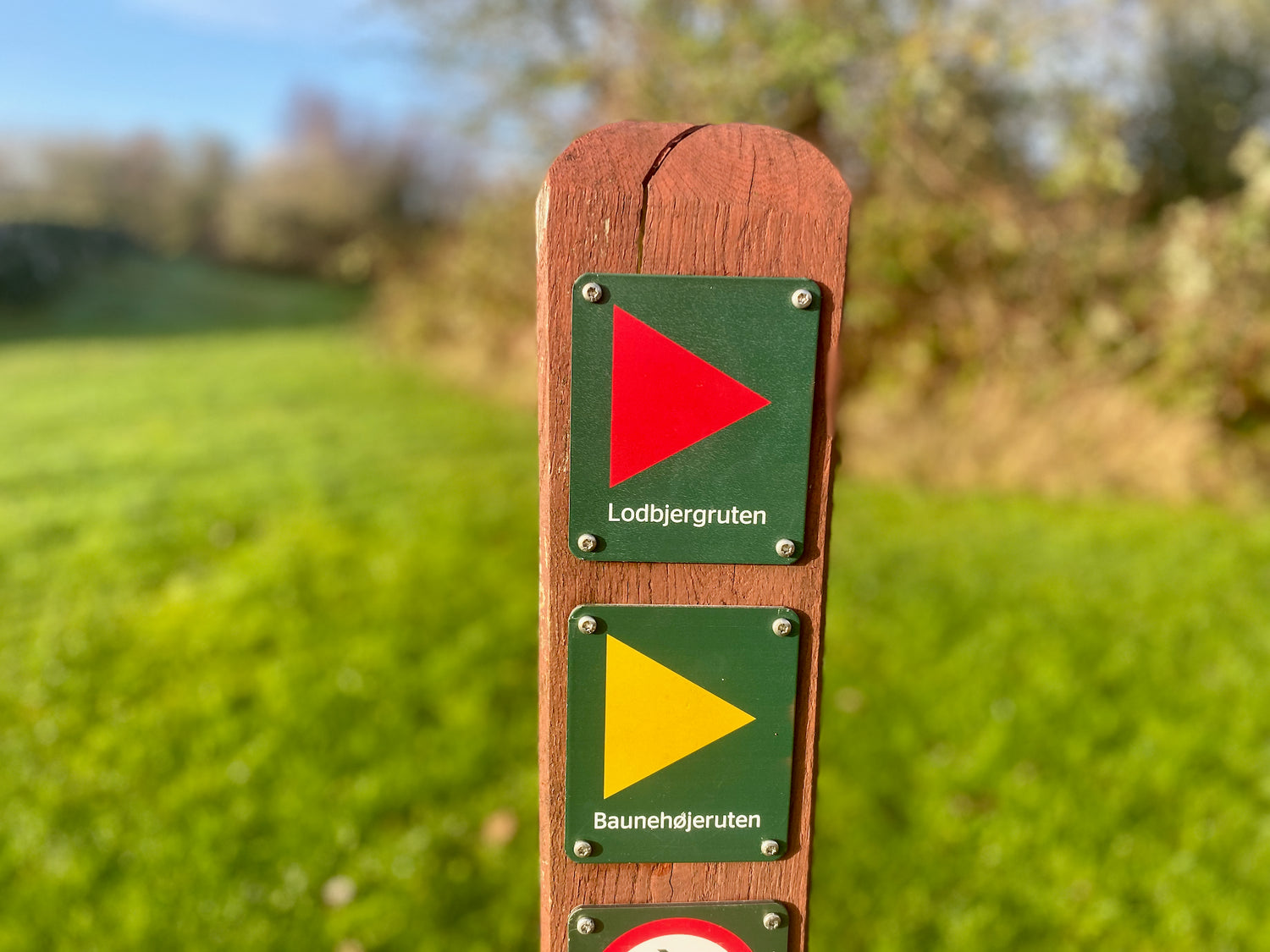
Baunehøj route 4.8 km
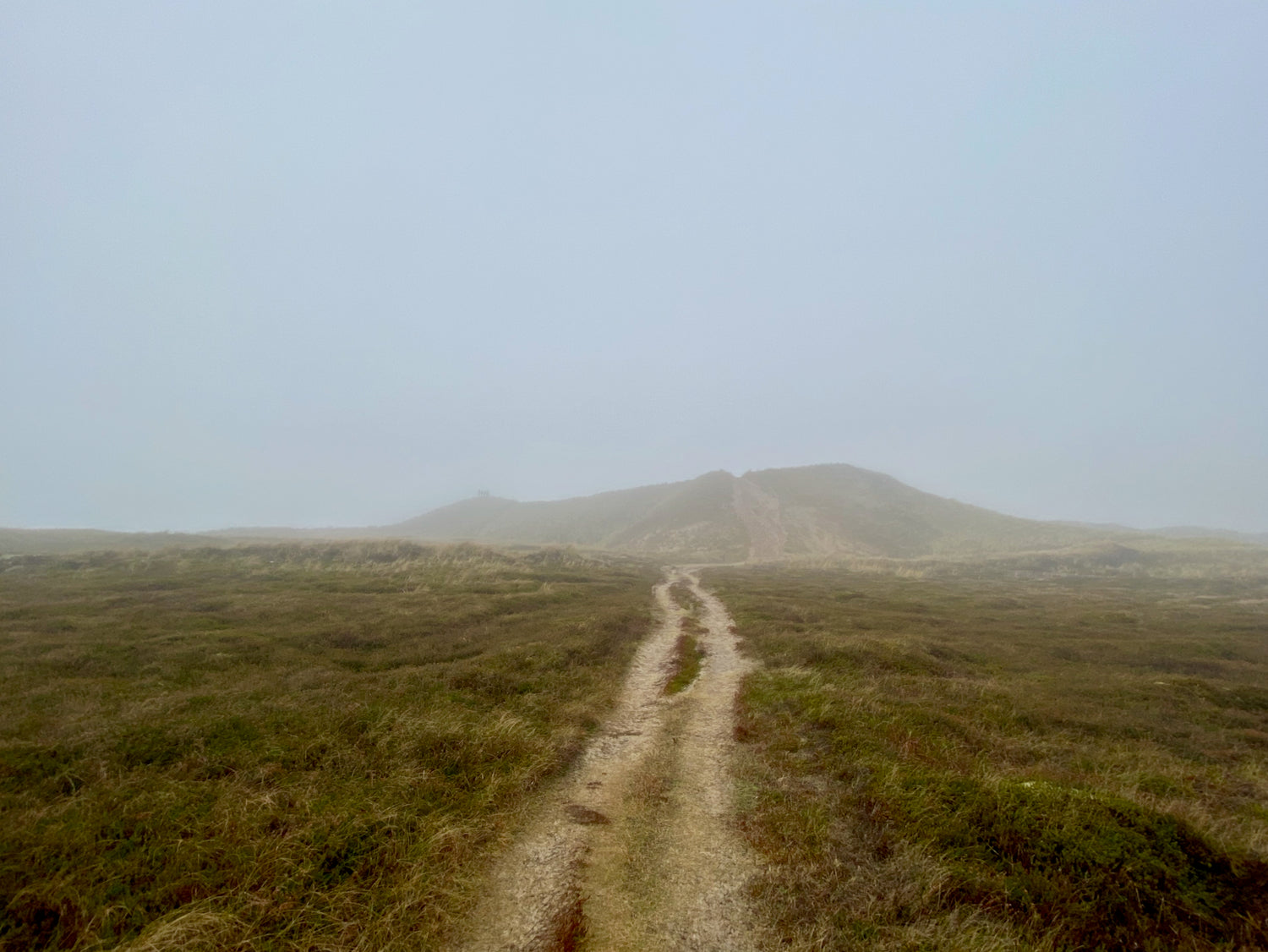
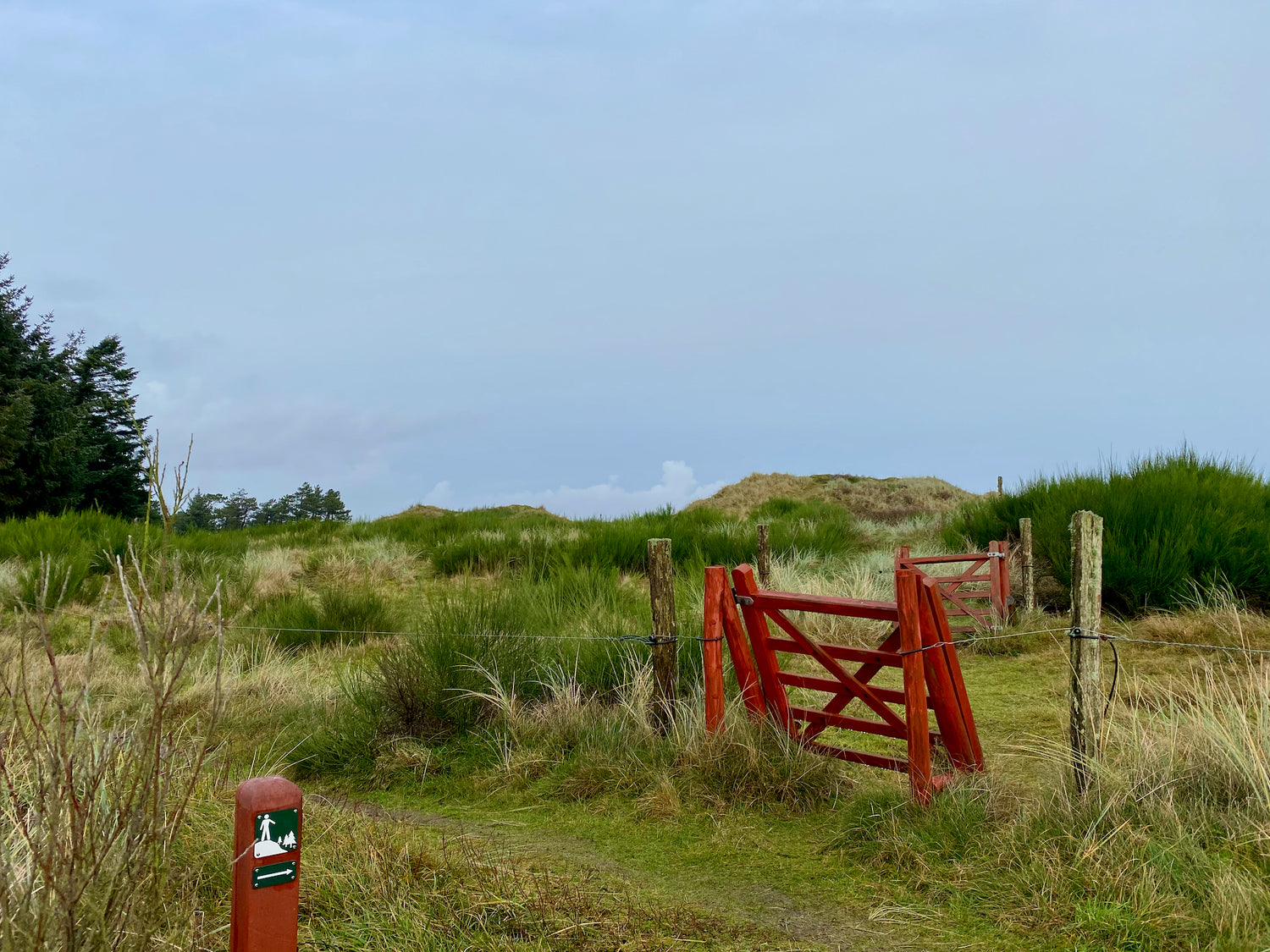
The Baunehøj route goes from Denmark's smallest medieval village church, Lodbjerg church, on to the Bronze Age hills Baunehøjene, from where you get great views of the landscape.
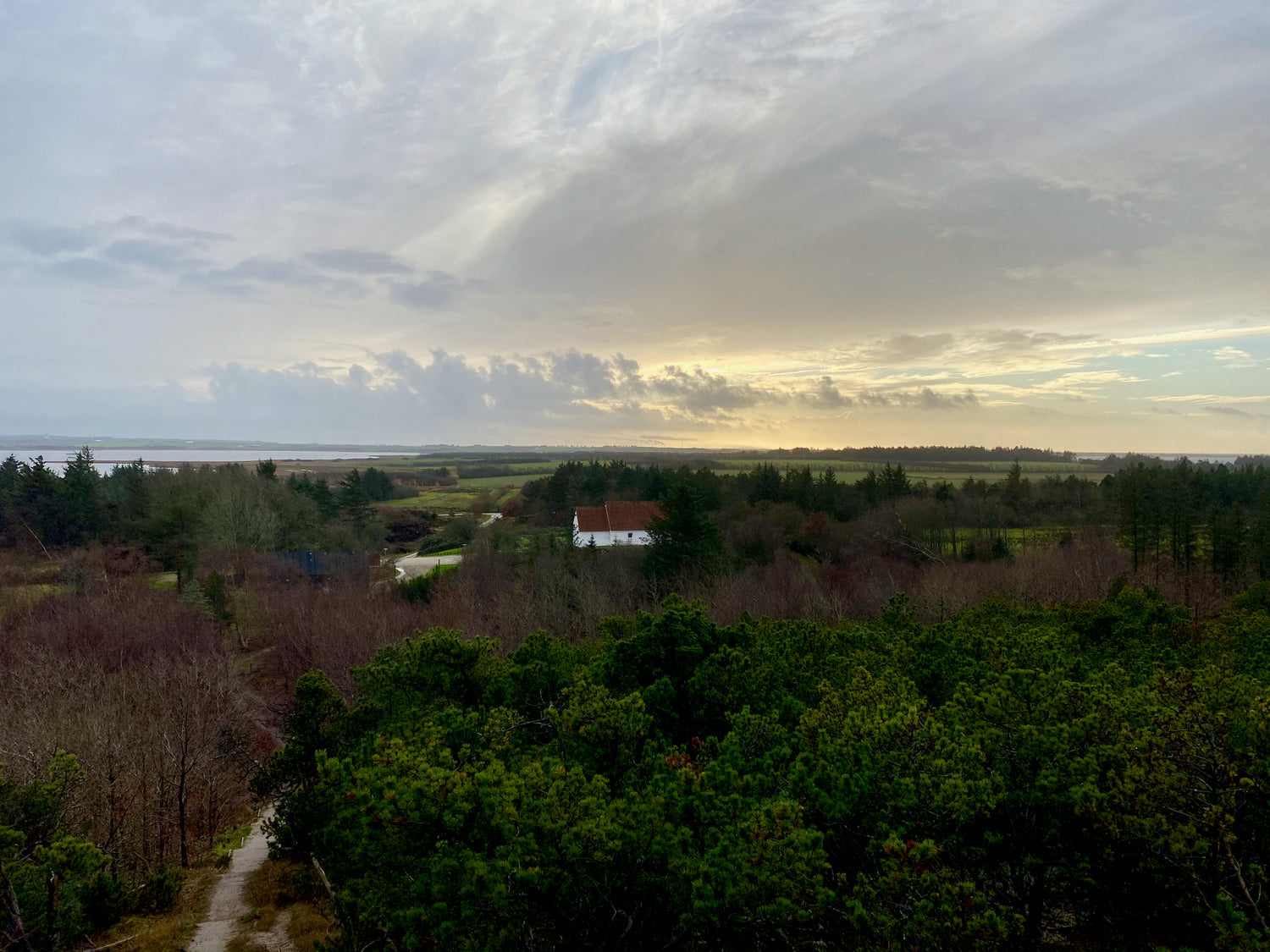
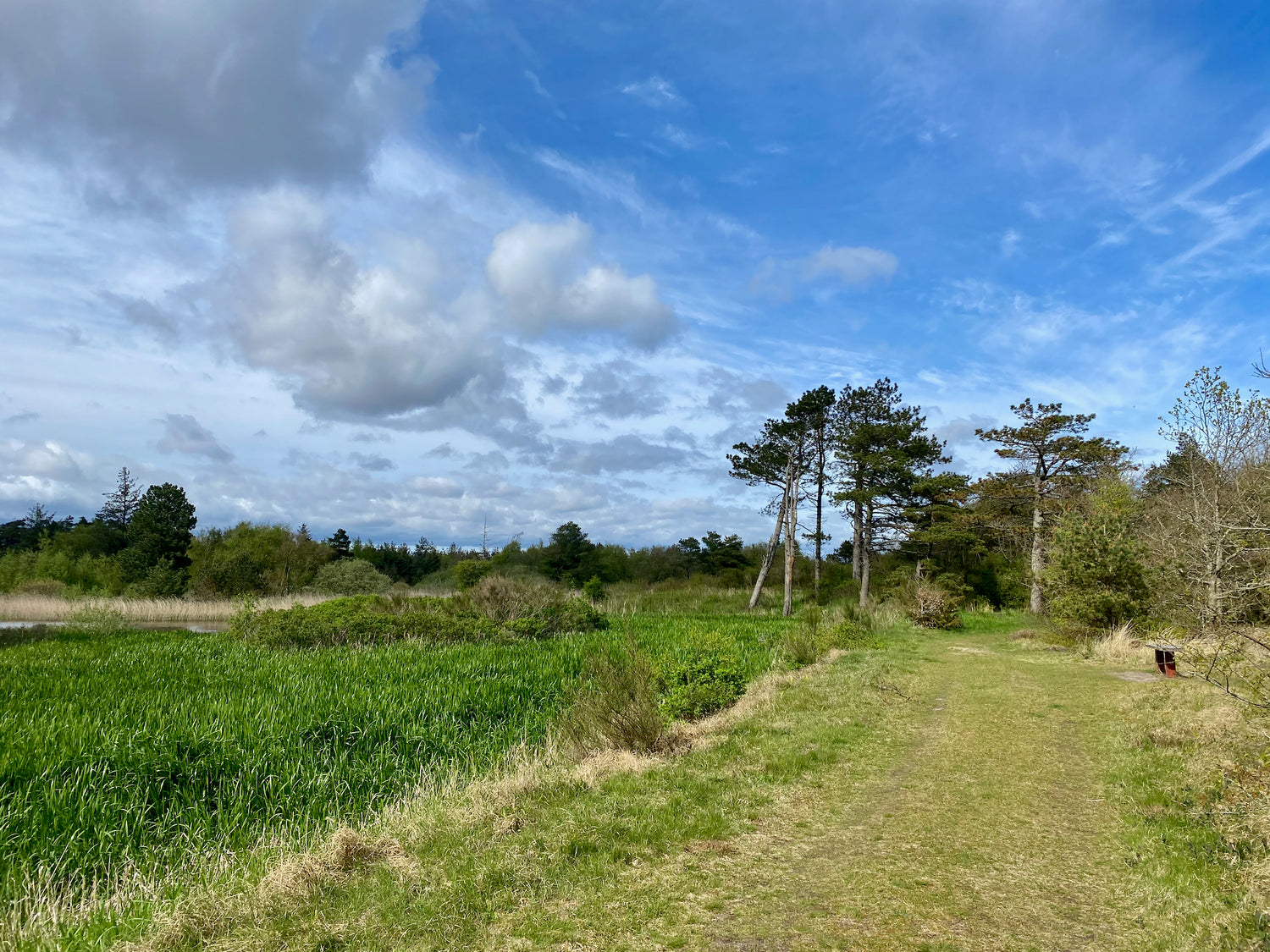
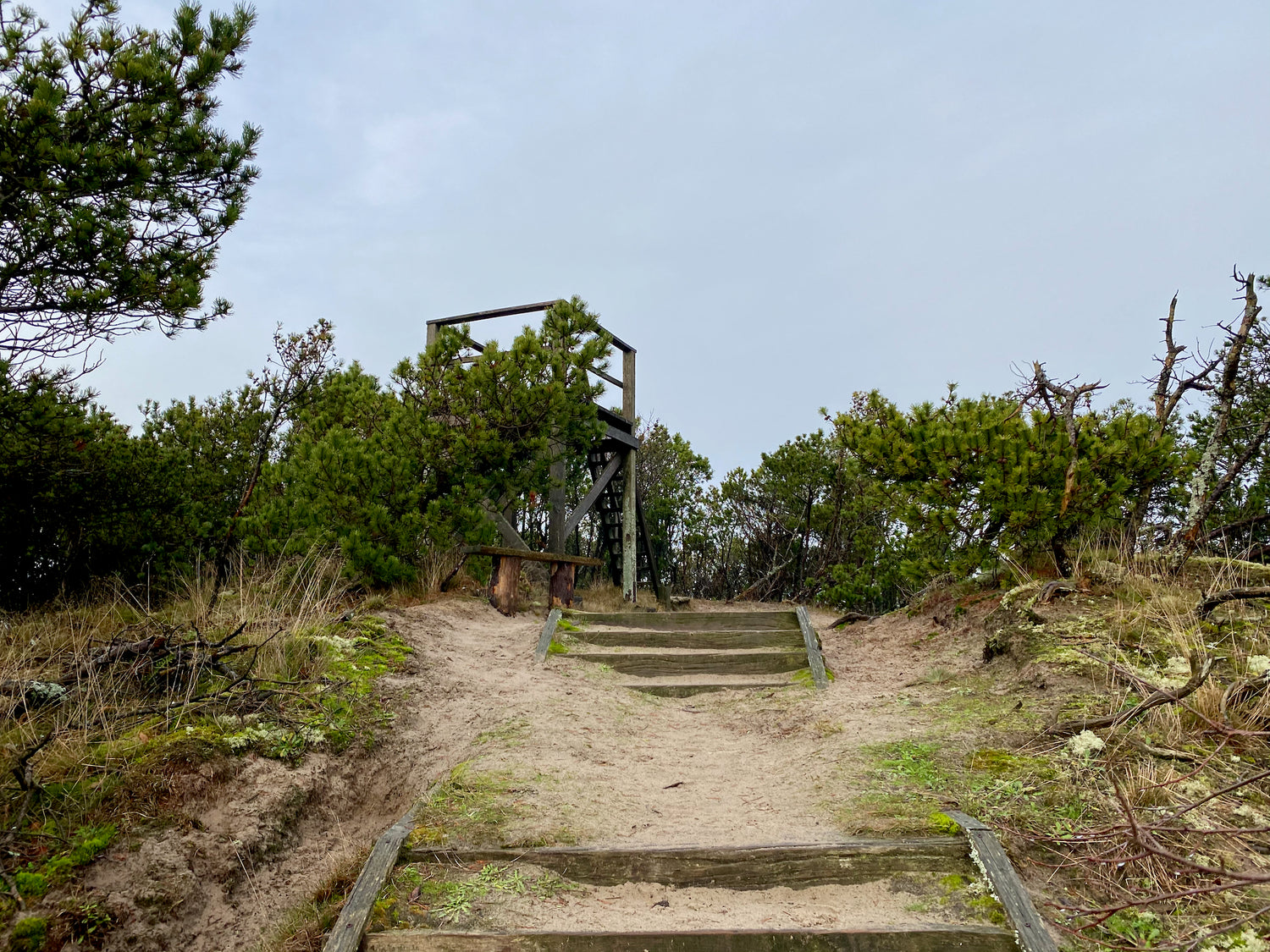
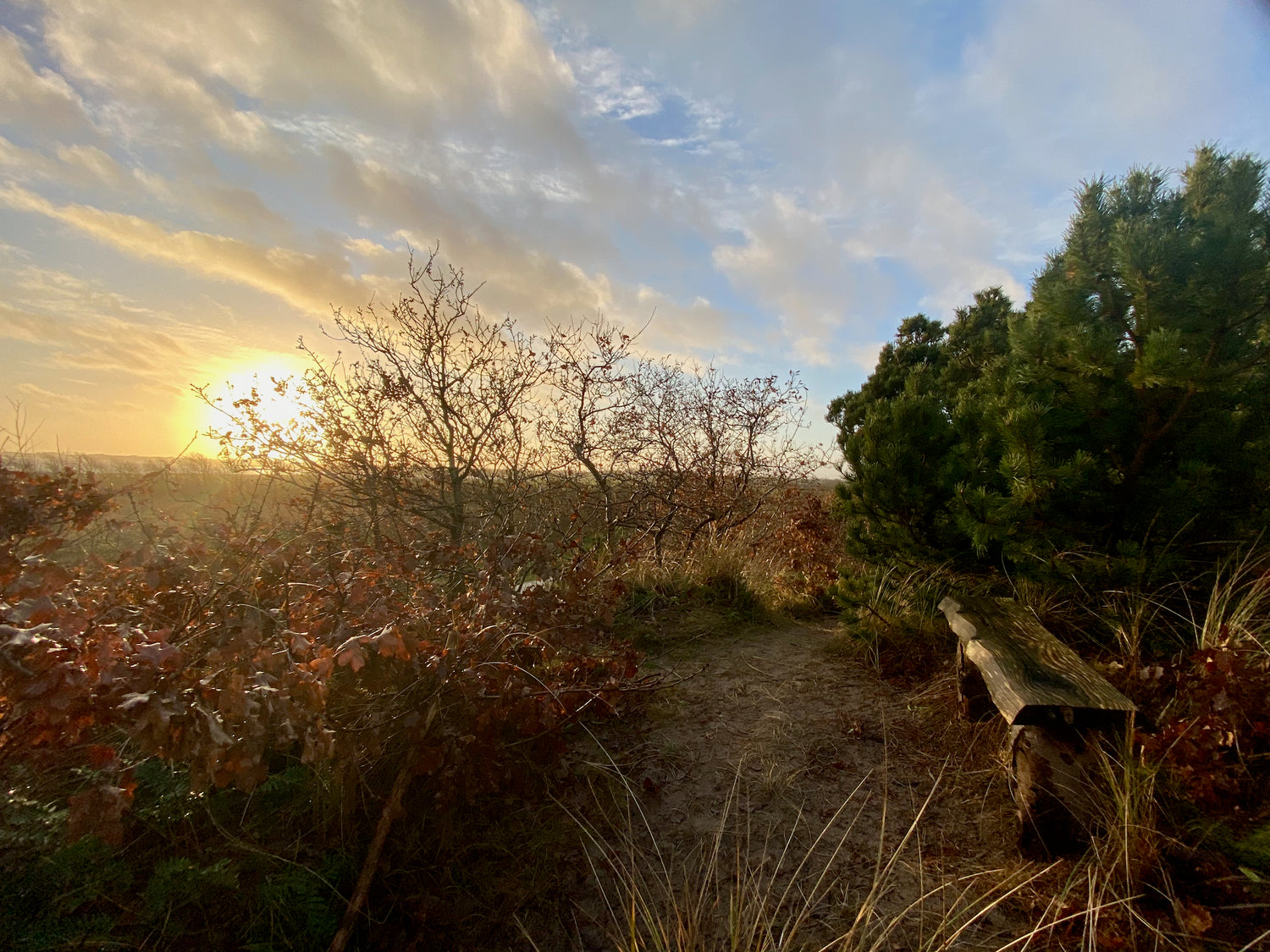

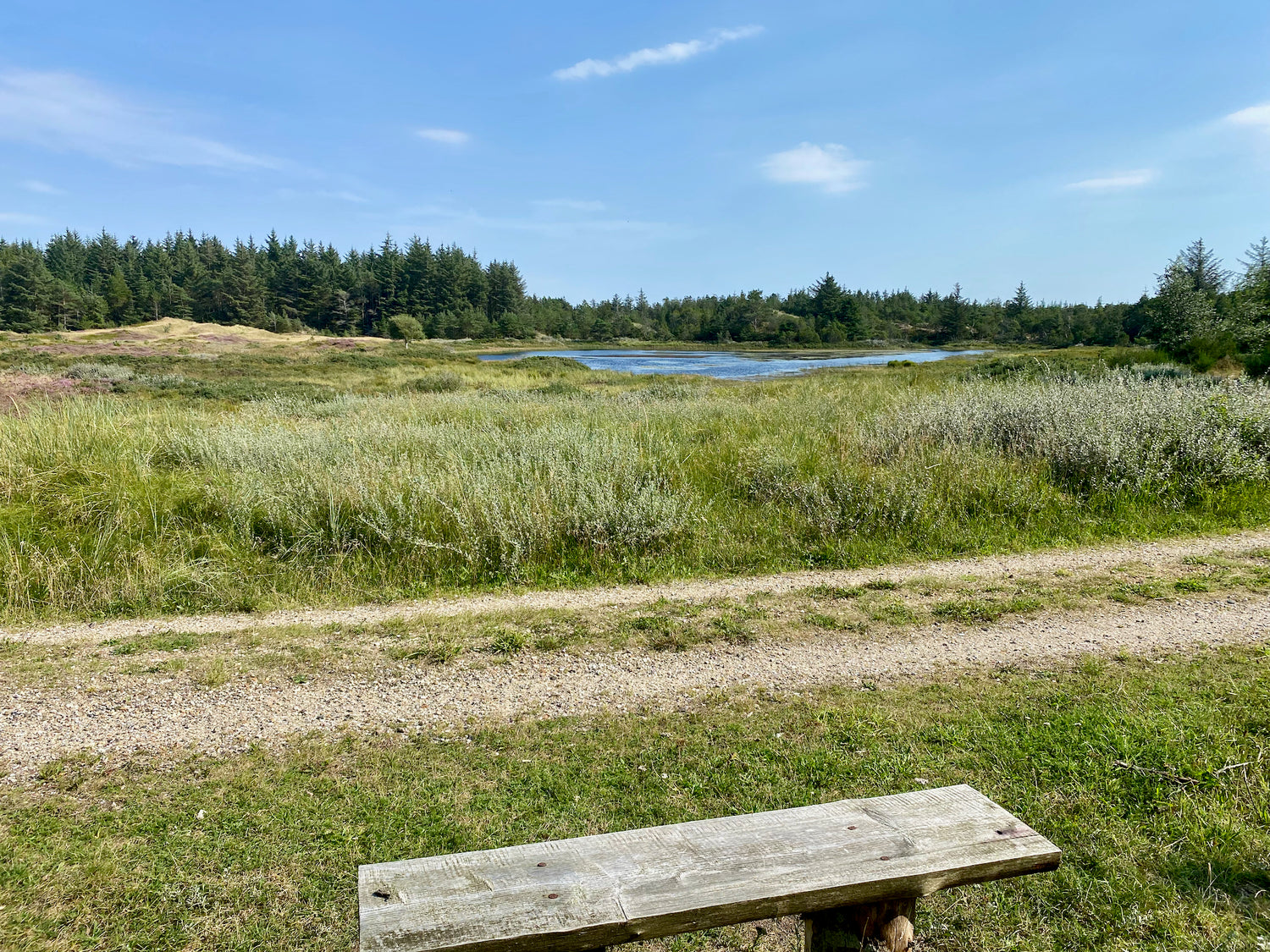
The Holden Lake route 4.8 km
On the trip you can stop at Holden Sø and enjoy the view of the water mirror which reflects the appearance of the forest with tree species such as Scots pine with its almost fiery orange bark.
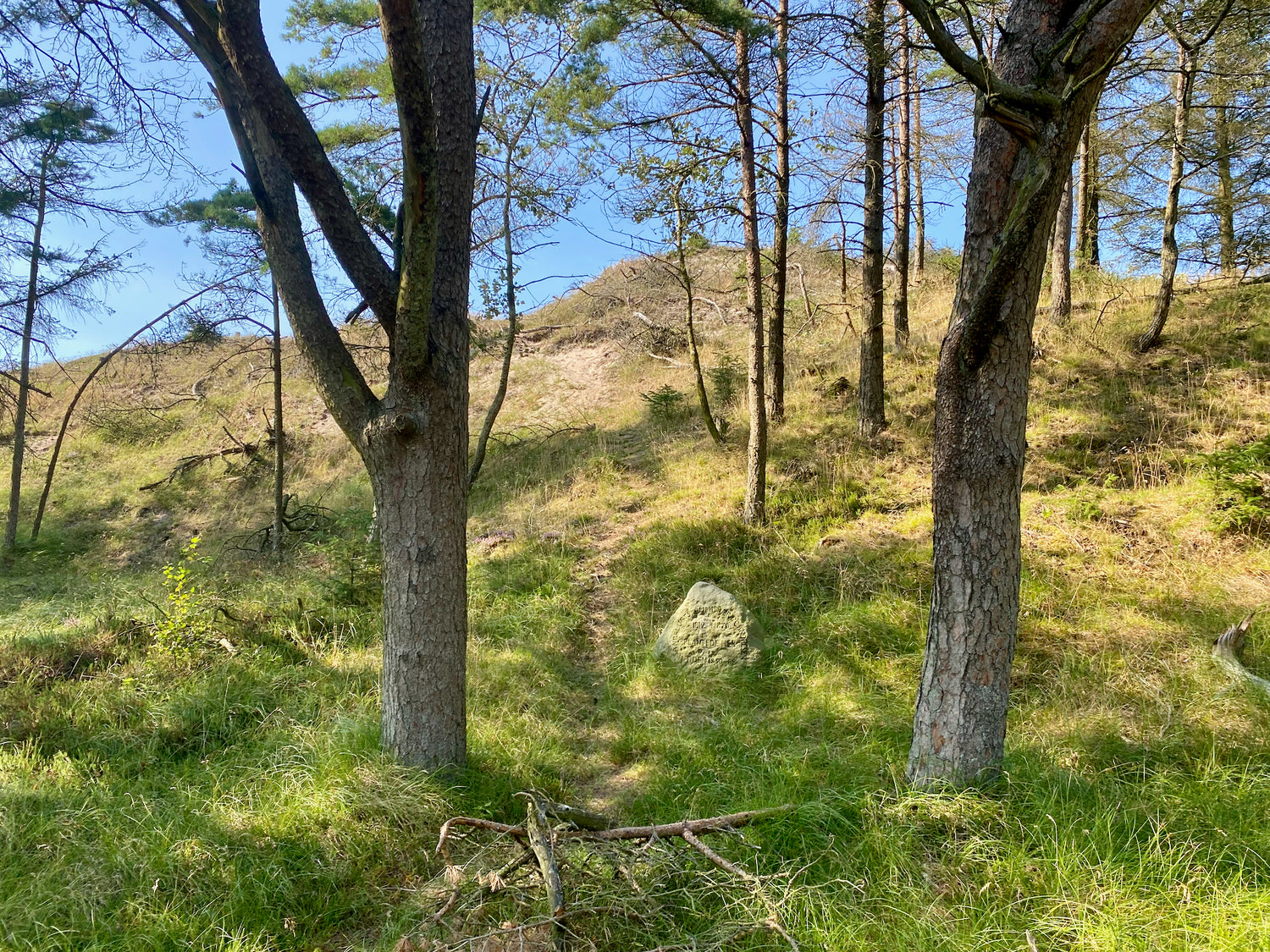
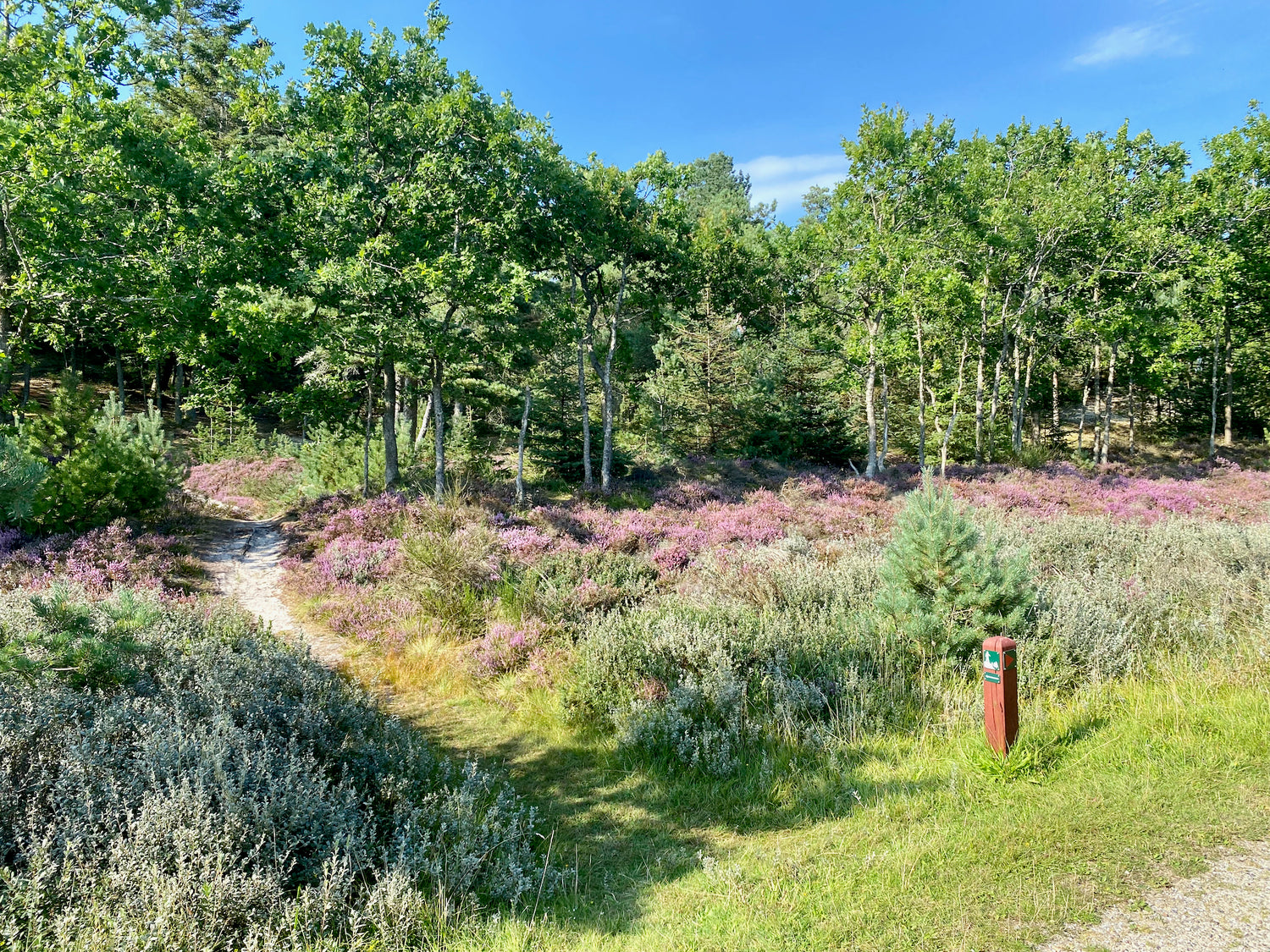
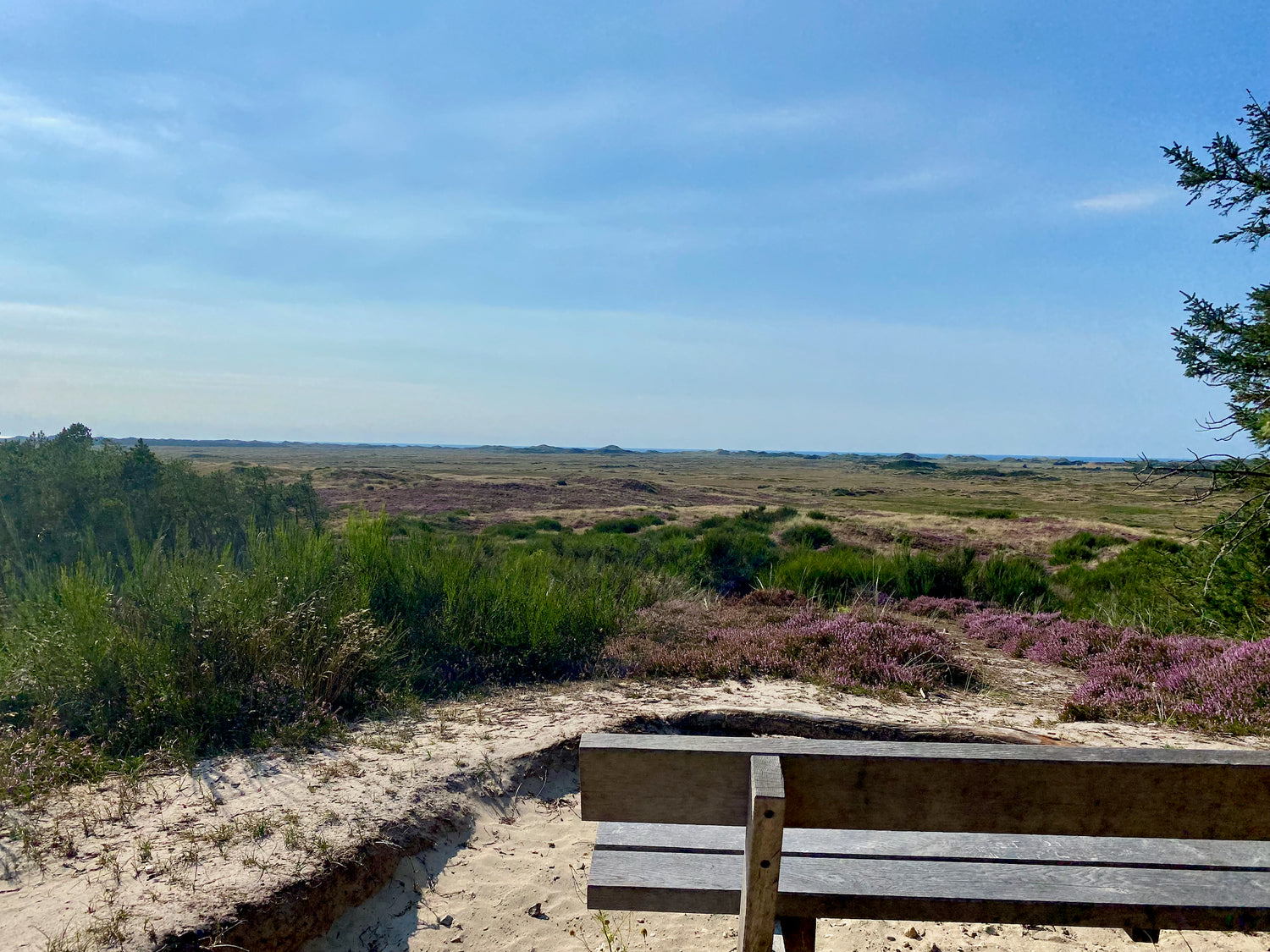
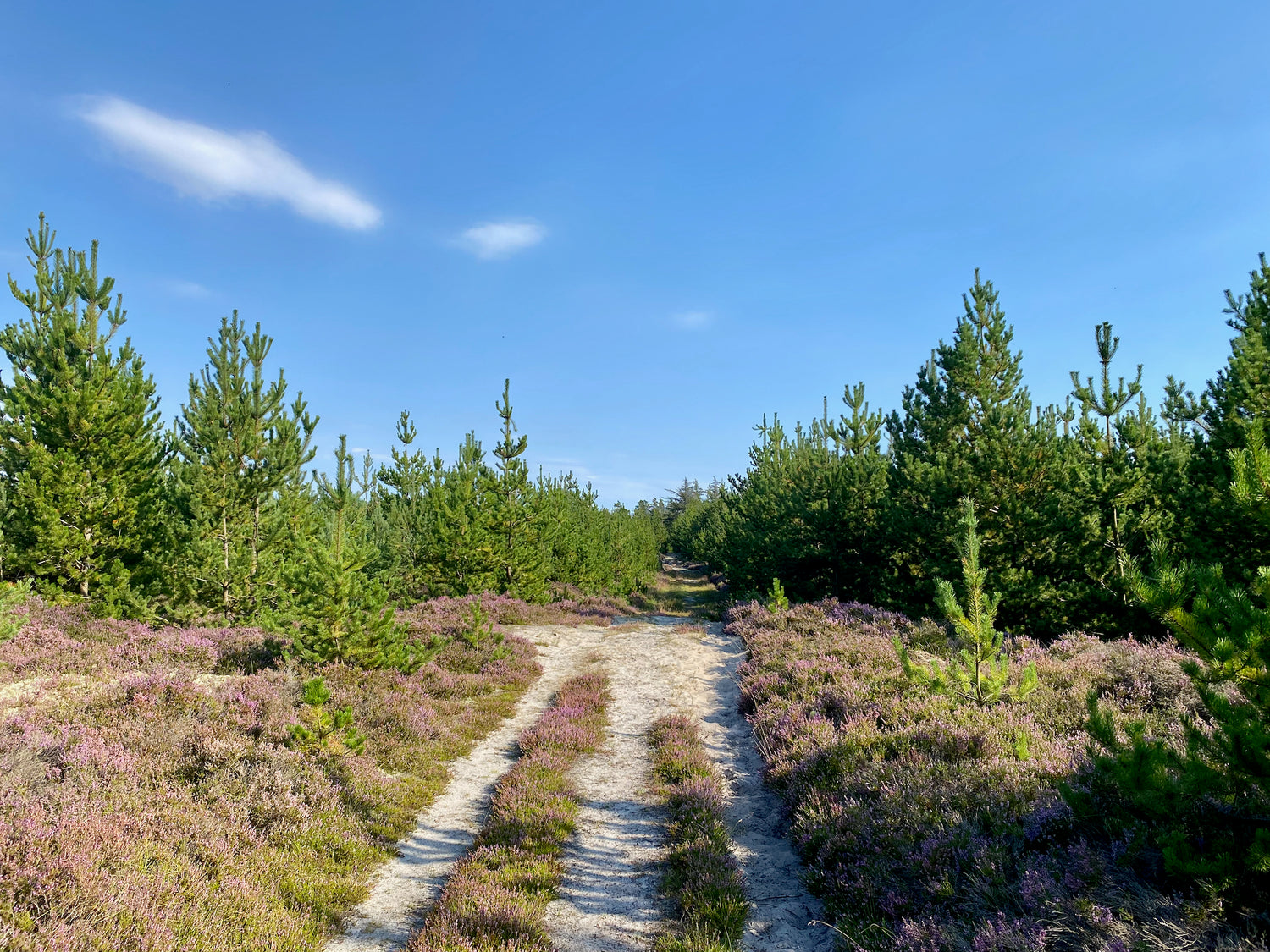
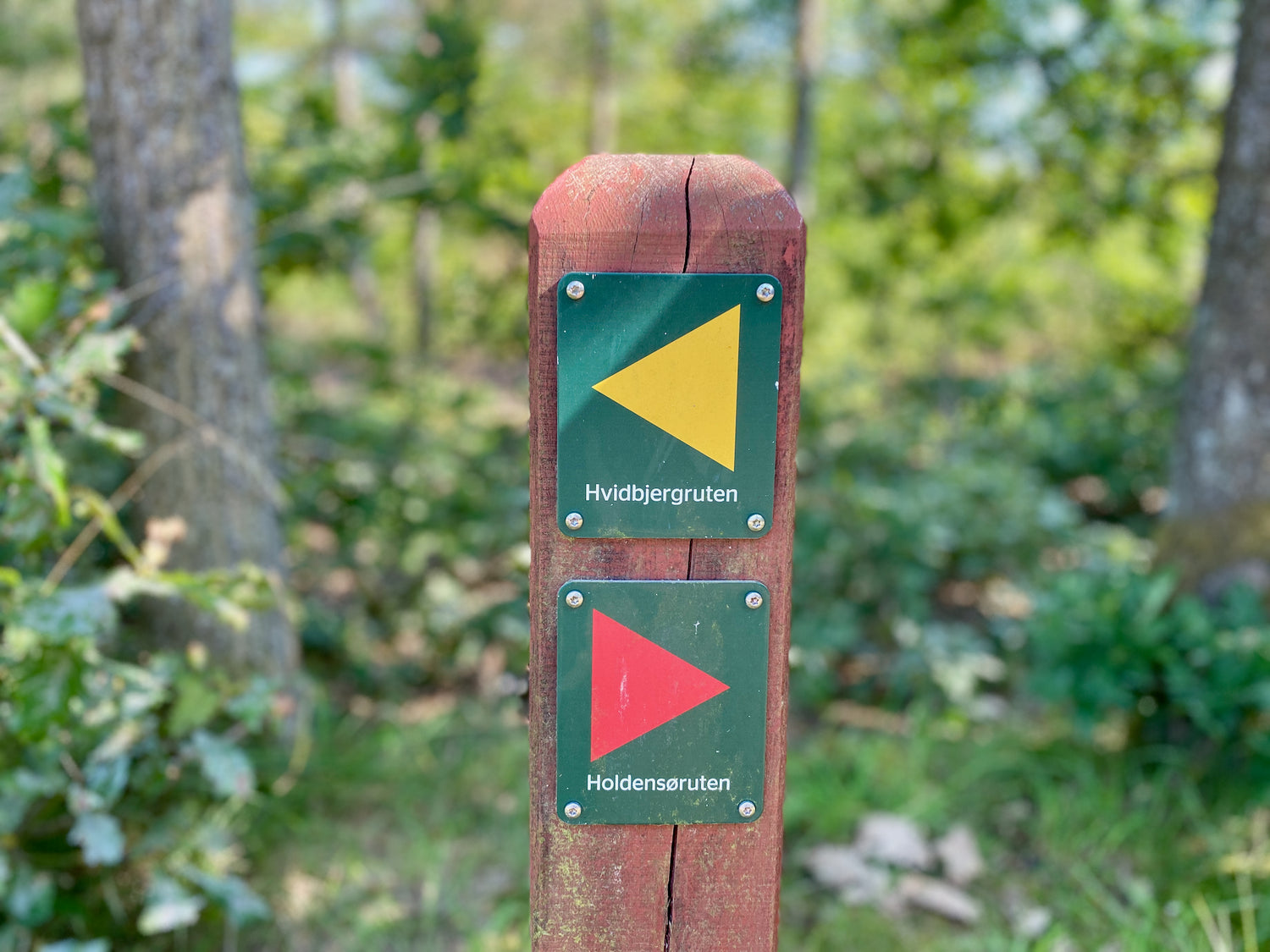
Lodbjerg route 9.5 km
The Lodbjegrrute is a wonderful hike that has a bit of everything with dunes, heath, coniferous forest, deciduous trees and pastures with sheep, cattle and horses.
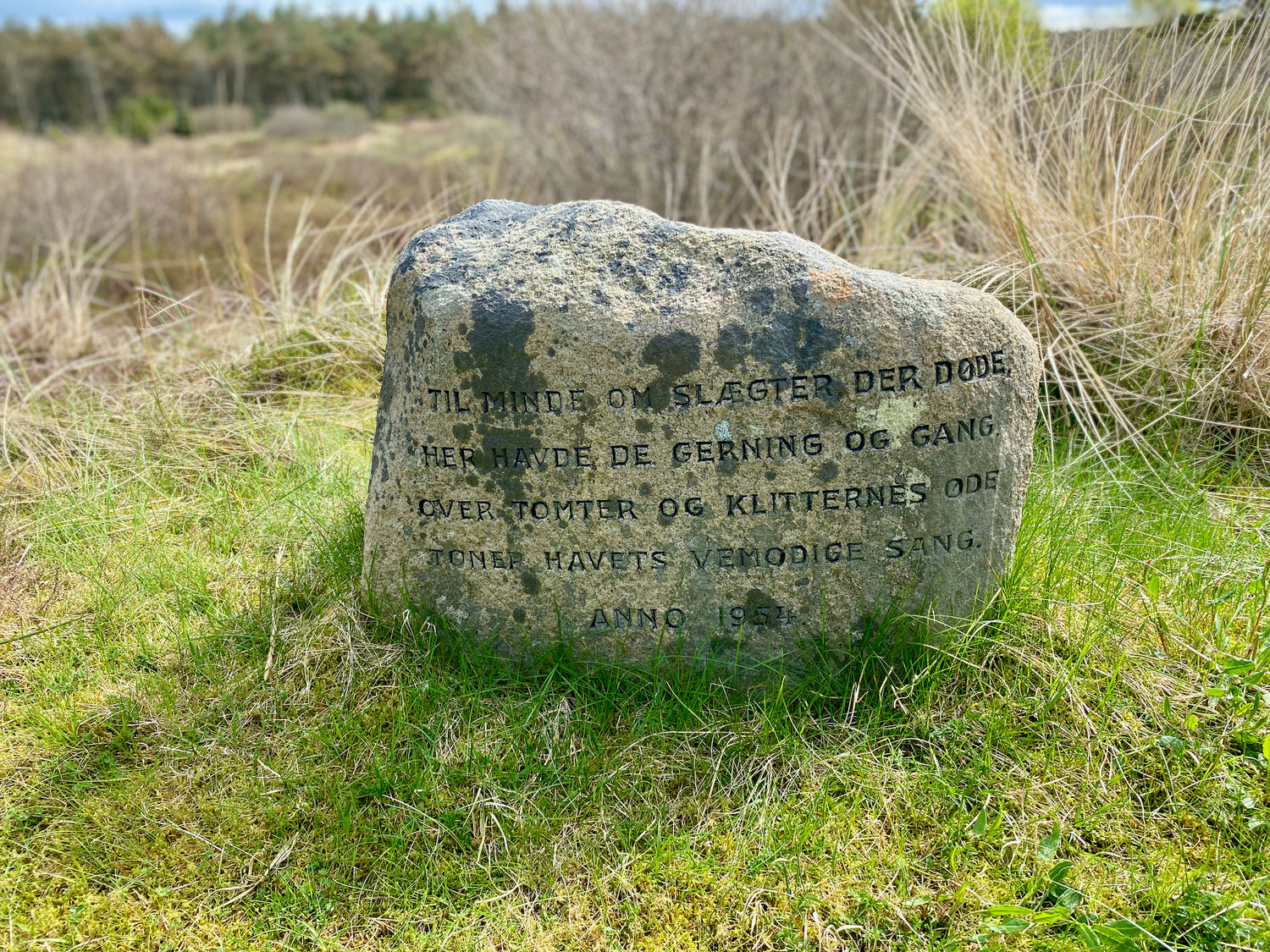
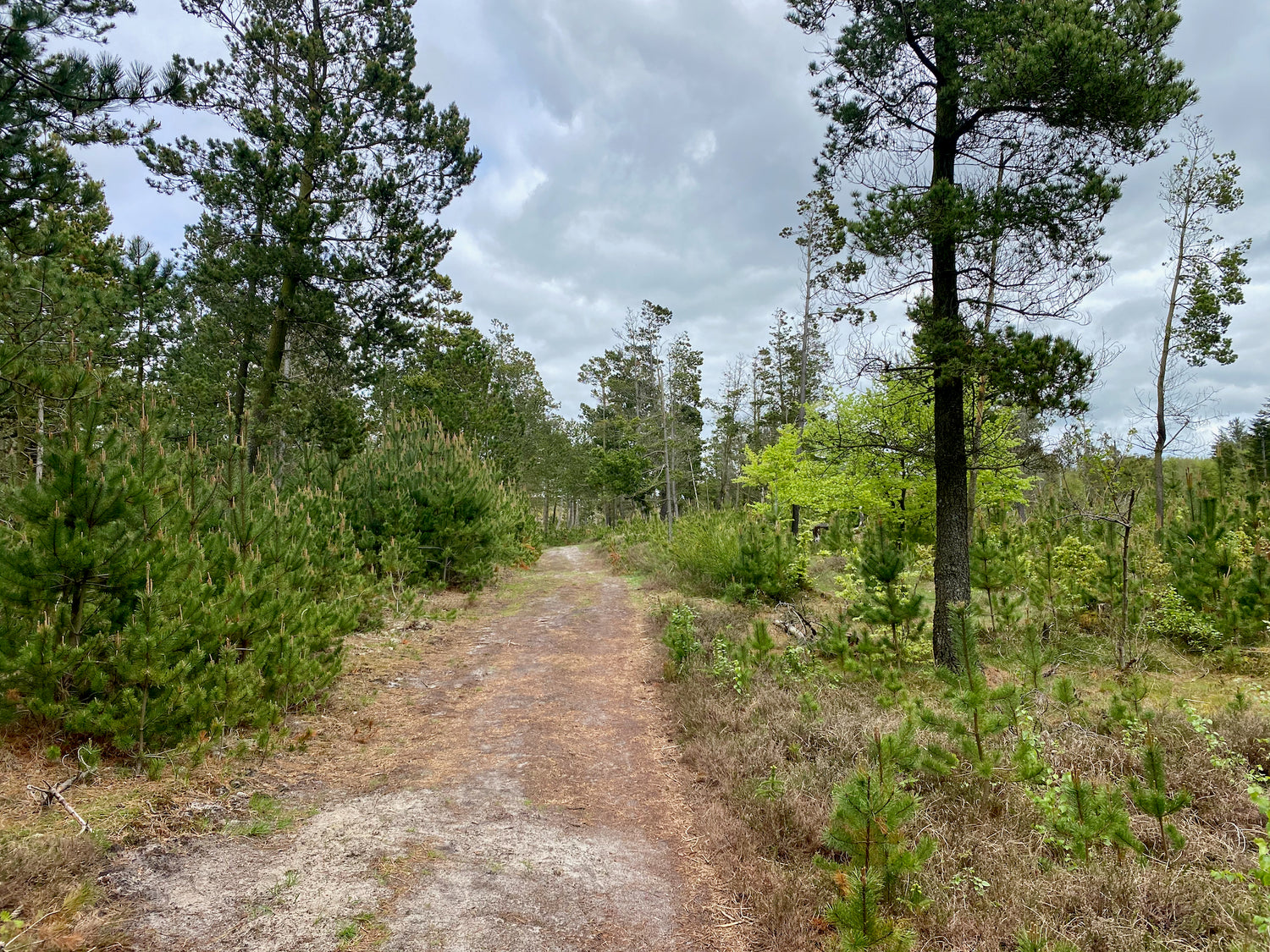
Ideal sequence of the paths in relation to transport.
We recommend that you walk the hiking trails in the following order to minimize the transport distance between the trails:
- Penbjerg route 5.7 km
- Sorte Næse route 6.2 km
- Baunehøjruten 4.8 km
- The Holden Lake route 4.8 km
- (Lodbjerg route 9.5 km)
You can choose to skip paths so that the distance fits what you want to walk.
Be aware
If you continue onto the Sorte Næse route following the Penbjerg route, you can advantageously omit walking all the way back to the lighthouse. Instead, follow the black arrows (Sorte Næse route) from where the rescue road and the path to Penbjerg and Sorte Næse meet. It is indicated by the arrow on the map above.
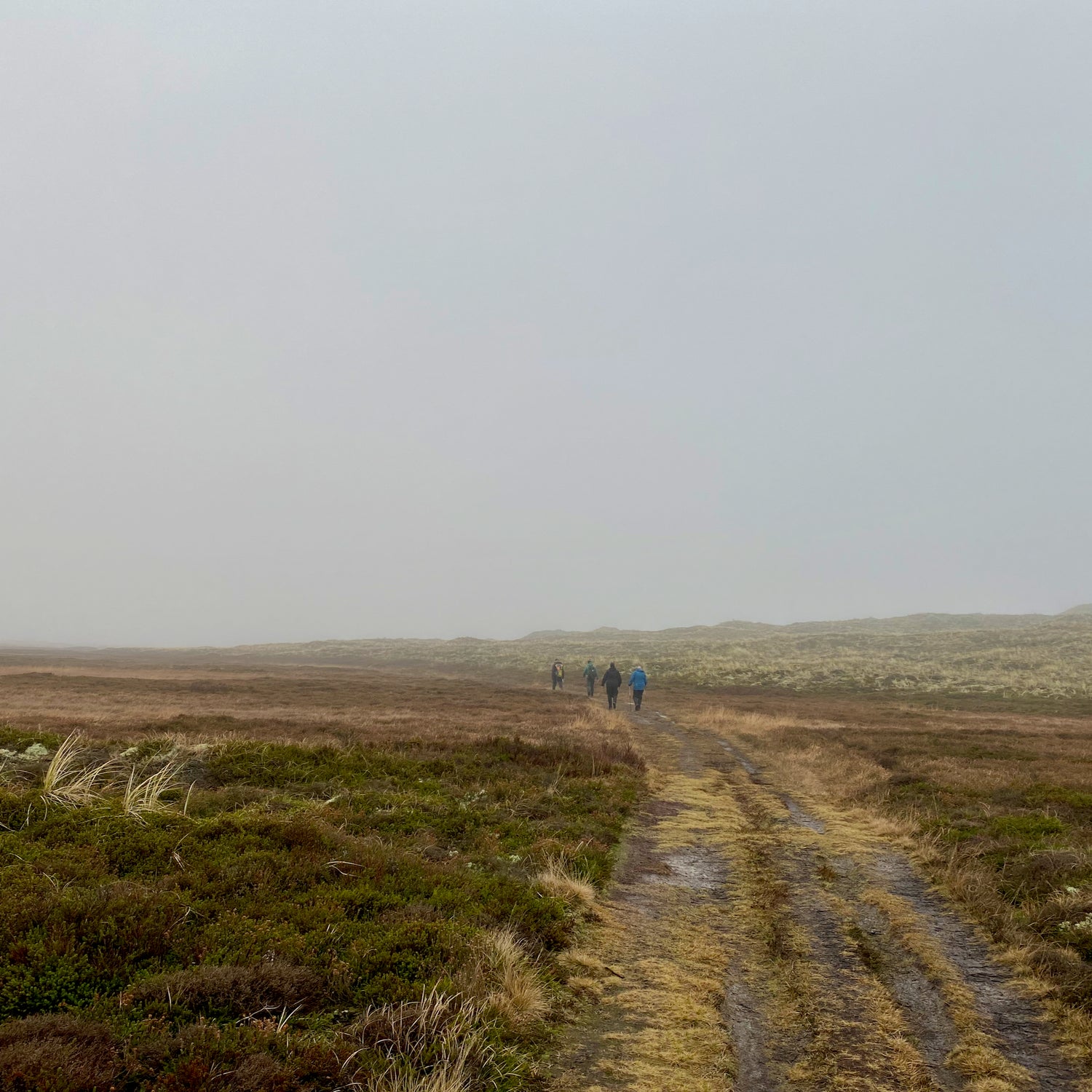
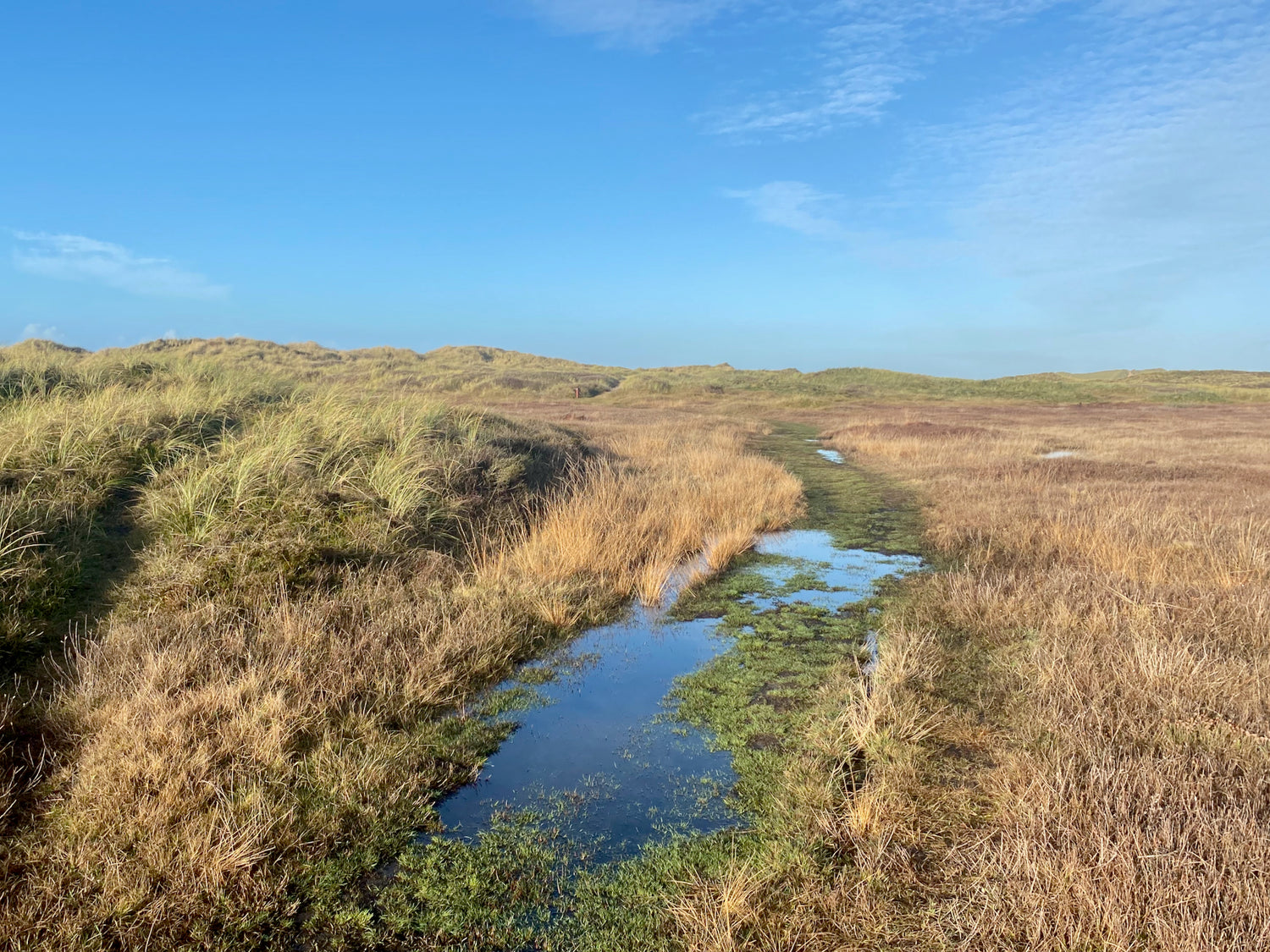
You should be prepared for the possibility of encountering a significant amount of water on the Penbjergruten after heavy rain for extended periods. There is almost always an alternative route available to bypass the water.
On the Sorte Næse route, strong winds can lead to the sea reaching right up to the dunes, and there may also be water in some other places along the route.
"If the Penbjerg and Sorte Næse routes are completely impassable, you can choose to switch to the Lodbjerg route as an alternative. The Lodbjerg route is an extension of the Baunehøjruten, totaling 9.5 km."
Experiences and sights
-
Lodbjerg Lighthouse
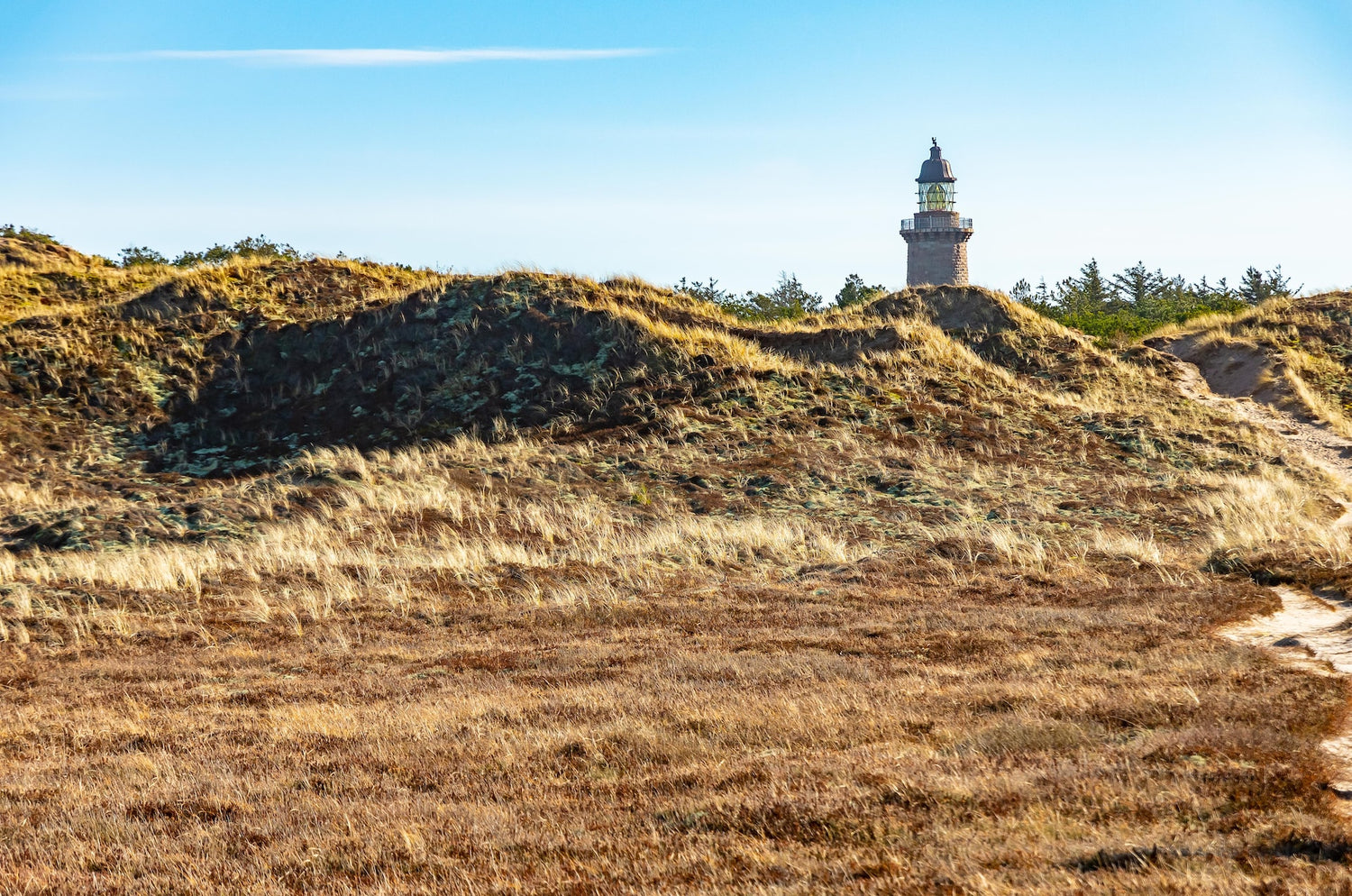
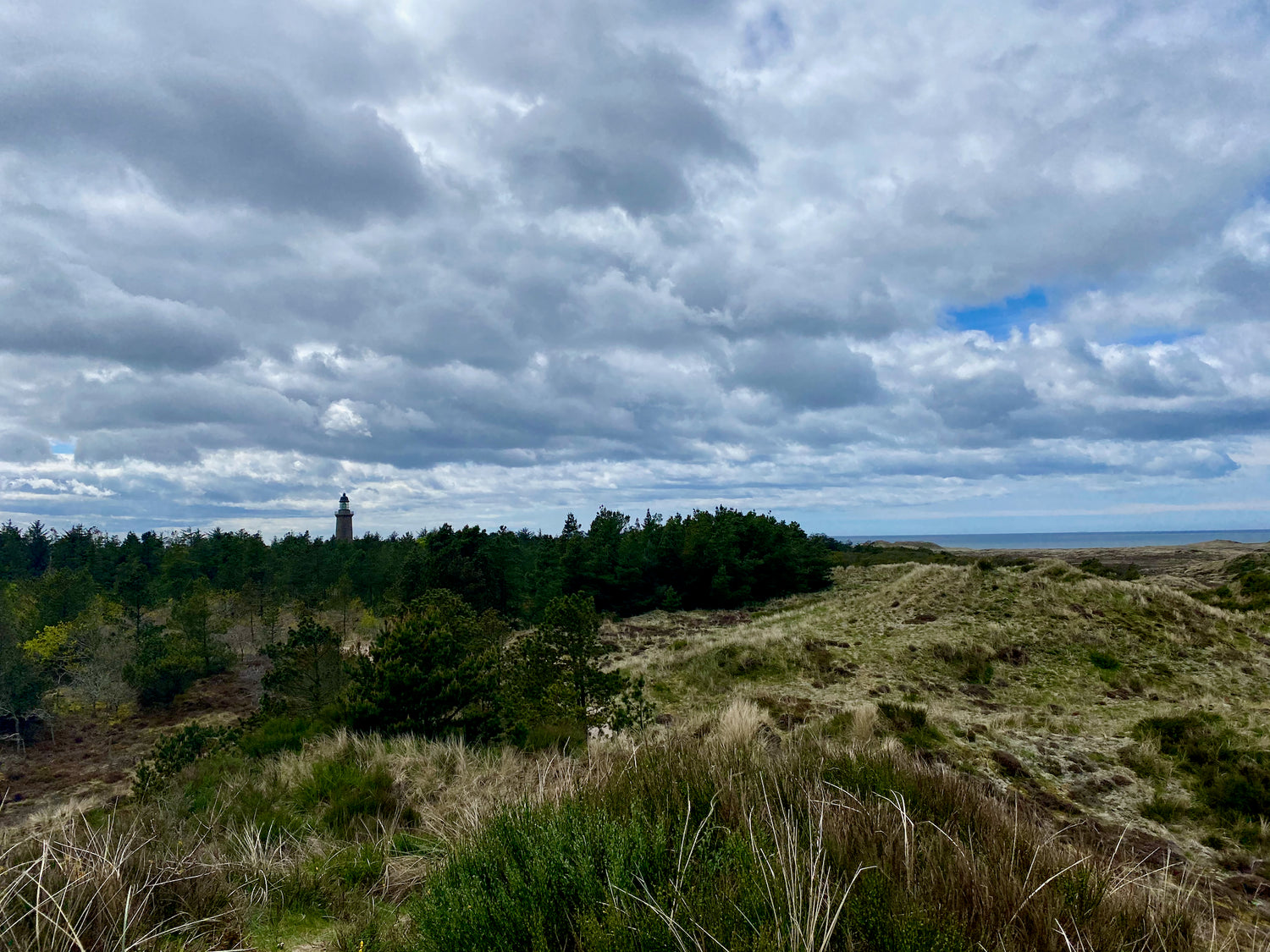
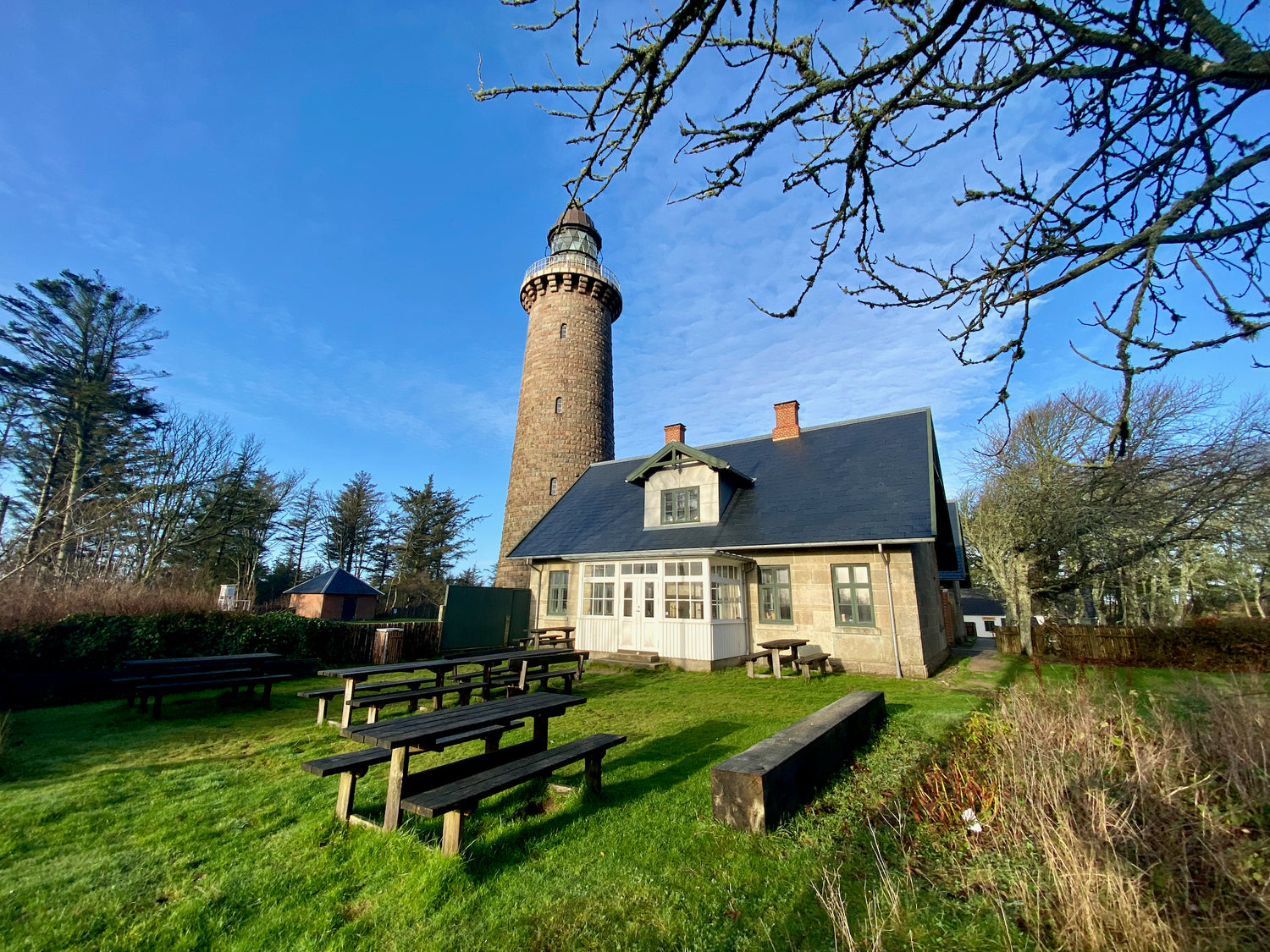
Lodbjerg Lighthouse was built in 1883 from beautiful granite stones from Bohus in Sweden. The lighthouse is 35 m high and in clear weather the view from the lighthouse is magnificent.
Lodbjerg Lighthouse was restored in 2019 and has a nice exhibition with the history of the lighthouse from the beginning of construction to the present day.
In the old lighthouse keeper's residence at Lodbjerg Lighthouse, there is now a cozy café where you can eat freshly baked home-baked cakes and enjoy a good cup of coffee or tea. -
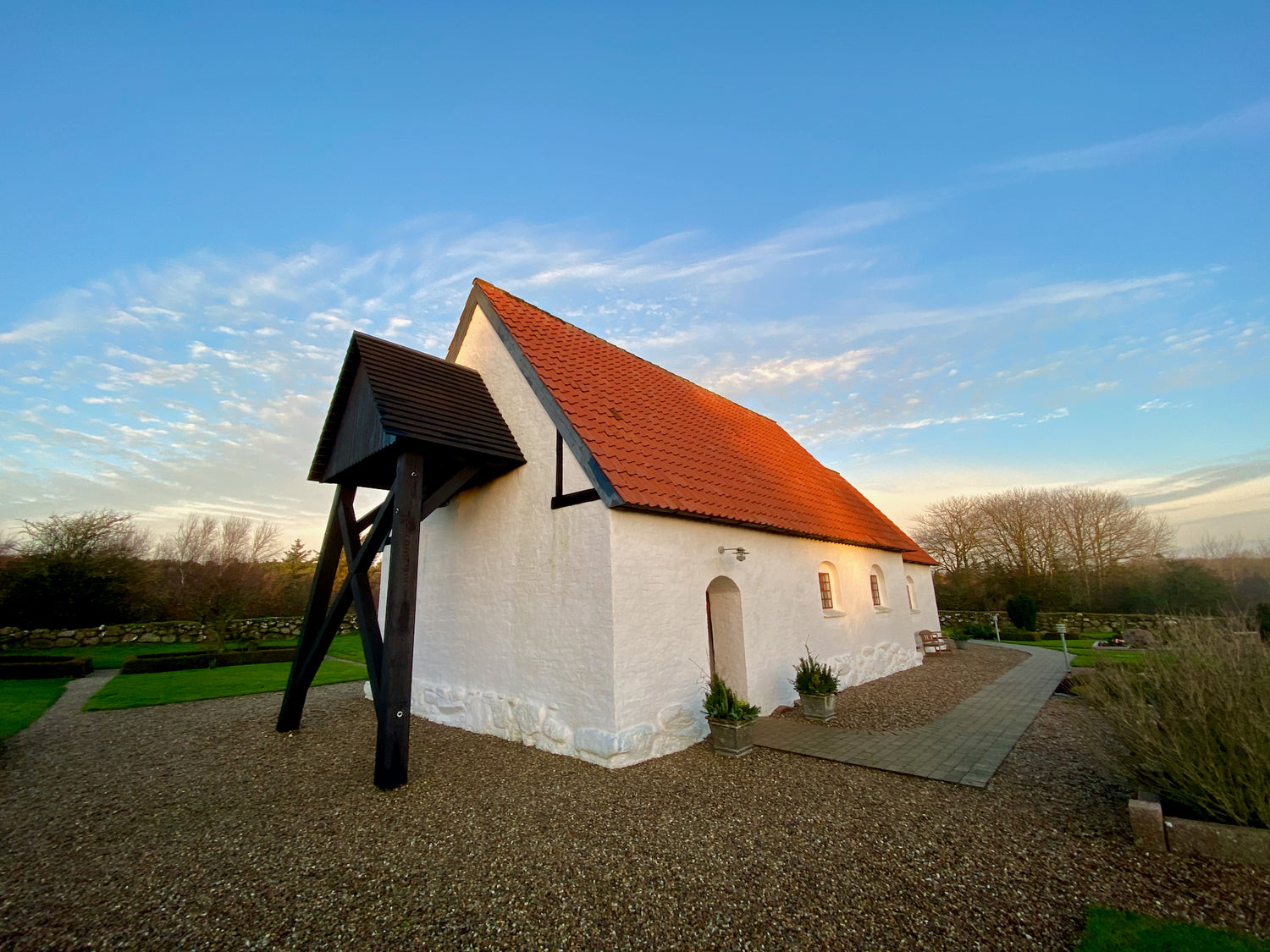
Lodbjerg Church
Lodbjerg Church, beautiful and lonely surrounded by forest and dunes, is Denmark's smallest medieval village church.
The church was probably built between 1490 and 1540. It must have been moved twice while the parishioners avoided the sand drift.
At the west gable of the church is a wooden belfry and it has two Late Gothic frescoes:
Mary as Queen of Heaven and the copper serpent in the desert. -
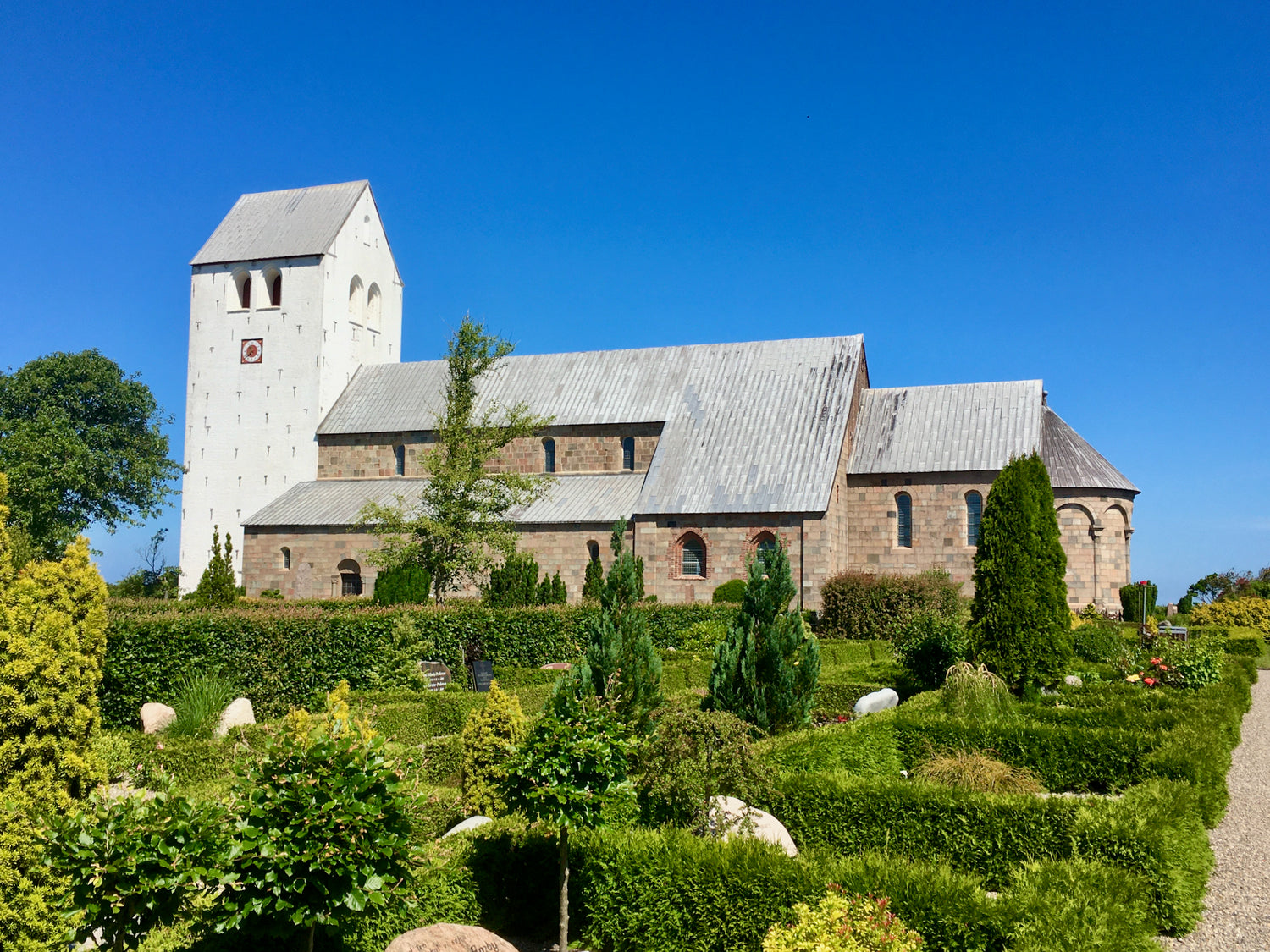
Vestervig Church
Vestervig Church is the largest village church in the Nordics. The reason the church is so large is that it was originally a monastery church for the lost Vestervig Monastery.
The church has a canonical sundial, of which there are only 2 equivalents in the whole of Europe.
Vestervig church is linked to the legend of Liden Kirsten and Prince Buris, an unhappy love story. It is still customary for brides to place a bouquet on the grave where the couple is believed to lie. -
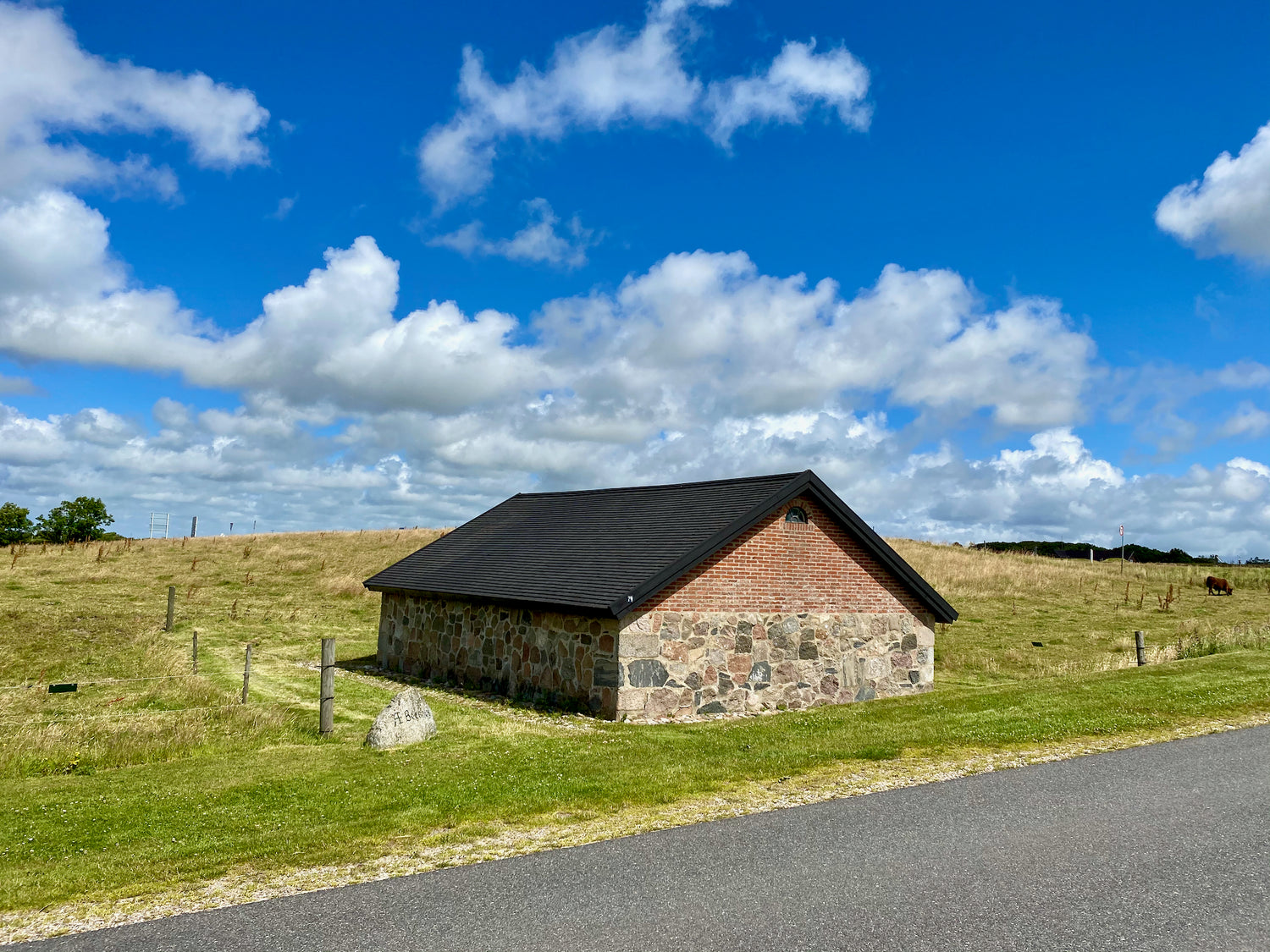
Æ Beeshus
Æ Beeshus is one of the last testimonies of the kind of livestock herding that began at Vestervig Monastery in the middle of the 1800s.
Large herds of cattle grazed freely and at the outermost fields shelters were built for the animals, where they were supplemented with concentrated feed.
The house was equipped with restraints for the animals, so that you could make sure that they all got the right amount of concentrate.
In the house there is now a beautiful board exhibition that deals with topics that can be seen in the immediate area. -
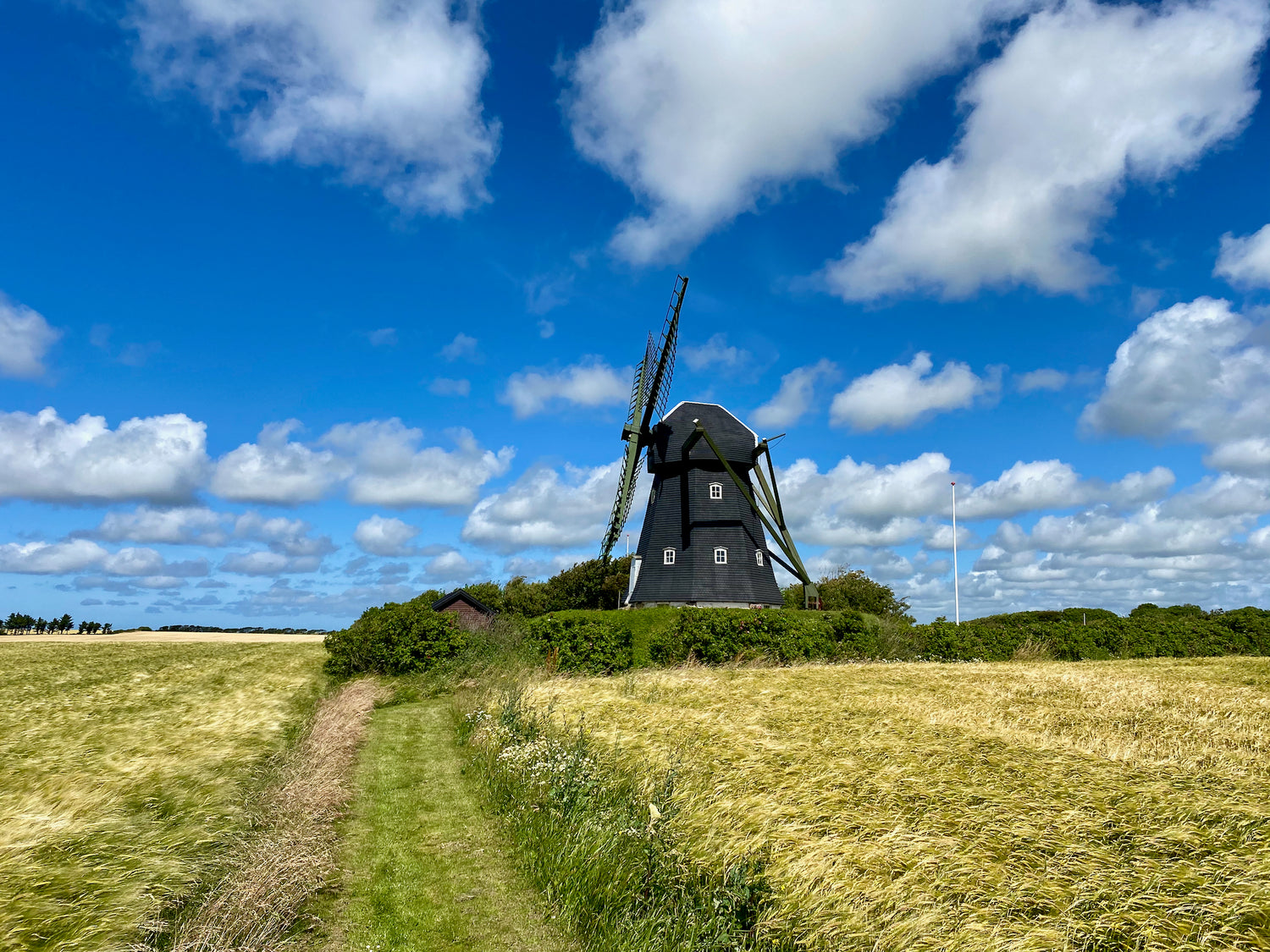
Vestervig Klostermølle
Vestervig Klostermølle is an underground Dutch wind turbine. The mill, built approx. 1860, consists of an octagonal superstructure with a clapboard roof on a brick foundation with earthwork and cellar.
It is a relatively small turbine with a windbreak of 15 meters and turns manually.
The mill functions today as a small museum. The mill's layout and history are thoroughly described on boards that are hung outside the mill. -
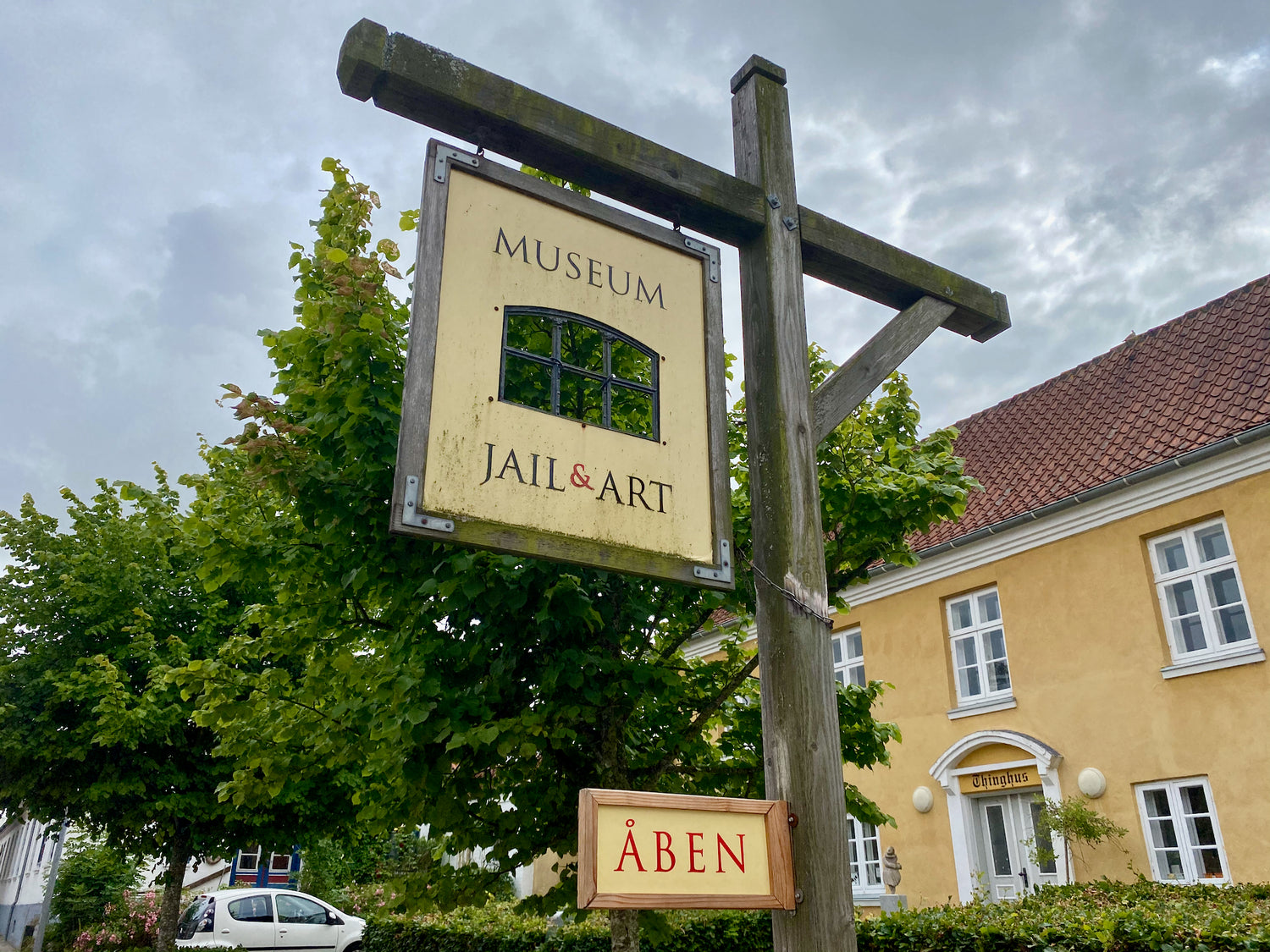
Thinghuset – Jail & Art
Thinghuset – Jail & Art in Vestervig is today a museum, while the front house is set up as an art exhibition for local artists.
The small prison was built in 1833 with 4 prison cells, a court room and housing for the custodian. The prison functioned until 1949 and has remained largely untouched ever since. Malene Schwartz's (a danish actress) grandfather, Otto Georg Schwartz, was a bailiff from 1907 to 1915.
The gallery in the front house is jointly run by approx. twenty local artists and craftsmen from Thy. -
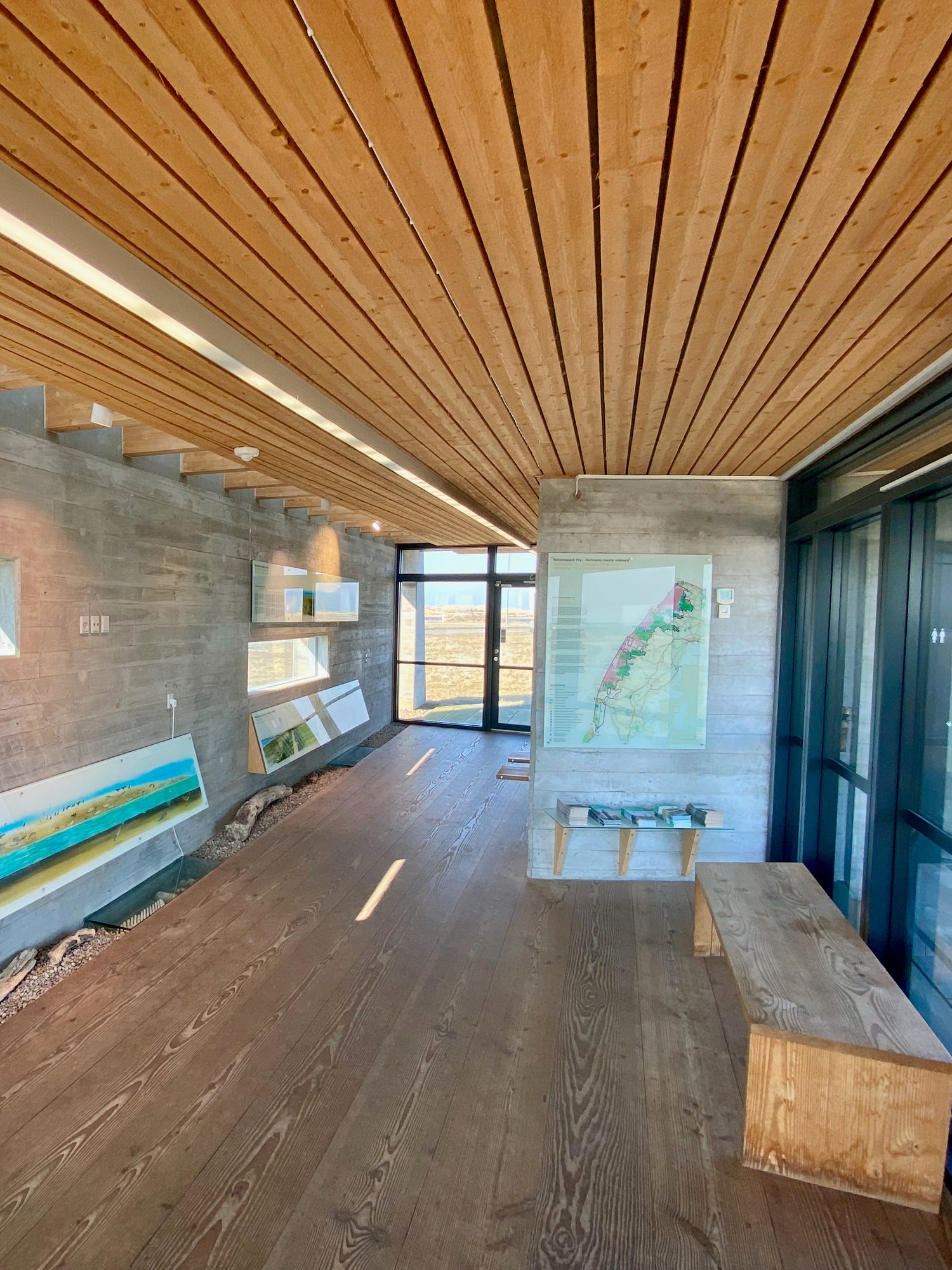
Agger Tange with Svaneholmhus
Agger Tange, with the information center Svaneholmhus, is the southernmost point of Thy and the National Park.
The landscape on the peninsula and just east of it differs with lagoons and beach meadows from the natural types found in the rest of the national park.
It is one of Northern Europe's significant resting areas for waterfowl, and at the same time, an important breeding site for endangered meadow birds. Common seals are often seen on the banks at Agger Tange. -
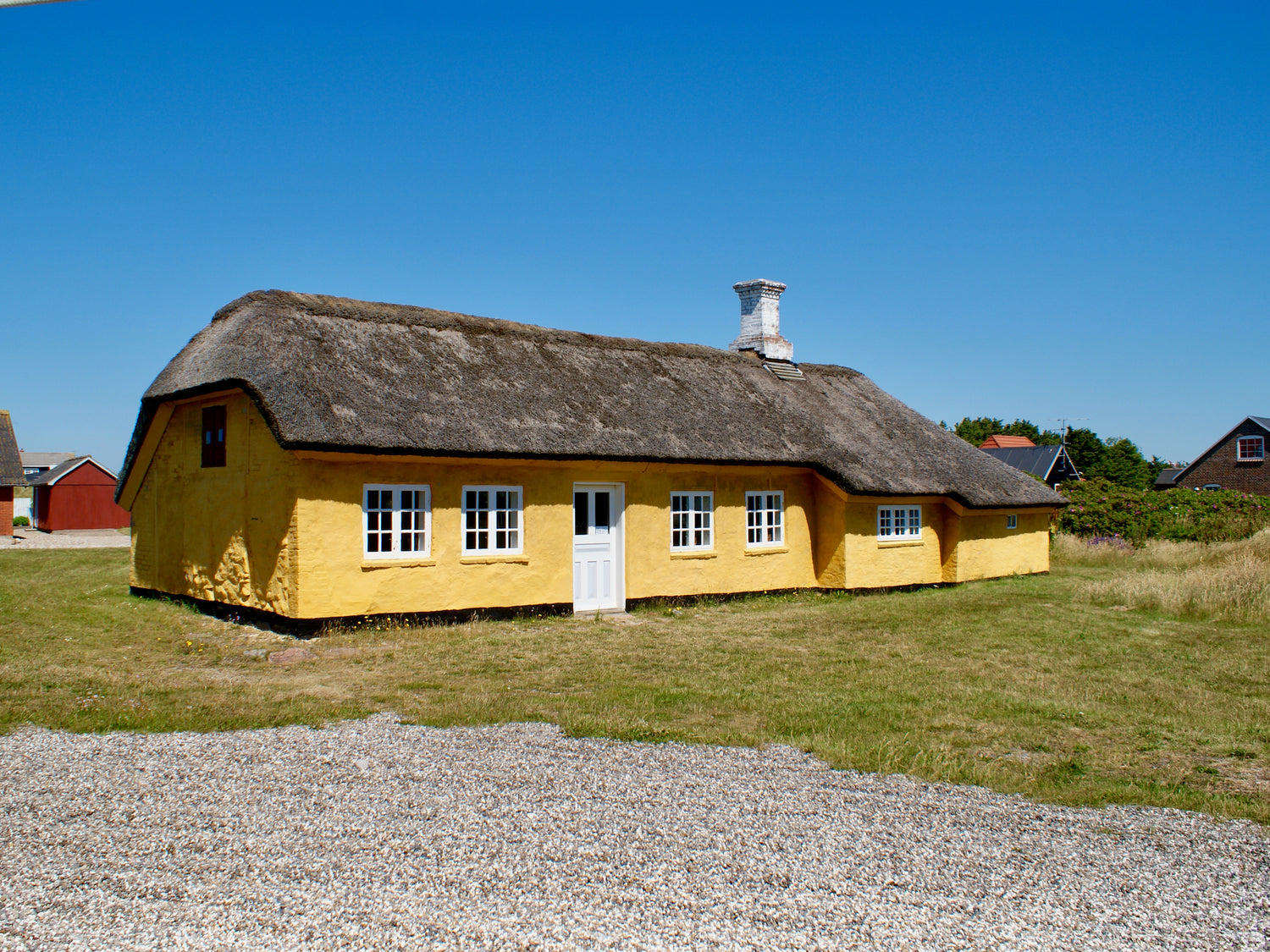
The Fisherman's House
The Fiskerhuset in Agger is a listed house which tells about Agger's history, living conditions and building customs on the West Coast. The house exudes atmosphere in the small, low-ceilinged rooms.
There is a special exhibition in the annex, i.a. about life in Agger and building customs in Thy in the 1800s.
The fisherman's house was probably built in 1749, as this year is carved into a cupboard door in the kitchen and is considered the house's baptismal certificate. -
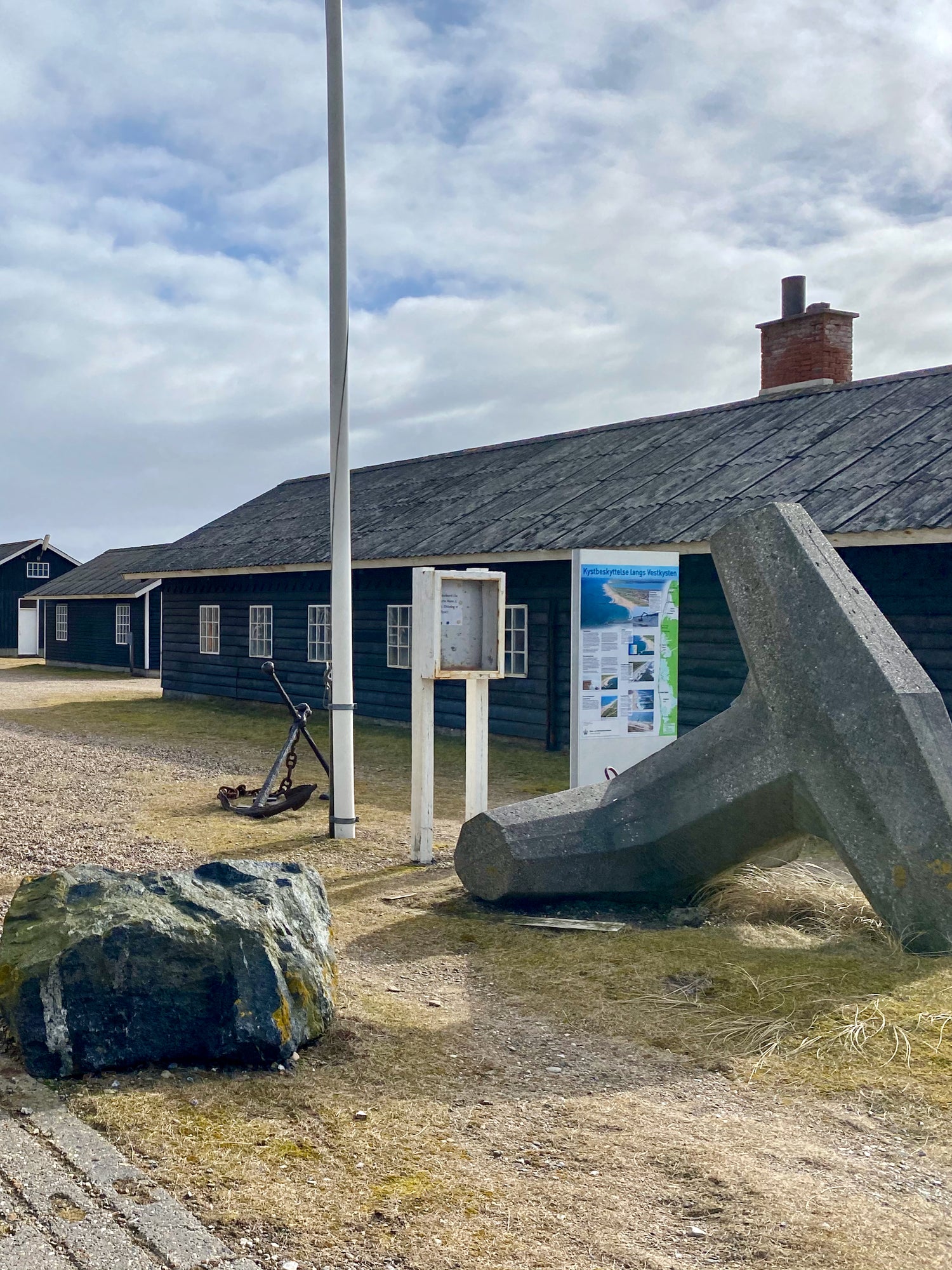
De sorte huse (The Black Houses)
In Agger you will find a collection of characteristic black wooden houses whose history is linked to the coastal defence.
De Sorte Huse" was the workplace of the Water Works Administration in the early 1900s.
Today, De Sorte Huse is the setting for various cultural events throughout the year, and here you will also find an exhibition about the history of the town and coastal fishing. In addition, there is also a "lunch box house". -
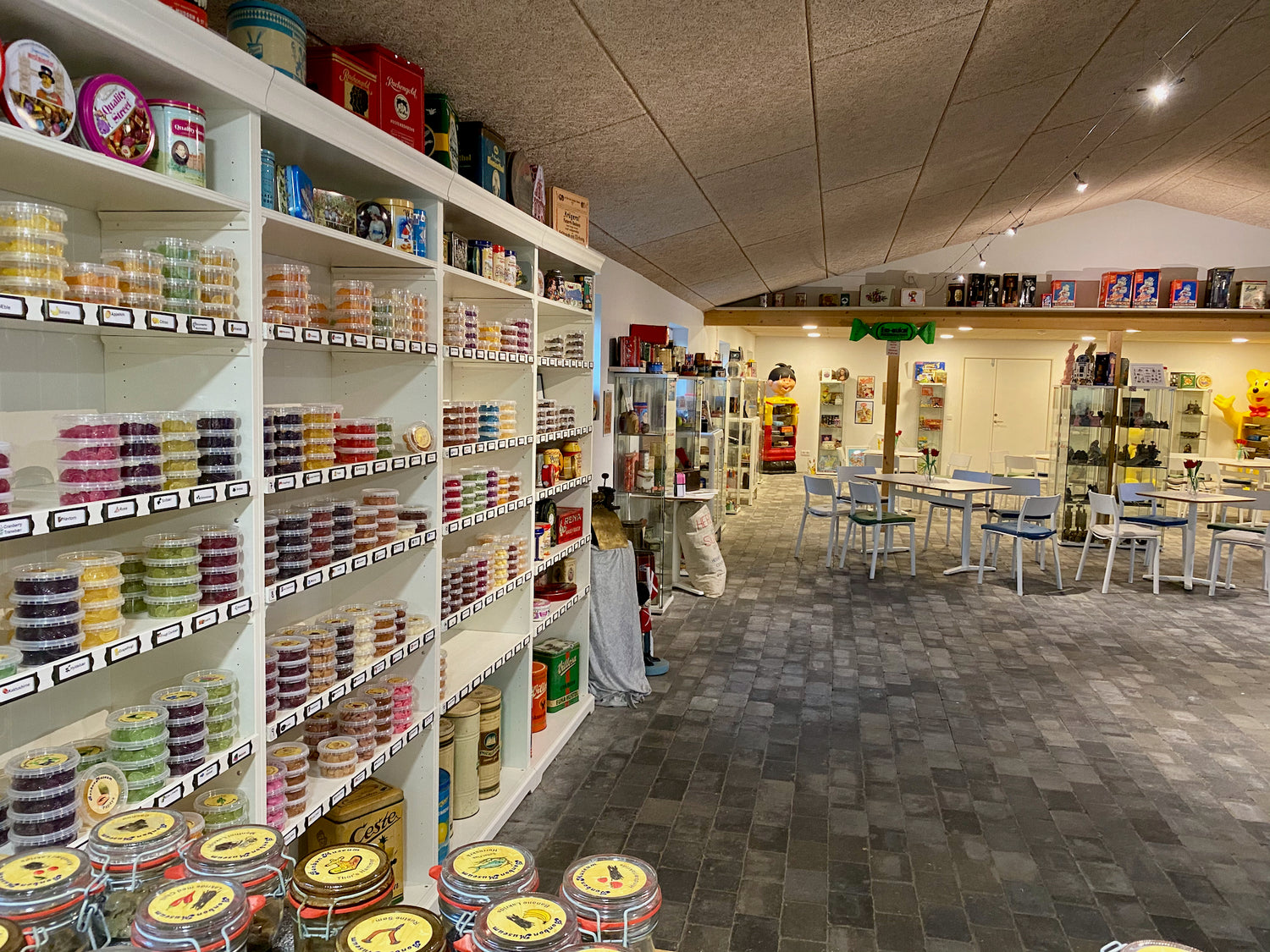
Bonbonmuseet (The Candy Museum)
In the Bonbonmuseet, everything revolves around the world's sweetest temptation. In the museum, you can learn about everything worth knowing about the history, tradition and production of bonbons.
Here, guests will find a number of interesting objects connected to the history of candy canes.
There is also a small candy factory, where you can experience how handmade candies were made a hundred years ago. - -
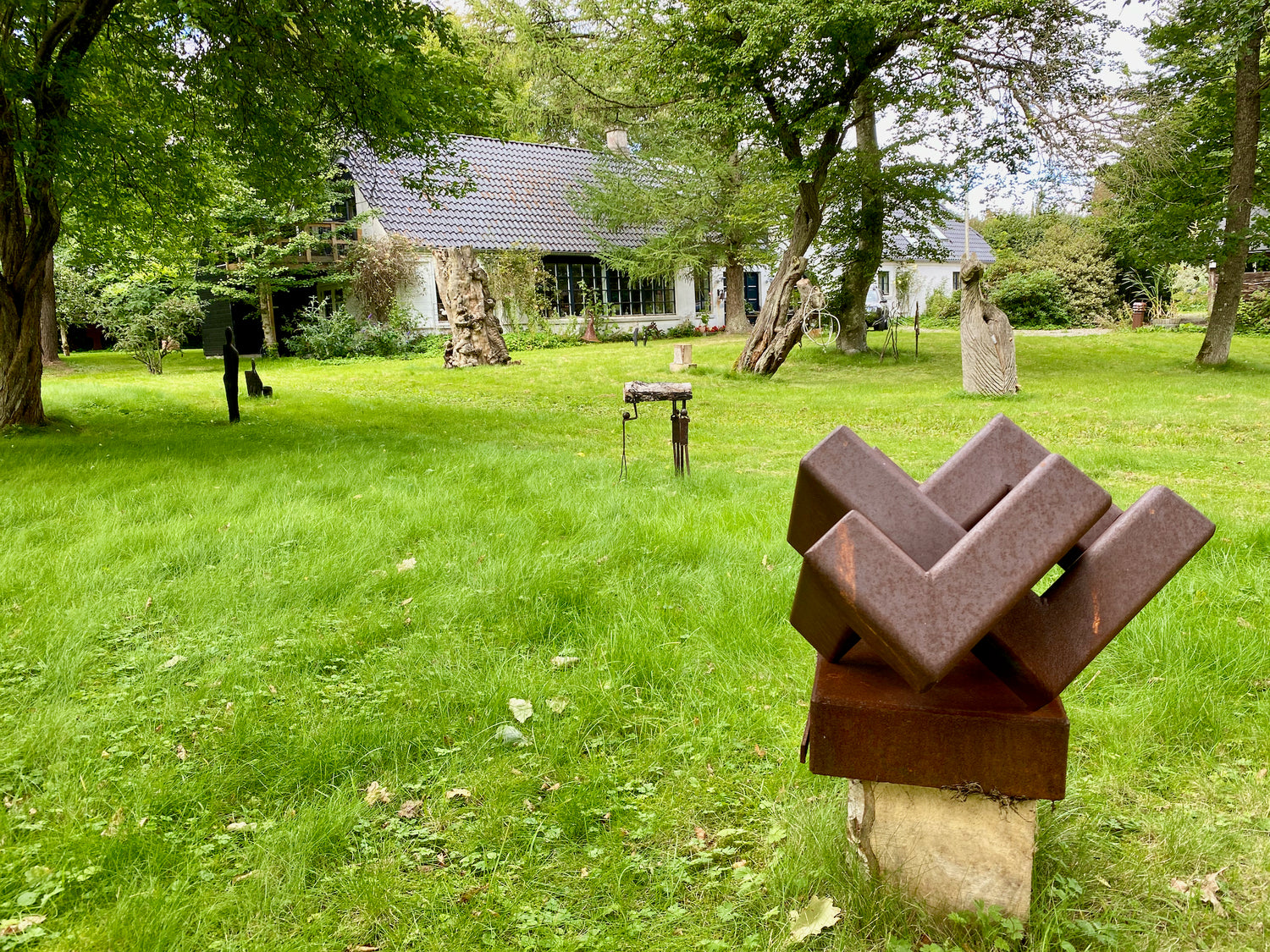
The sculpture garden
The sculpture garden in Svankjær in Thy is an international exhibition place for art with over 100 sculptures outdoors and around 400 indoors.
The Skulpturhaven regularly holds exhibitions with both well-known and lesser-known artists.
The sculptures in the garden are very varied. Here are the works of expensive artists, impressive granite sculptures from Greenland, busty women in wood from the local area, works in iron, stainless steel and wood.
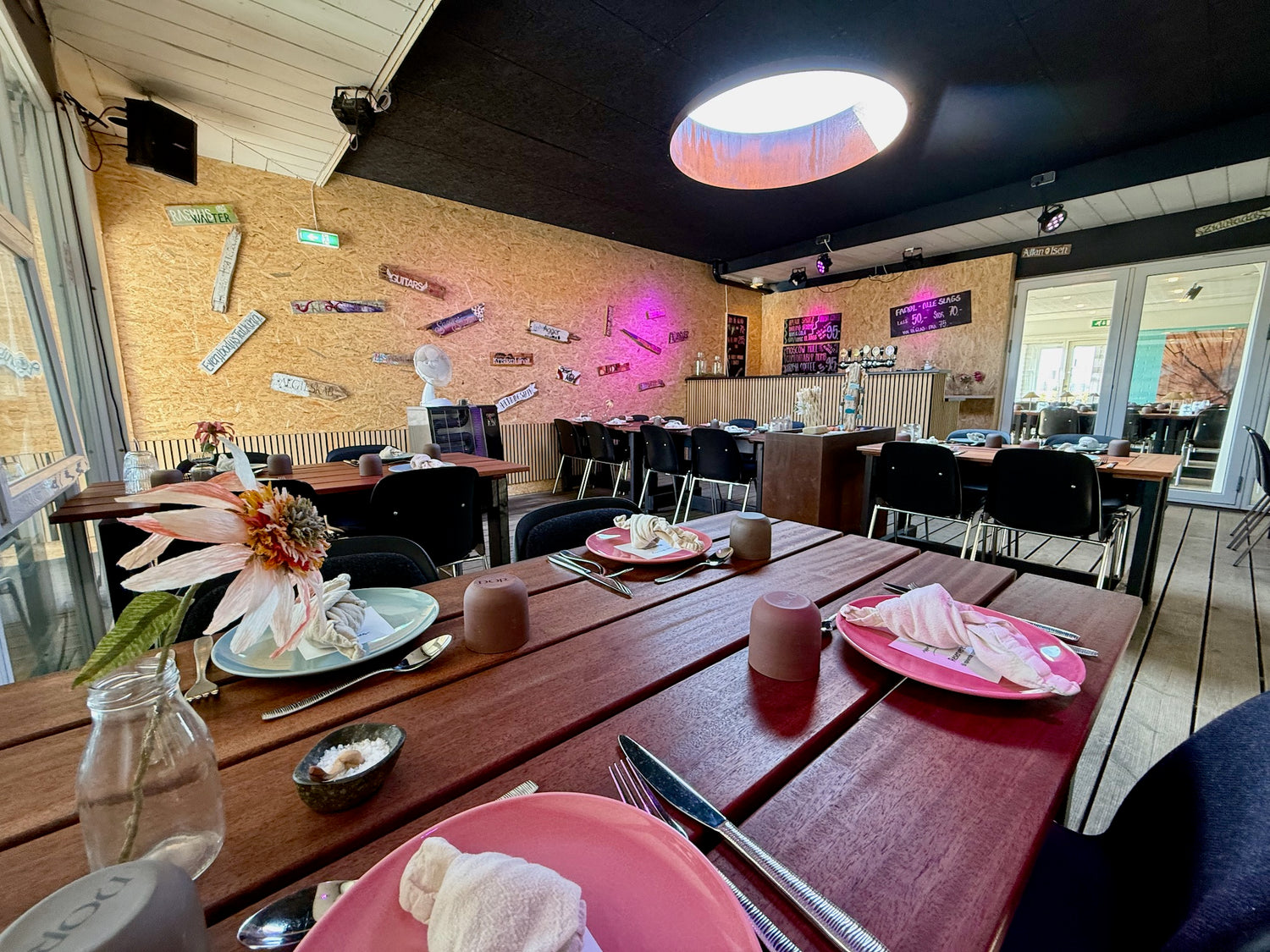
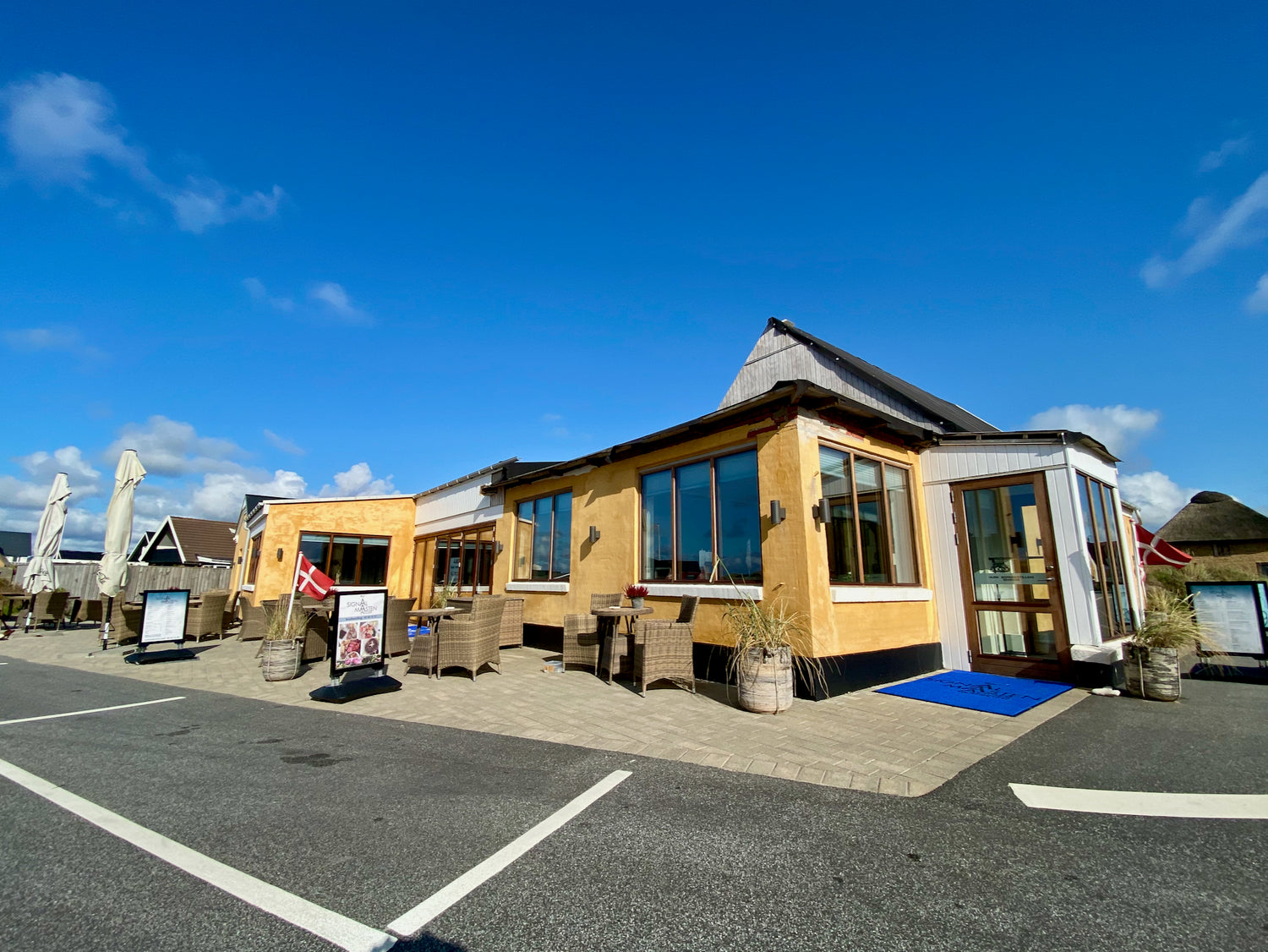
Restaurants and cafés
Equipment for your hike
Thy Outdoor - Thisted
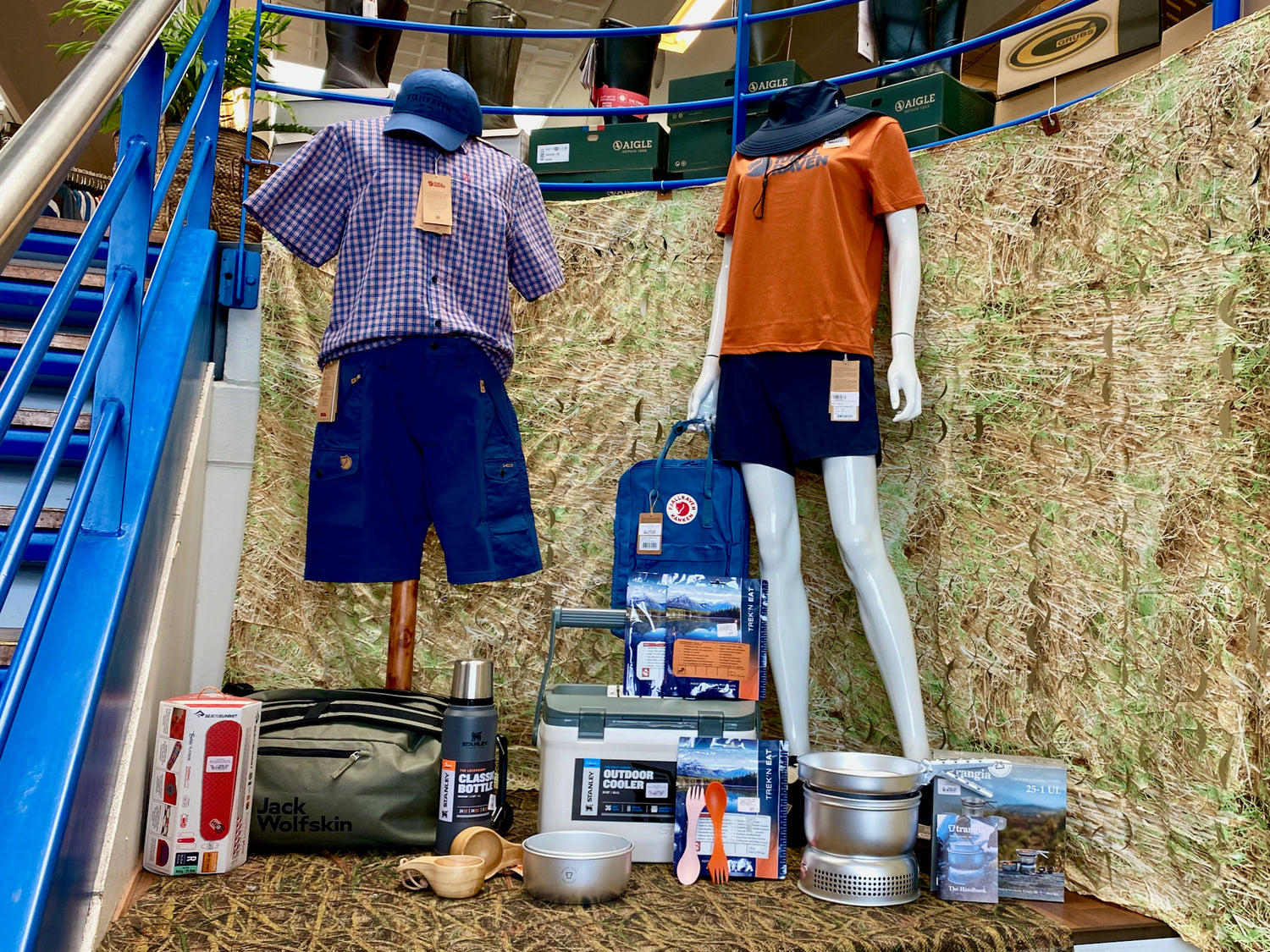
Thy Outdoor is a shop that sells equipment for nature lovers, hunters, anglers and families with dogs and cats.
The almost 1000 m2 store, which is located in Thisted, contains everything you need for your hiking adventure!
In the webshop you can find products that are also represented in the store.